metal
metal
neo-concrete
geometric pattern
geometric
geometric-abstraction
abstraction
Copyright: Mathias Goeritz,Fair Use
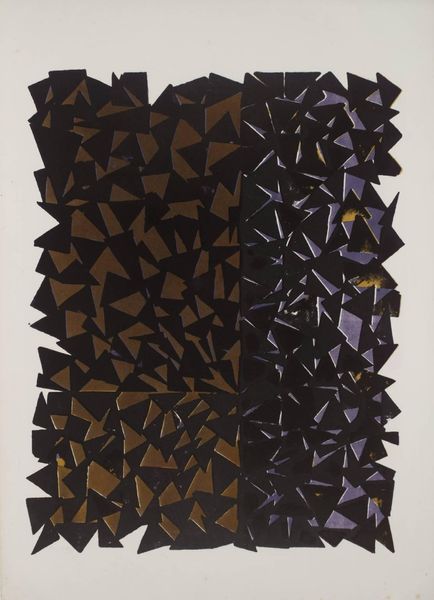
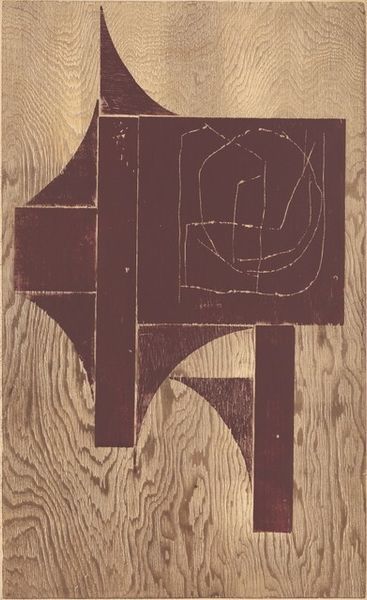
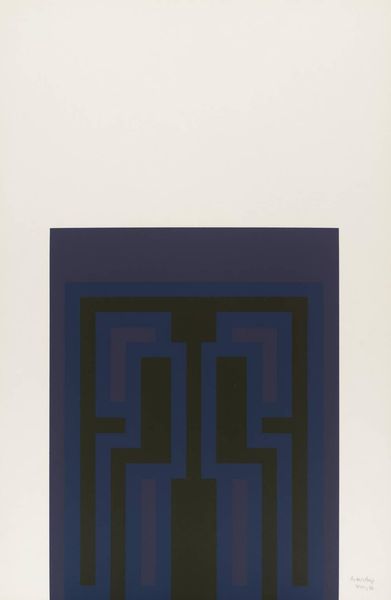
Curator: Well, I find this composition quite striking! What's your take? Editor: Intriguing. It evokes a sense of incompleteness or division to me. Three semi-circular metal forms float on a purple field; two silver forms rest near the top, almost as if torn, while a golden one is located below. There’s something quite austere about it. Curator: Austere perhaps, but also quite potent. We are looking at an “Untitled” piece from 1961 by Mathias Goeritz, an artist associated with Neo-Concrete art and Geometric Abstraction. These forms speak to archetypes and universal symbols—broken cycles, perhaps the moon in phases. Editor: Neo-Concrete? I see what you mean by the metallic components' physical presence in defiance of a flat reading. The perforations on the semi-circles introduce this element of light play. But the color also flattens the components: notice the sharp chromatic contrast between the purple plane and the silver/gold semi-circles. It keeps them at arm's length. Curator: Exactly! This deliberate juxtaposition—that visual tension—creates meaning. It hints at cosmic themes, referencing ancient symbolic languages where geometry expressed transcendental truths. Perhaps Goeritz sought to reconcile this historical symbolic language with contemporary abstraction. Editor: Interesting... it’s certainly a successful exercise in contrasts and balances. The roughness of the punctured metal is softened by the playful shapes, creating dynamism that subverts the initial somber mood, offering a contemplative, almost ethereal, feeling. The artist presents you with the formal contrast, leaving you to construct what the image "means" through it. Curator: Absolutely, the use of humble materials alongside geometric precision is a conscious move. By imbuing these abstract forms with recognizable patterns, Goeritz invokes both the individual's search for symbolic significance and universal truths embedded within material forms. Editor: So it seems. Viewing this through the lens of pure formalism revealed aspects beyond its geometry: a somber opening gives way to seeing these metal elements reflecting light and life, as a kind of hidden, structural principle. Curator: I agree. Examining it through iconography really gives us a peek into how deeply images echo within our cultural consciousness and impact individual experience.
Comments
No comments
Be the first to comment and join the conversation on the ultimate creative platform.
 React
React Comment