mixed-media, assemblage, ceramic, sculpture, architecture
#
mixed-media
#
assemblage
#
sculpture
#
ceramic
#
figuration
#
traditional architecture
#
building art
#
sculpture
#
genre-painting
#
mixed media
#
miniature
#
architecture
#
historical building
Copyright: Public Domain
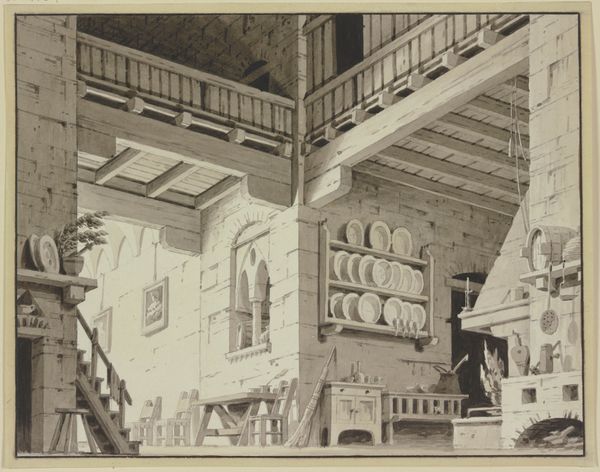
Editor: This is "Moorish Maji," a mixed-media assemblage from around the 18th century, here at the Minneapolis Institute of Art. It’s a diorama, really – with figures and buildings, and it's surprisingly detailed. What stories do you see in it? Curator: The first thing I notice is the complexity of representation at play. What we see is likely a European fantasy of the “Moorish” world, constructed through the lens of colonialism. What do you make of the juxtaposition between the holy scene and the specific architectural style? Editor: I hadn’t thought of it that way. I suppose I saw it as simply "exotic," a kind of foreign setting. So you're suggesting that the setting isn't just decorative? Curator: Exactly. These "genre paintings" often subtly reinforce power dynamics. How might this scene, depicting a Middle Eastern setting for the Nativity, serve a colonial gaze back in Europe? Consider who has the power to represent whom and for what purposes. Editor: So the miniaturization of the figures and architecture might further create a sense of control over this "Moorish" world? It's not just a charming scene; it's a statement. Curator: Precisely. And think about the materials themselves – the ceramic, the assemblage… Are these meant to imitate or exoticize? The question we must always ask ourselves is: Whose story is being told, and whose is being left out? Editor: It gives me a completely different perspective. I’m seeing a political narrative now. Thanks. Curator: Absolutely. Art serves as a mirror reflecting society, but it’s a fractured one, reflecting the complex histories of those involved in its production.
Comments
No comments
Be the first to comment and join the conversation on the ultimate creative platform.
 Collect
 React
React Comment
More like this