1732 - 1775
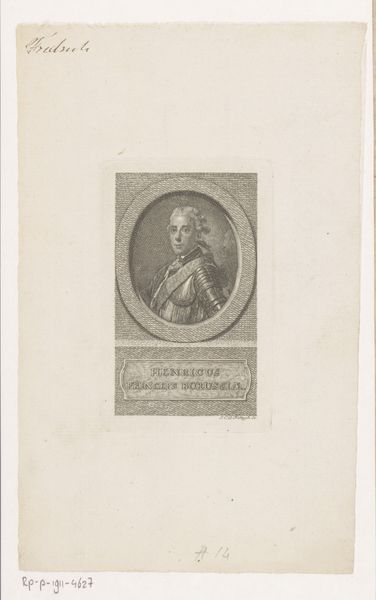
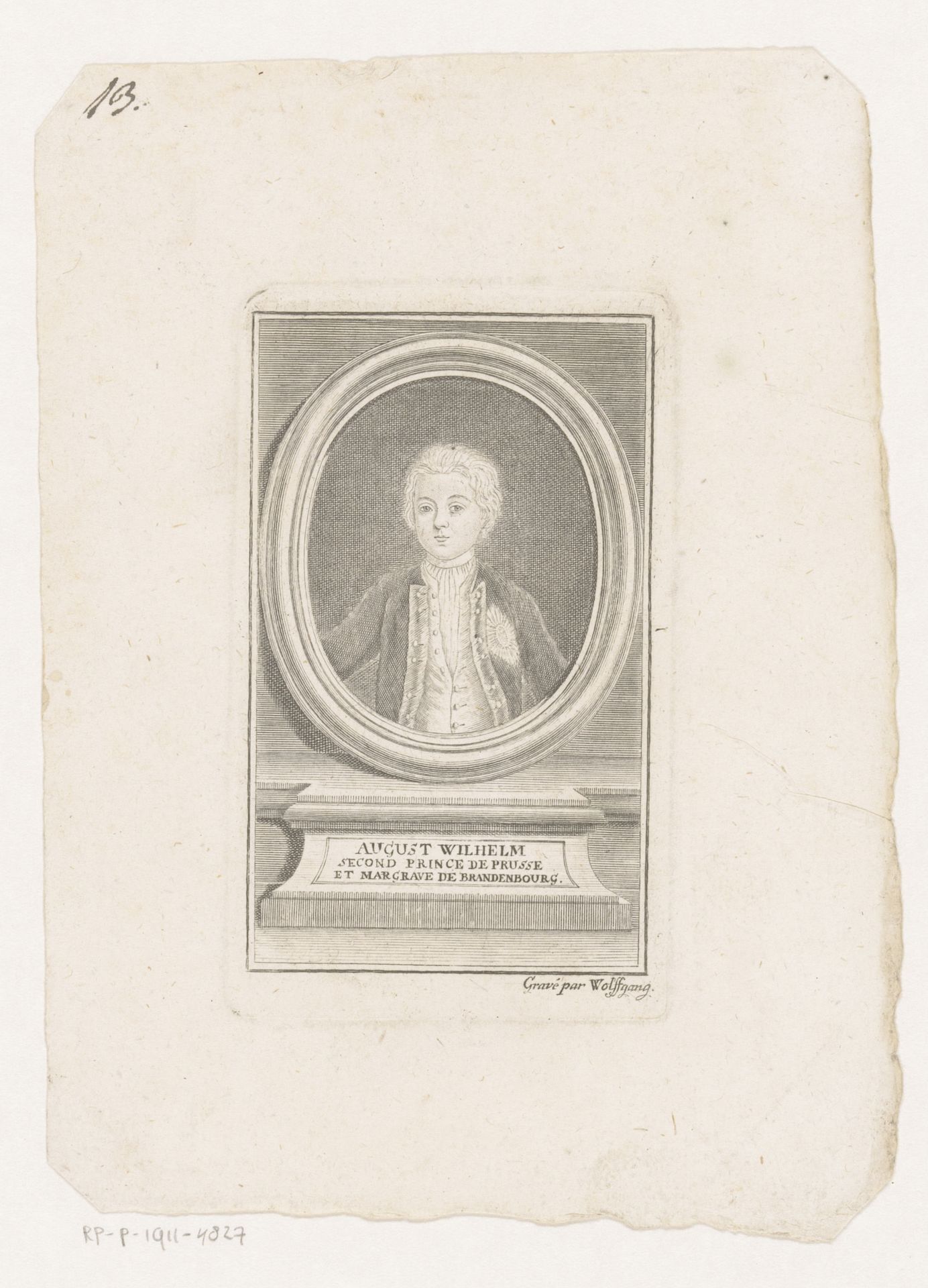
Portret van August Willem, prins van Pruisen

Gustav Andreas (1692-1775) Wolfgang
1692 - 1775Location
RijksmuseumListen to curator's interpretation
Curatorial notes
Editor: Here we have "Portret van August Willem, prins van Pruisen," created sometime between 1732 and 1775 by Gustav Andreas Wolfgang. It's a baroque print, an engraving, displayed here at the Rijksmuseum. There's a formality and a deliberate, constructed nature to it that makes me wonder, what historical context shaped this kind of imagery? Curator: That formality, that "constructed nature" as you say, speaks volumes about the cultural memory it embodies. Look at the oval frame – an ancient symbol of cycles, eternity, rebirth, enclosing him, setting him apart, almost as a sacred object, or a familial reliquary. Notice how this intimate portrait is placed on a pedestal inscribed with his title. Does that juxtaposition suggest anything to you about how August Wilhelm, and Prussian royalty in general, wished to be perceived? Editor: It feels a little contradictory. Intimate but still elevated and separated from everyday life... like an accessible god. I see that August Wilhelm was a prince, so I suppose being perceived as separate but benevolent was the image he wanted to project? Curator: Precisely. Think about the rise of Prussia during this period. This isn’t merely a portrait; it’s a carefully constructed statement of power and lineage. Every line, every curve in the engraving, reinforces this. He isn't just August Wilhelm; he is *August Wilhelm, Second Prince of Prussia*. How do you think this portrait would function within, say, the family’s estate or political circles? Editor: It becomes like propaganda almost? A way to continuously remind people of his power and authority. That’s something I hadn't considered before, I thought it was only a pretty portrait! Curator: It *is* a pretty portrait. But portraits of the time are seldom just innocent representations. They're cultural documents laden with intention and meaning. Editor: Thank you. I’m beginning to see how even the smallest details in art like this speak to larger cultural narratives.