About this artwork
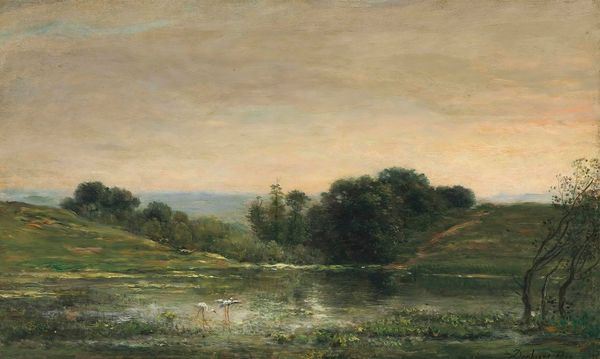
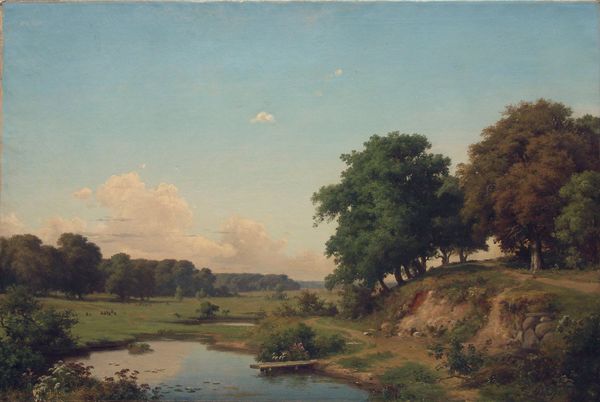
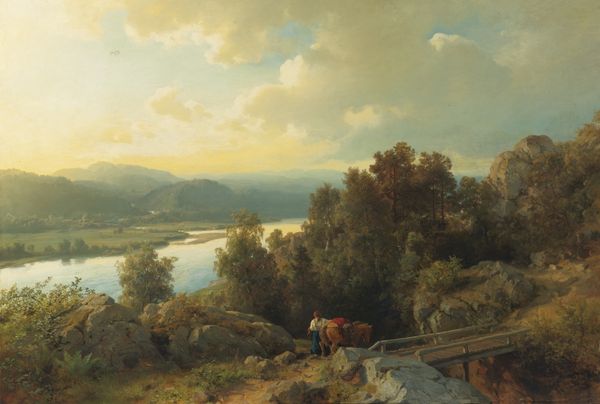
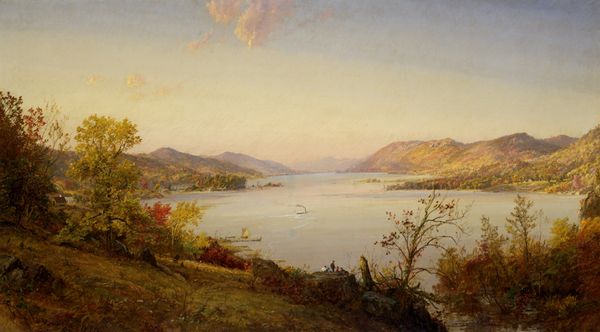
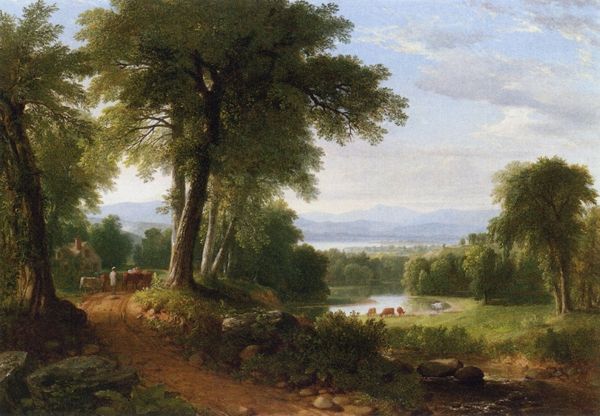
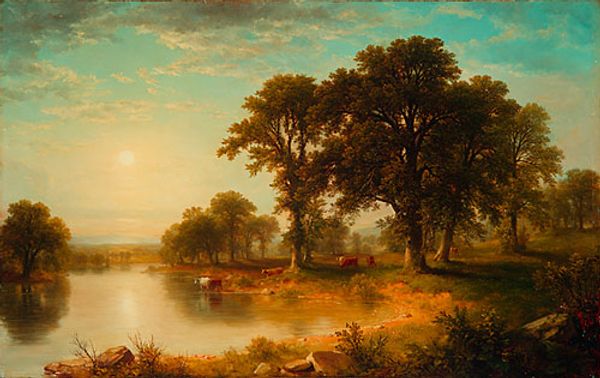
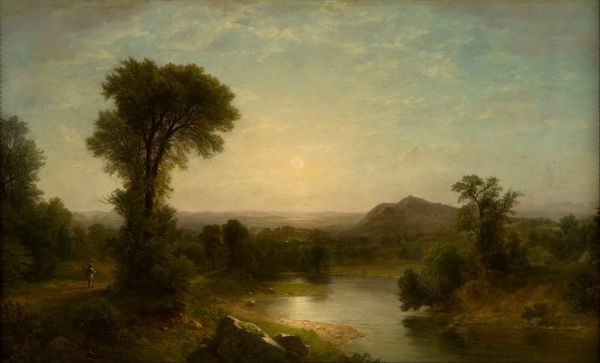
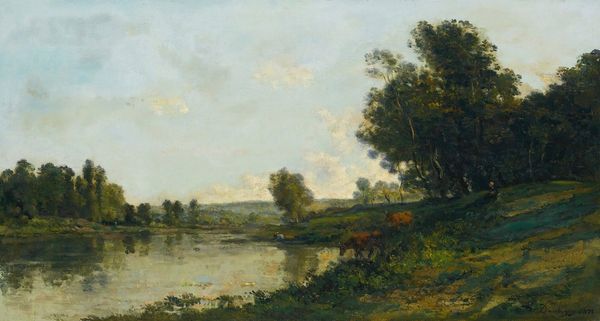
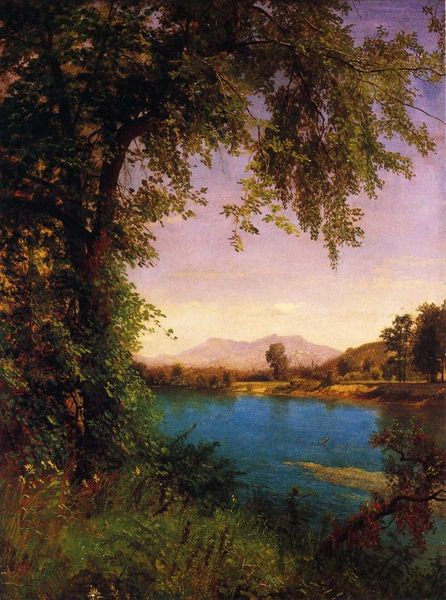
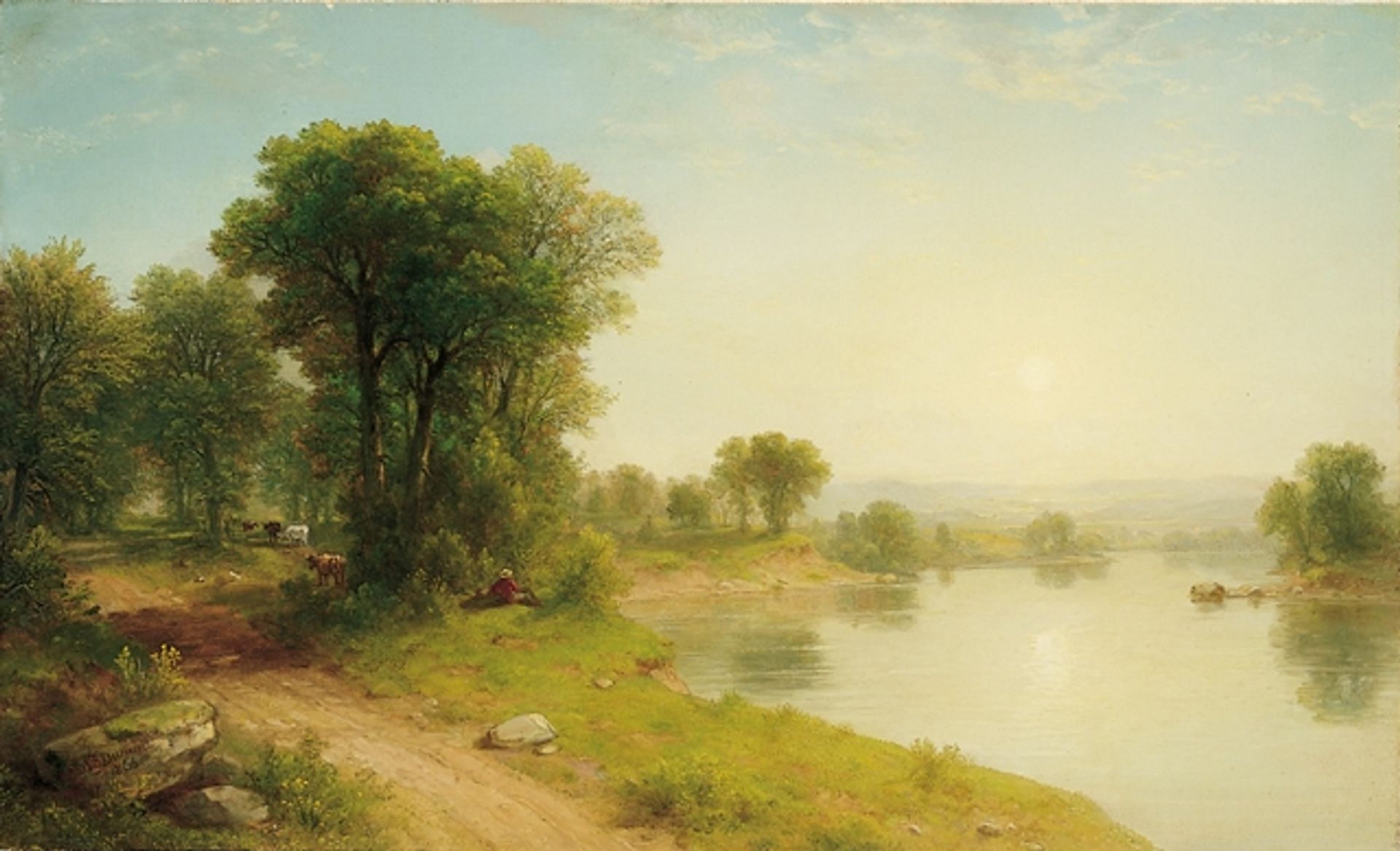
Asher Brown Durand, a leading figure in the Hudson River School, likely created this landscape painting in the mid-19th century. The Hudson River School was not just an artistic movement, but also a cultural phenomenon, deeply intertwined with the social and political currents of a rapidly expanding America. Durand and his contemporaries forged a distinctly American artistic identity by turning away from European models and focusing on the unique beauty and grandeur of the American landscape. Manifest Destiny, the belief that American settlers were destined to expand across the continent, was at its peak. Landscape paintings, like this one, played a role in promoting this ideology, presenting the land as both a source of economic opportunity and a symbol of national identity. By consulting period literature, political documents, and the biographies of artists like Durand, we can understand the complex relationship between art, nature, and nation-building in 19th-century America. This gives clues to art’s role in shaping social values.
Landscape

Asher Brown Durand
1796 - 1886Location
Brigham Young University Museum of Art, Provo, UT, USArtwork details
- Medium
- painting, oil-paint
- Location
- Brigham Young University Museum of Art, Provo, UT, US
- Copyright
- Public domain
Tags
painting
oil-paint
landscape
impressionist landscape
oil painting
romanticism
natural-landscape
hudson-river-school
water
realism
Comments
Be the first to share your thoughts about this work.
About this artwork
Asher Brown Durand, a leading figure in the Hudson River School, likely created this landscape painting in the mid-19th century. The Hudson River School was not just an artistic movement, but also a cultural phenomenon, deeply intertwined with the social and political currents of a rapidly expanding America. Durand and his contemporaries forged a distinctly American artistic identity by turning away from European models and focusing on the unique beauty and grandeur of the American landscape. Manifest Destiny, the belief that American settlers were destined to expand across the continent, was at its peak. Landscape paintings, like this one, played a role in promoting this ideology, presenting the land as both a source of economic opportunity and a symbol of national identity. By consulting period literature, political documents, and the biographies of artists like Durand, we can understand the complex relationship between art, nature, and nation-building in 19th-century America. This gives clues to art’s role in shaping social values.
Comments
Be the first to share your thoughts about this work.