

1847
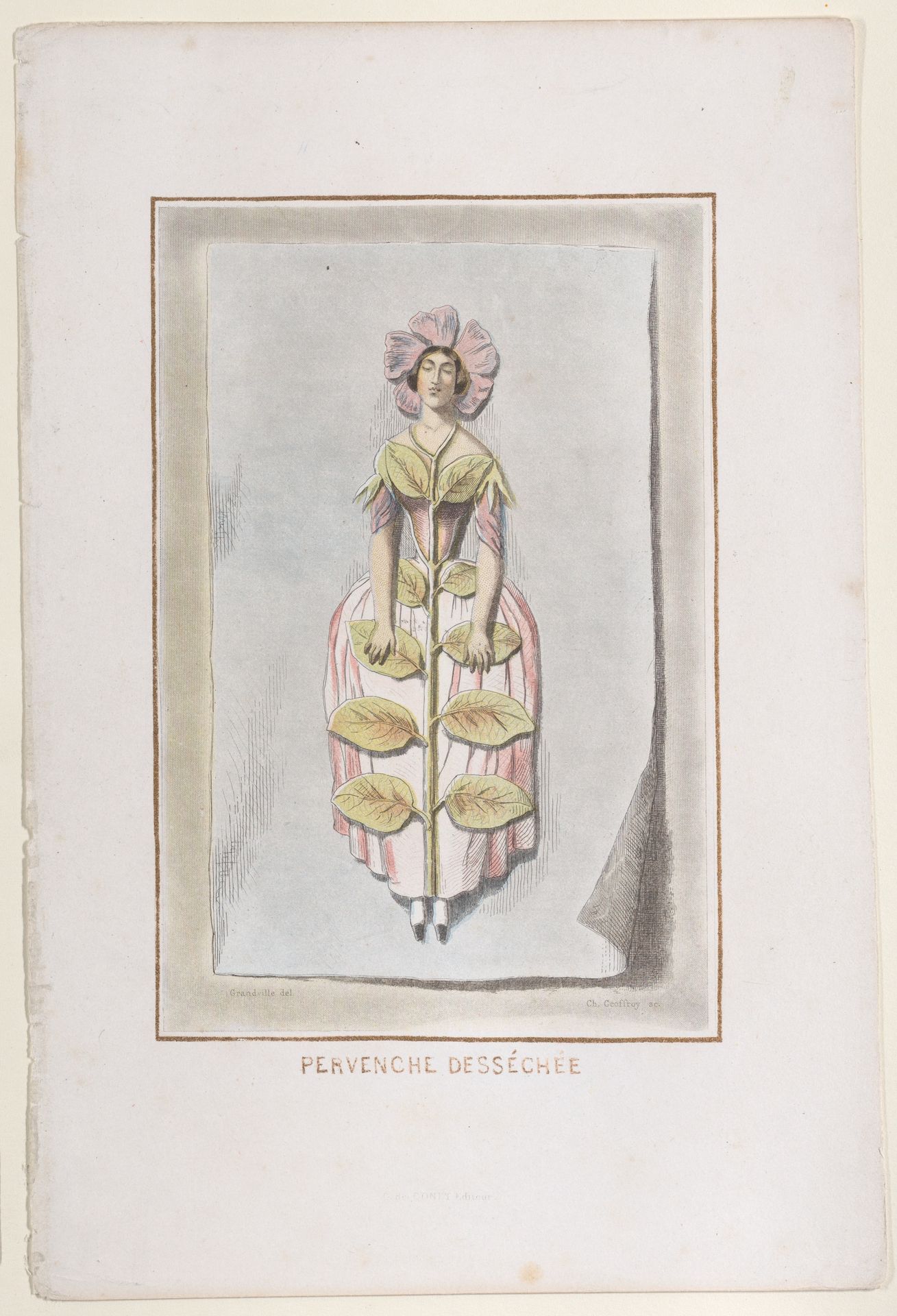
Perveche Desséchée, from "Les Fleurs Animées"

Listen to curator's interpretation
Curatorial notes
Editor: This is J. J. Grandville’s "Perveche Desséchée, from 'Les Fleurs Animées'," created around 1847, using colored pencil and print on paper. It's at the Met. The figure seems melancholic, almost burdened by its floral costume. How do you interpret this work? Curator: This piece is fascinating when viewed through a lens of 19th-century societal constraints on women. Consider the era’s fascination with botany alongside the objectification of women, often likened to delicate flowers. Does the "desséchée" – meaning dried up or faded – suggest a critique of these constraints, perhaps highlighting the ephemeral nature of youthful beauty and the societal pressures faced by women as they age? Editor: So, it's like the flower-woman is a symbol of fading beauty and the pressures on women? Curator: Precisely. Think about how women were often valued for their appearance and perceived innocence. Grandville may be commenting on this fleeting value. The figure's somber expression combined with the wilting implication in the title prompts questions about female agency, or lack thereof, within that historical context. What do you think the artist is trying to convey about the relationship between women and nature? Editor: It makes you think about how women were displayed almost like possessions in portraits of that time! Curator: Exactly! And by animating a flower in this way, Grandville subverts that tradition, forcing us to confront the artifice and underlying power dynamics. What’s really striking to me is that Grandville does not present us with an idyllic picture of female beauty but a 'desséchée' or faded one. It forces a very uncomfortable perspective about idealized femininity that I find particularly interesting. Editor: I hadn’t thought about it that way before. It’s definitely a more complex commentary than I initially perceived. Curator: This piece reveals so much about how social and cultural factors influence art and our perception of identity. There are complex and troubling factors in plain sight!