print, paper, engraving
#
portrait
#
neoclacissism
# print
#
paper
#
history-painting
#
engraving
#
realism
Dimensions: height 180 mm, width 118 mm
Copyright: Rijks Museum: Open Domain
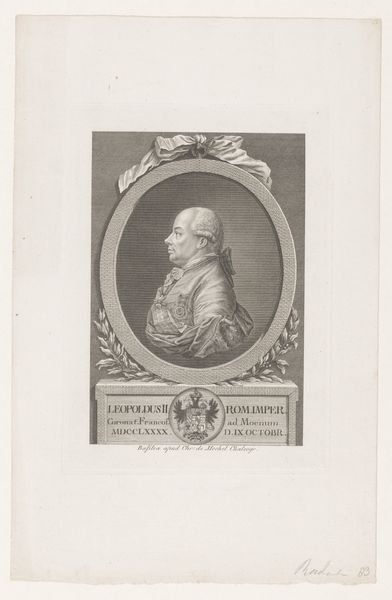
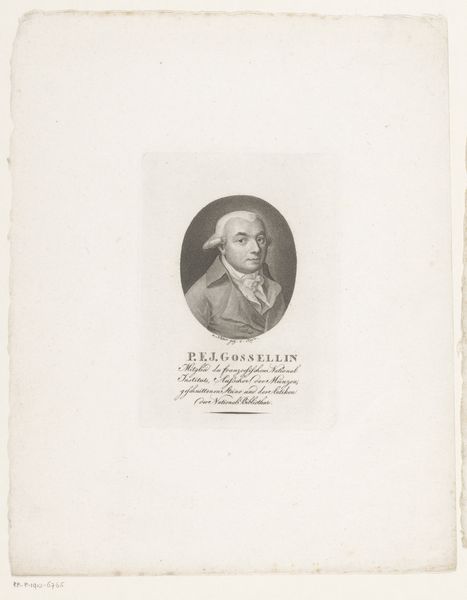
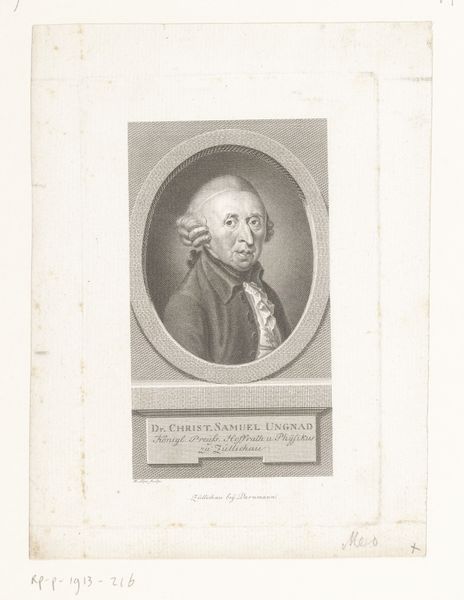
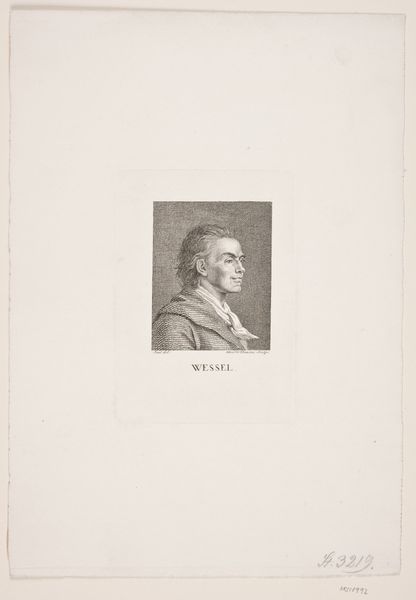
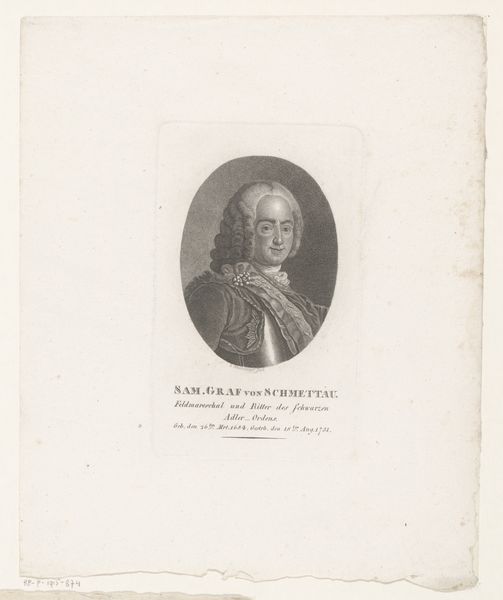
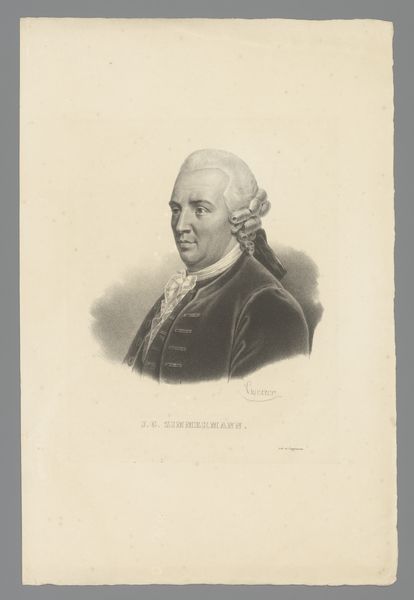
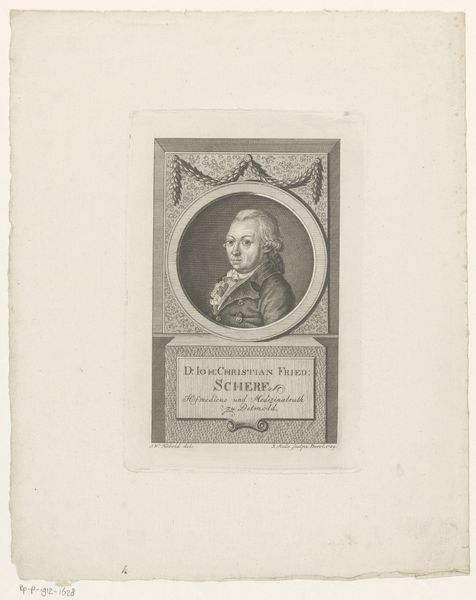
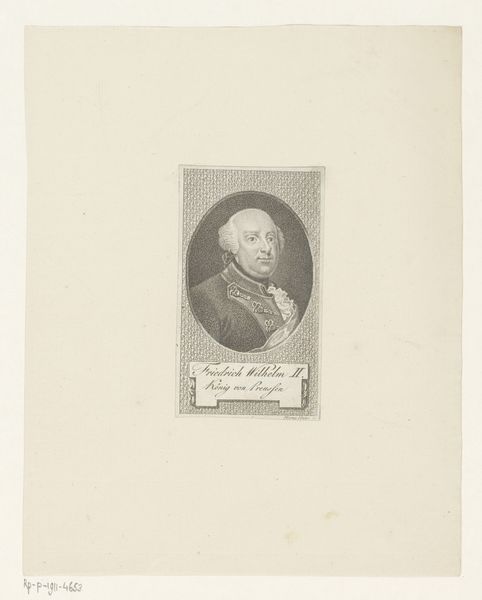
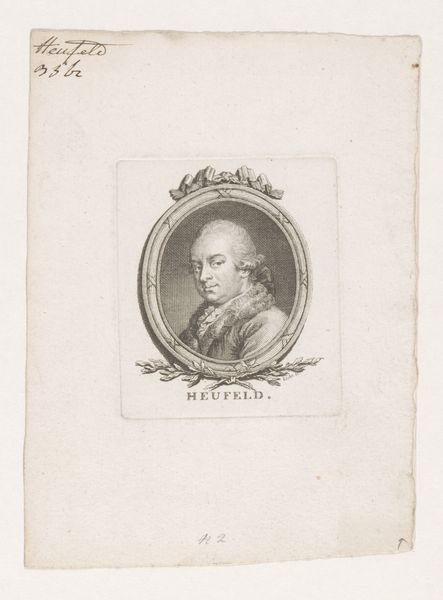
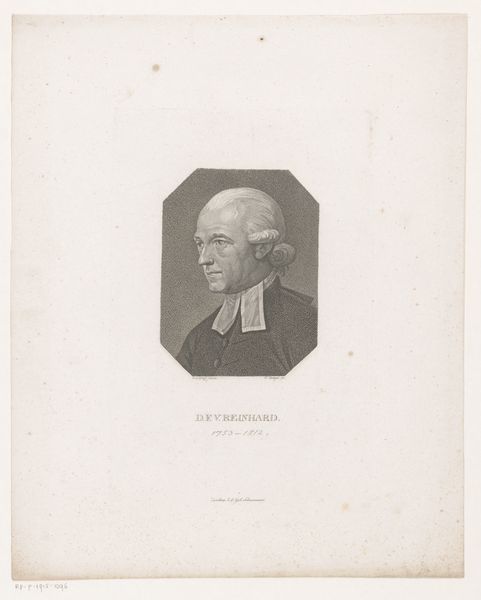
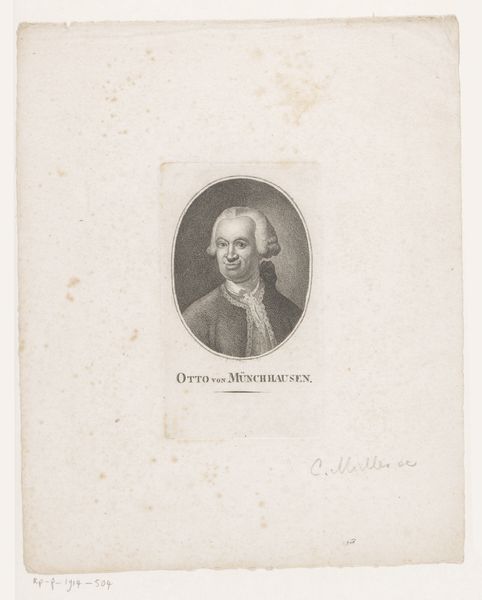
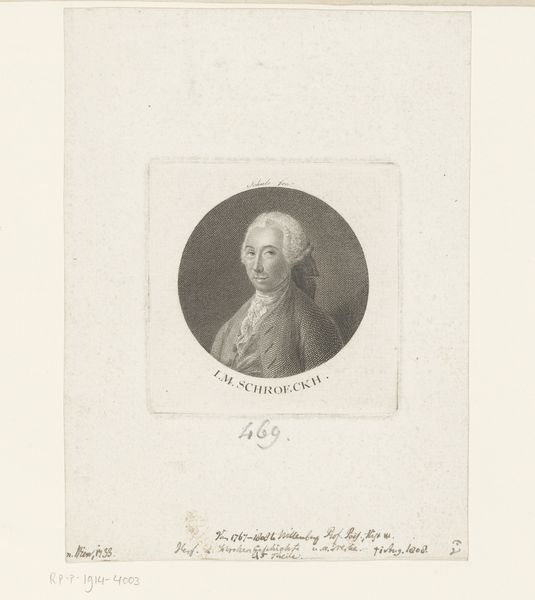
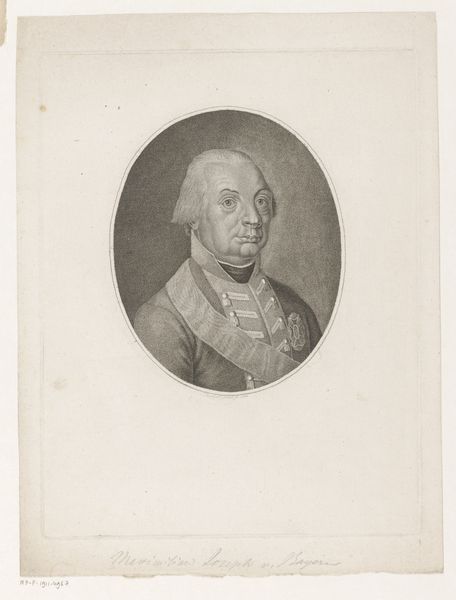
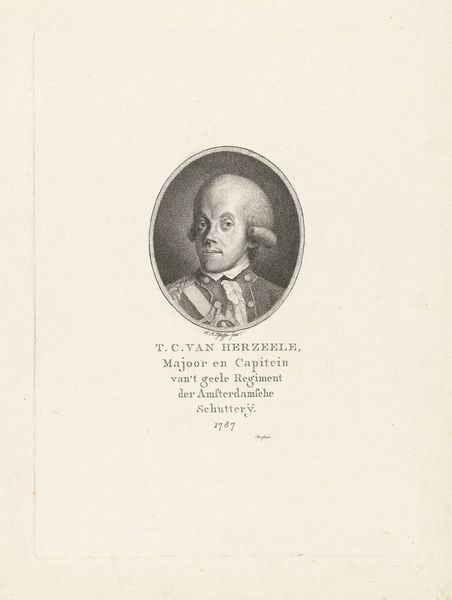
This print of Hans Carl von Winterfeld was made by Gustav Zumpe using a technique called etching. An etching is made by drawing an image into a prepared ground on a metal plate, and then using acid to bite away the exposed lines. The plate is then inked and printed, leaving a fine network of lines on the paper. The striking thing about this print is the level of detail Zumpe achieved. Look closely, and you'll see the subtle gradations of tone that give Winterfeld's face its volume. This was only possible through countless hours of labor, controlling the strength and duration of the acid baths. Although this print looks quite refined, etching was a relatively democratic medium at this time. It allowed artists to make multiple copies of their work, and circulate them widely, without having to rely on wealthy patrons. In this way, etching helped to democratize art making and art collecting, aligning it with new modes of production. By focusing on these processes, we can understand this print not just as a portrait, but as an object that reflects the changing social landscape of the 19th century.
Comments
No comments
Be the first to comment and join the conversation on the ultimate creative platform.
 Collect
 React
React Comment
More like this