About this artwork
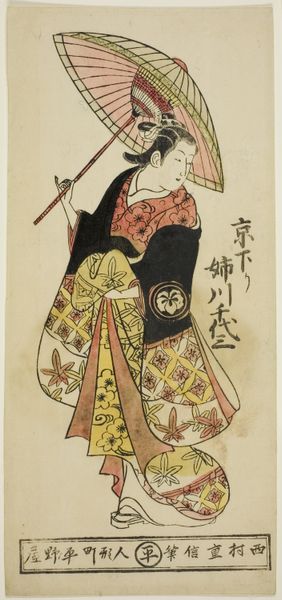
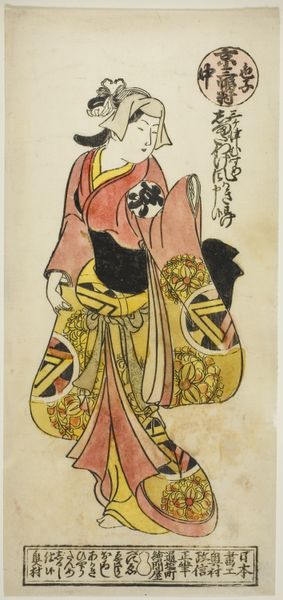
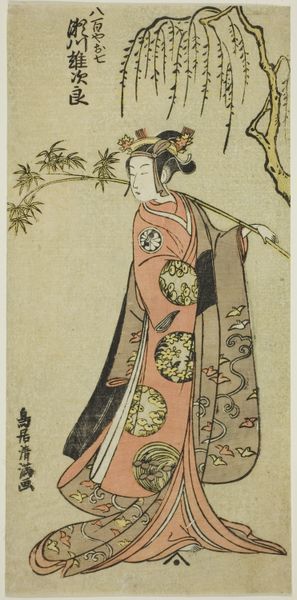
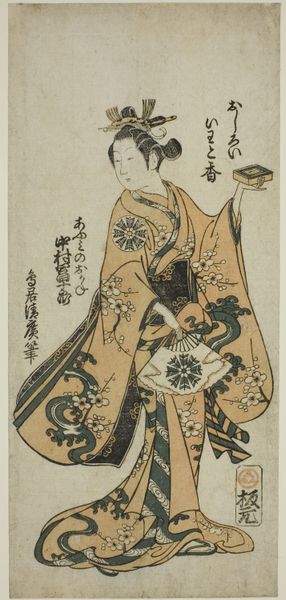
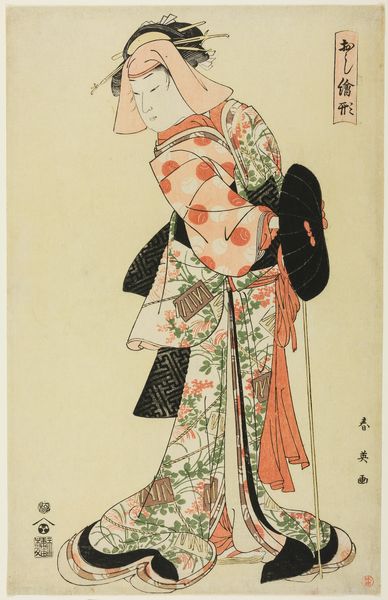
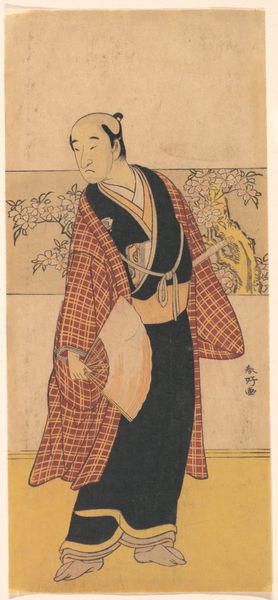
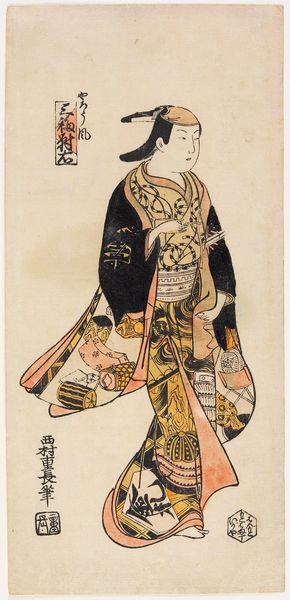
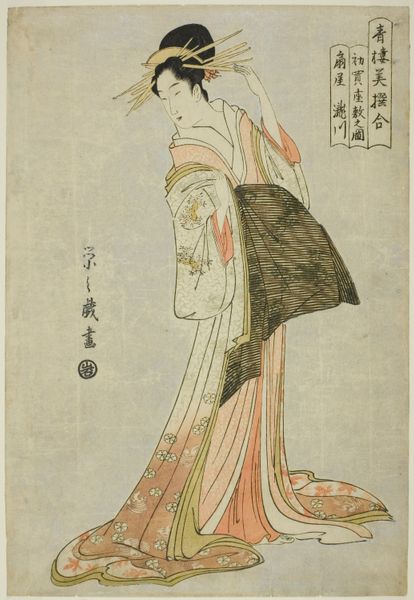
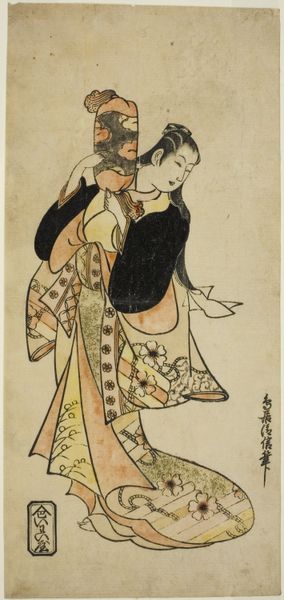
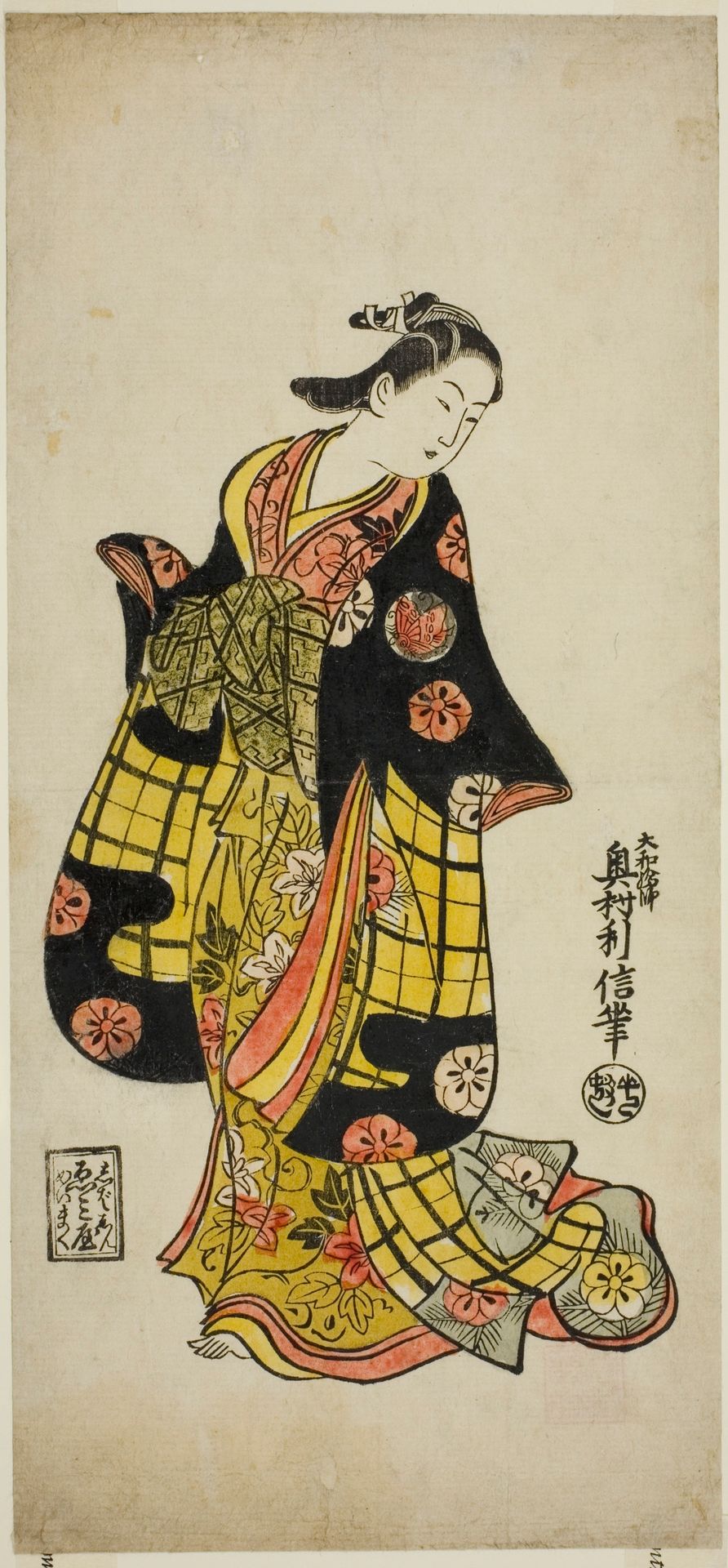
This print of Sanjo Kantaro as a courtesan was made in the mid-18th century by Okumura Toshinobu, using woodblock printing. Notice the flat planes of color, and crisp outlines – characteristics of the *ukiyo-e* tradition. But this belies a complex process: a separate block had to be carved for each color, then carefully aligned to create the final image. This division of labor was typical of woodblock production at the time, which was a burgeoning industry tied to the rise of a mercantile economy. The choice of subject matter is also telling. By depicting a male actor in drag, Toshinobu engaged with a popular interest in the fluid nature of identity and performance. In a way, the print itself mirrors this act of transformation. A mundane material, wood, is used to create a compelling, colorful fiction. By appreciating these materials, processes, and cultural context, we can move beyond aesthetic appreciation and consider the artistic, economic, and social values that shape our understanding of art.
The Actor Sanjo Kantaro as a courtesan c. 1723


Artwork details
- Medium
- print, woodblock-print
- Dimensions
- 13 1/2 × 6 1/4 in.
- Location
- The Art Institute of Chicago
- Copyright
- Public Domain
Tags
portrait
ink drawing
asian-art
ukiyo-e
figuration
woodblock-print
Comments
No comments
About this artwork
This print of Sanjo Kantaro as a courtesan was made in the mid-18th century by Okumura Toshinobu, using woodblock printing. Notice the flat planes of color, and crisp outlines – characteristics of the *ukiyo-e* tradition. But this belies a complex process: a separate block had to be carved for each color, then carefully aligned to create the final image. This division of labor was typical of woodblock production at the time, which was a burgeoning industry tied to the rise of a mercantile economy. The choice of subject matter is also telling. By depicting a male actor in drag, Toshinobu engaged with a popular interest in the fluid nature of identity and performance. In a way, the print itself mirrors this act of transformation. A mundane material, wood, is used to create a compelling, colorful fiction. By appreciating these materials, processes, and cultural context, we can move beyond aesthetic appreciation and consider the artistic, economic, and social values that shape our understanding of art.
Comments
No comments