
Curatorial notes
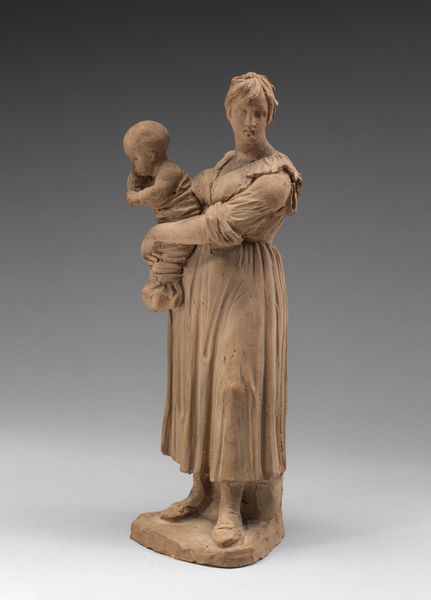
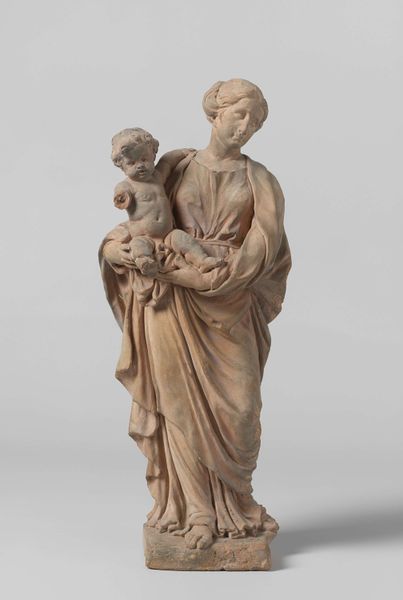
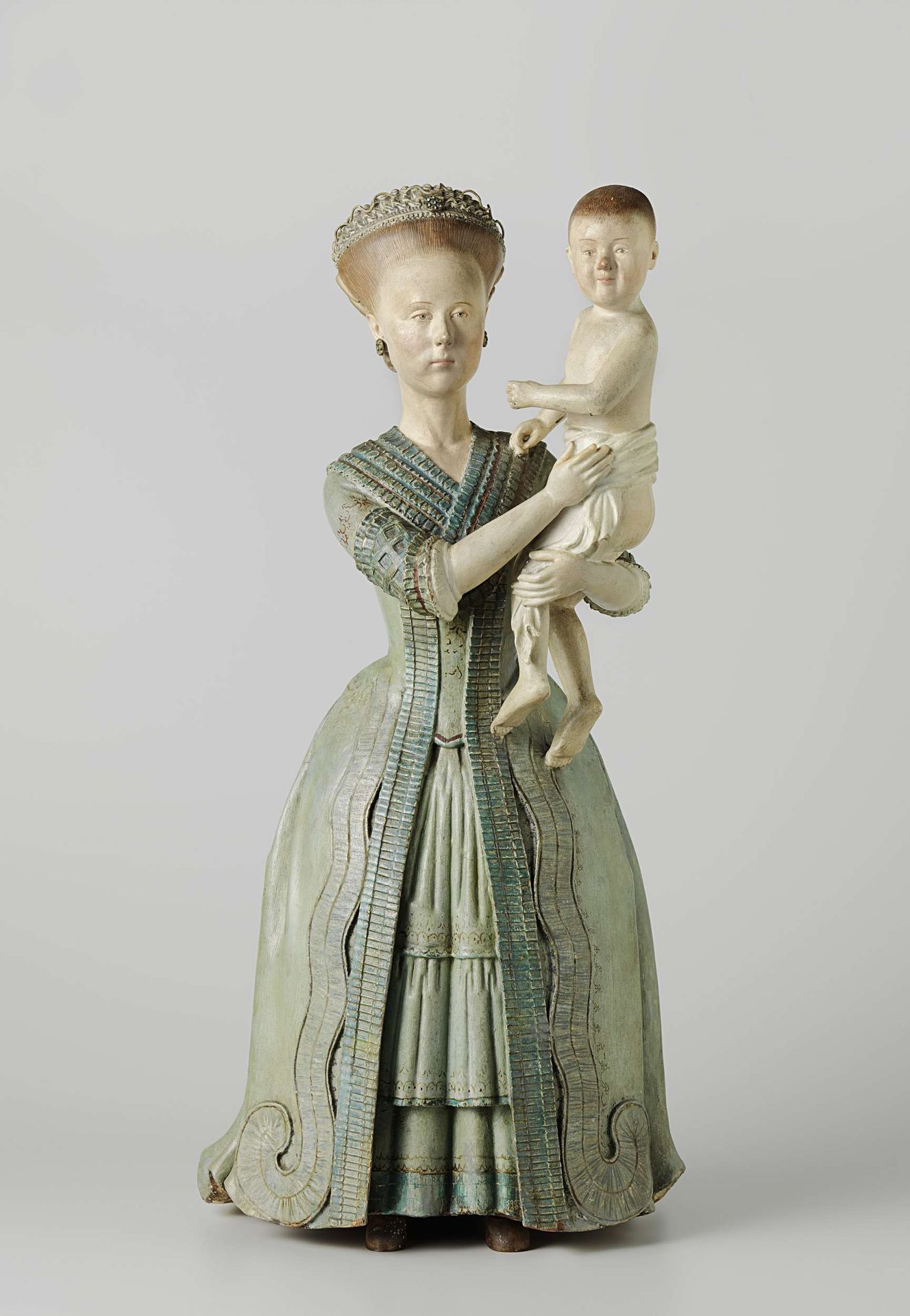
Curator: This carved wood sculpture from around 1775, titled "Woman Holding a Child," presents a fascinating intersection of the neoclassical portrait style with elements of genre painting. What strikes you about it? Editor: Well, immediately the stillness is striking. There’s a rigidity, almost, in both the mother and the child's poses. It’s serene, but perhaps a little…distant? It doesn't exactly exude warmth. Curator: It reflects, I think, a tension present in representing motherhood in the late 18th century. This piece exists in a society that was redefining gender roles, with sentimental ideas of motherhood gaining ground. However, representations of women, particularly upper-class women, often were carefully constructed. Editor: You can definitely see that here, she’s got this sort of crown-like structure on her head, but beyond her elaborate clothing, what is fascinating, iconography-wise, is the contrast between the ornamentation and her very plain face. She looks almost like a blank slate in contrast to her fussy wardrobe. The child, however, with his short haircut and neutral gaze, it's hard to infer what's on his mind. Curator: That resonates with me. This era saw the popularization of what some consider to be "polite portraits" which presented an elevated and controlled depiction. A marker of class status but one presented under this increasingly new guise of respectable, even idealized maternal roles. Editor: It is as if the sculptor aimed to represent maternal virtue without delving into personal emotion, making the universal symbolic power all the stronger. She stands, not so much a woman, but as an enduring symbol of the Neoclassical vision of Motherhood itself. Curator: That distillation is intriguing. What does this carving then say about the politics of image-making and presentation during that time period? There seems a clear focus on respectability, potentially signaling a push back against the excessive indulgence associated with the pre-revolutionary French elite. Editor: Yes, it's hard to overlook the subtle yet potent symbolism present. Motherhood being an ideal that transcended any political reality, and that transcends today. Curator: That balance of the idealized and the ordinary fascinates me, both then and now. Editor: Absolutely. This makes it all the richer, the historical background interplaying with the enduring symbols.