1633 - 1672
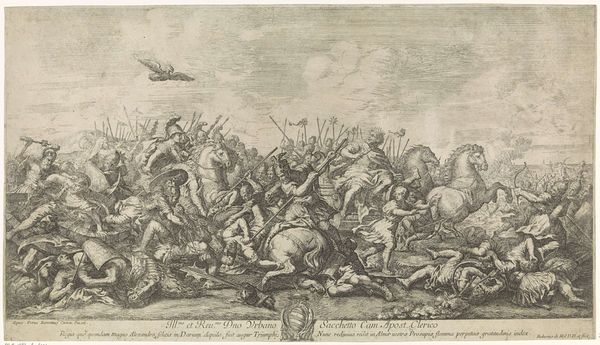
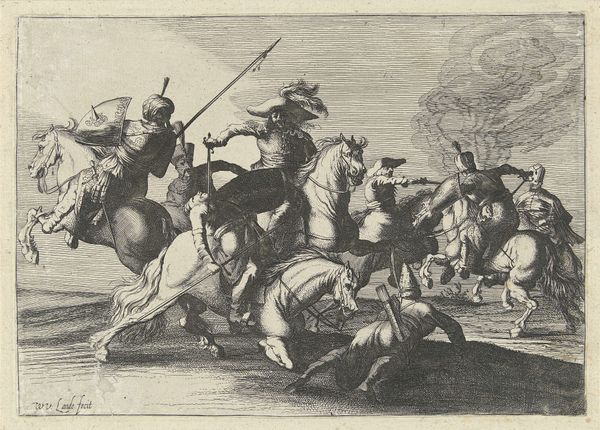
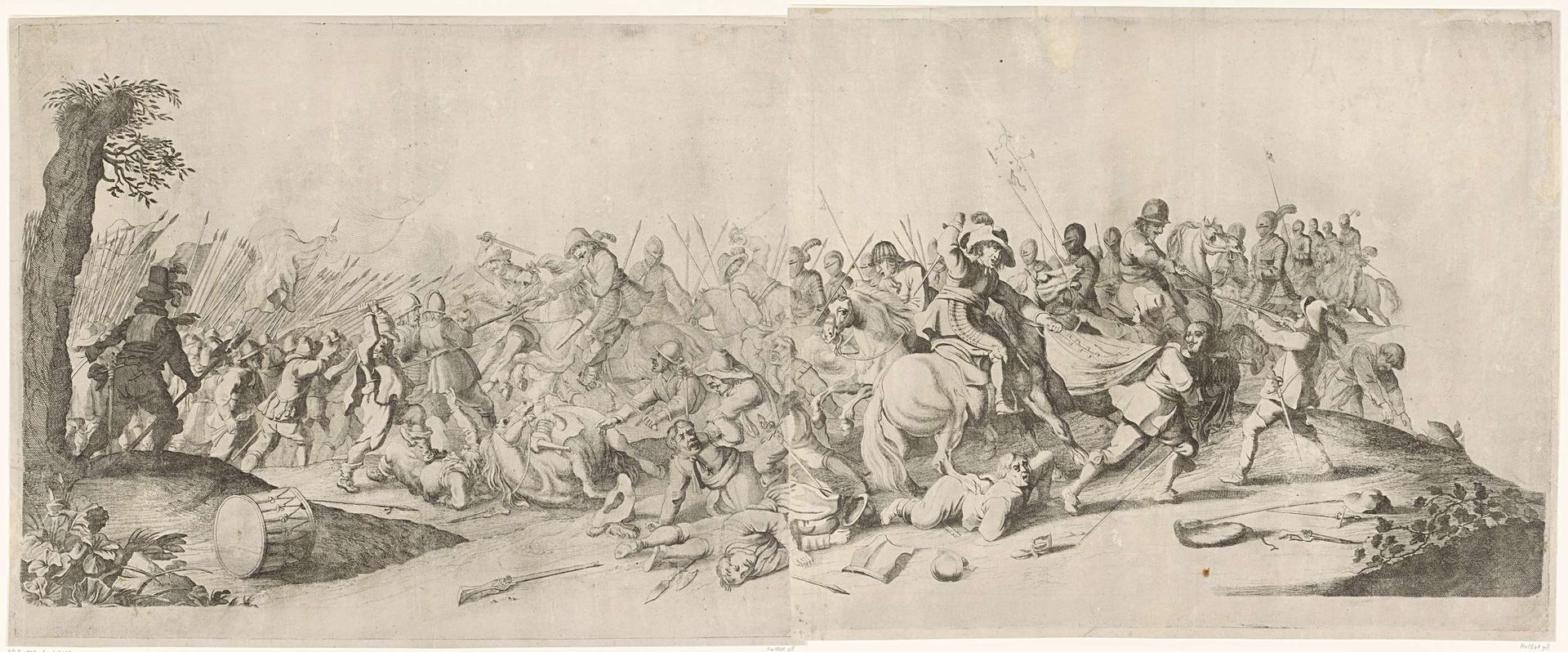
Gevecht tussen ruiters en voetvolk

Listen to curator's interpretation
Curatorial notes
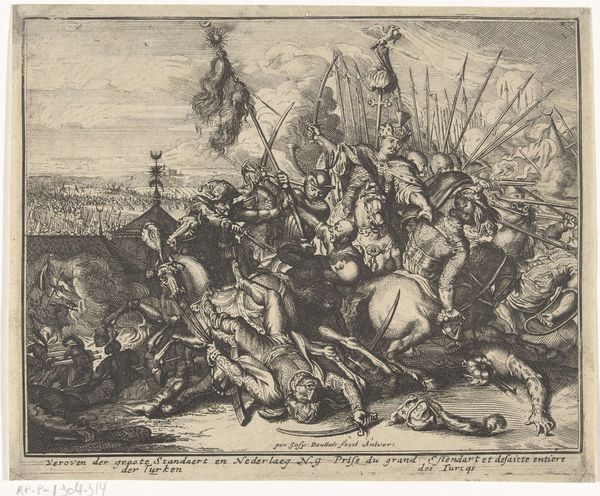
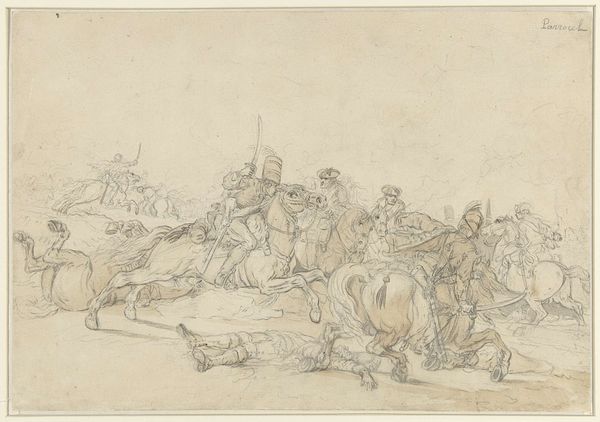
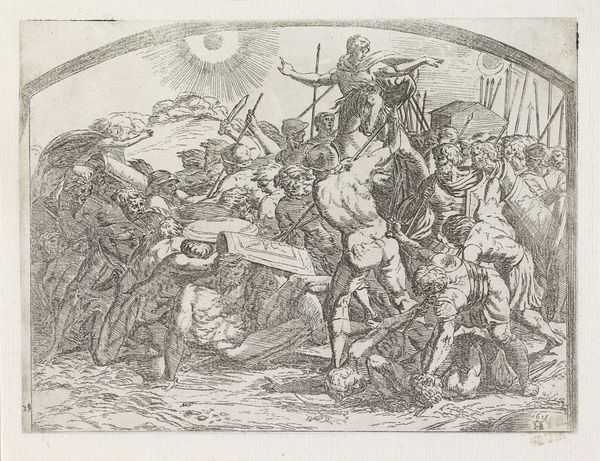
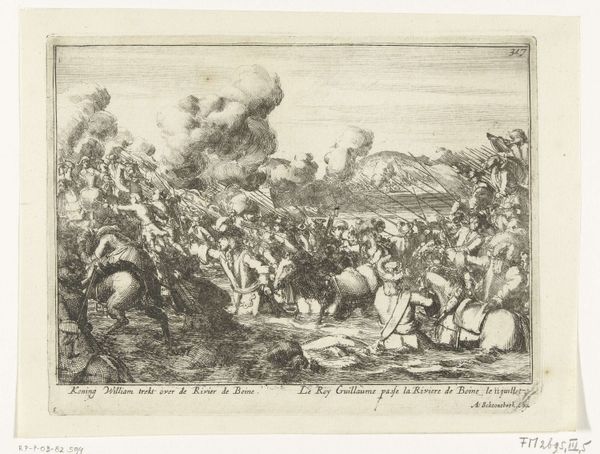
Willem Basse made this print of a battle scene sometime in the mid-17th century, using etching techniques. Basse would have covered a metal plate with a waxy, acid-resistant ground, and then scratched his design through this layer, exposing the metal. The plate was then immersed in acid, which bit into the exposed lines, creating grooves. Ink was applied to the plate, filling the etched lines, and the surface was wiped clean. Finally, paper was pressed against the plate, transferring the ink and creating the print. The linear quality of the etching really emphasizes the chaotic energy of combat, the way the figures are piled up, and the landscape is scarred by the conflict. It’s fascinating to see how a print like this – relatively quick to produce – could circulate widely, shaping public perceptions of war. The efficiency of printmaking, in contrast to the laborious nature of battle, offers a stark commentary on the era's conflicts.