About this artwork
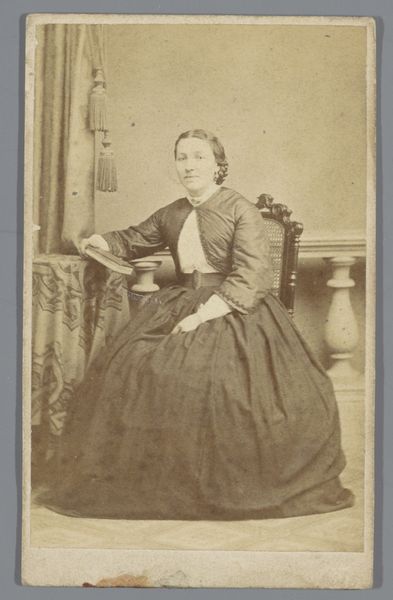
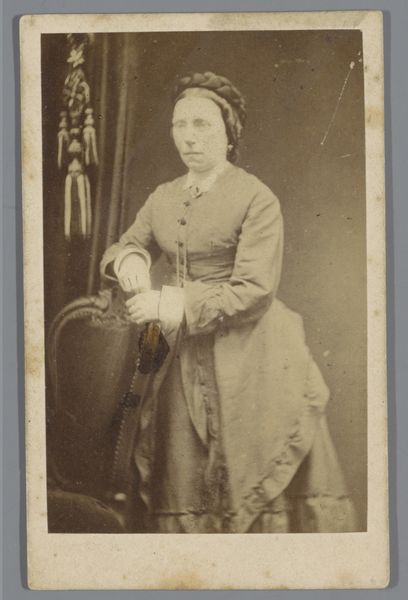
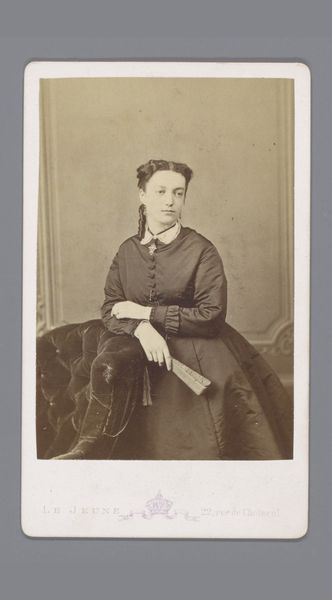
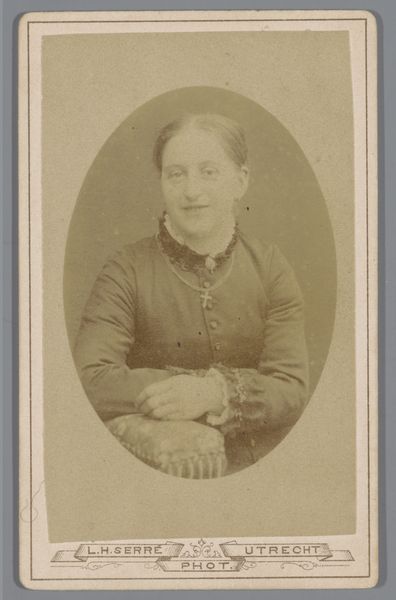
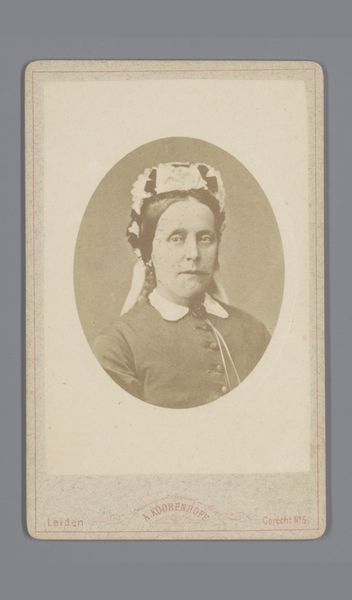
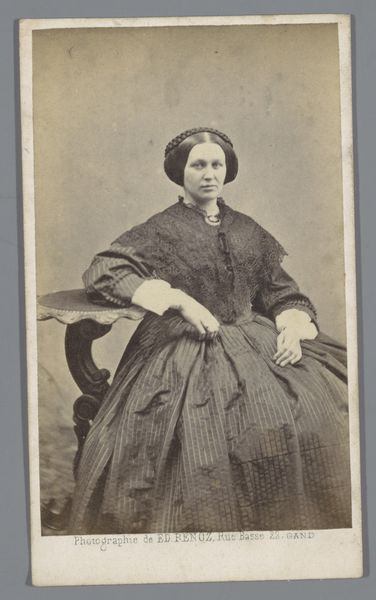
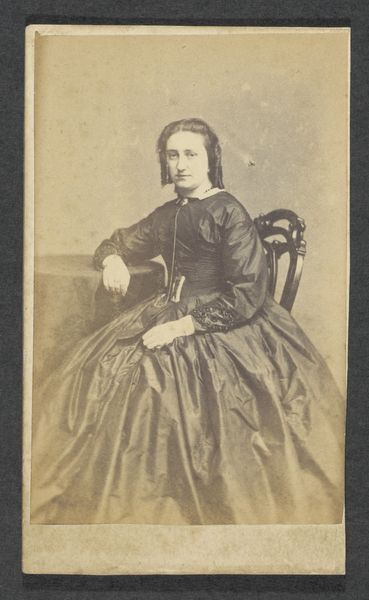
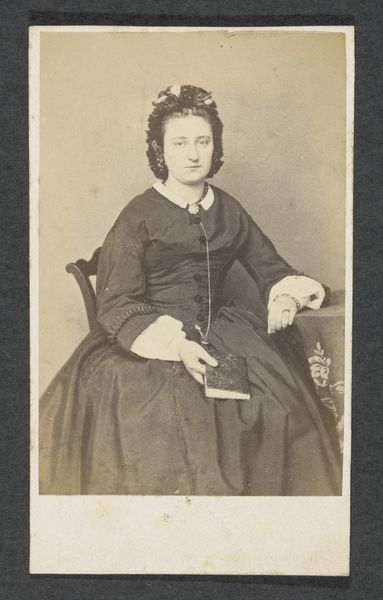
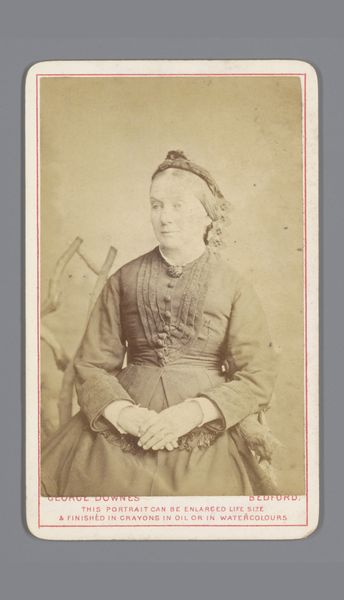
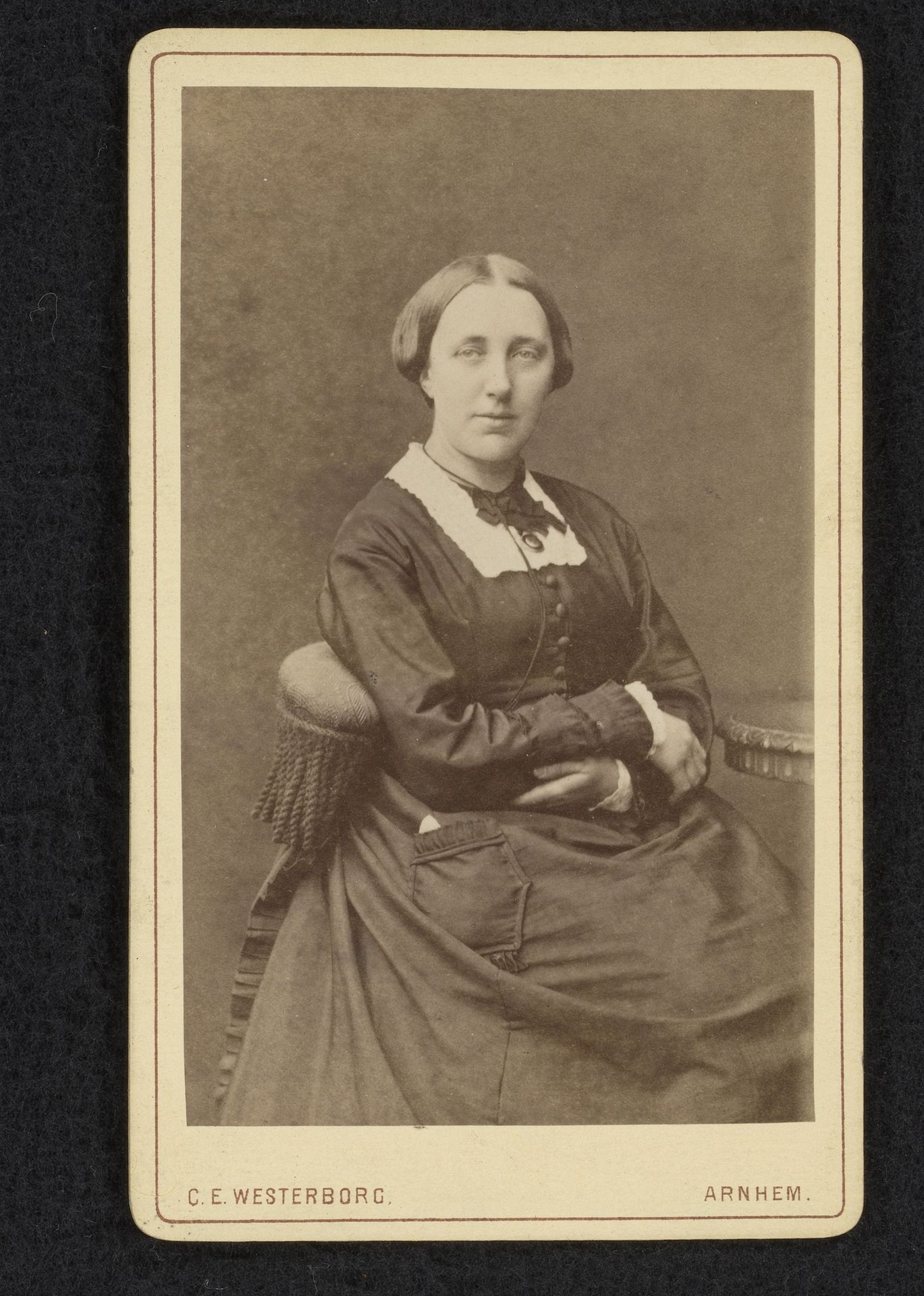
Carel Eduard Westerborg made this carte de visite, or visiting card, which features a photographic print of a woman in a seated position. The carte de visite emerged during a time when societal norms and class structure dictated specific gender roles. Here, the sitter's posture and dress reflect the expectations of women during this period. The photograph, however, offers a glimpse beyond mere representation. The woman's gaze, though composed, hints at a quiet strength, contrasting with the restrictive social norms that defined her existence. Her dress includes pockets. This practical addition suggests a narrative beyond the conventional depiction of women focused solely on domesticity and appearance. Ultimately, this image invites us to consider the complex interplay between identity, representation, and the lived experiences of women in the 19th century. It prompts us to see beyond the surface and delve into the nuances of gender, class, and individual expression.
Portret van een zittende vrouw
1861 - 1900

Carel Eduard Westerborg
1842 - 1916Location
RijksmuseumArtwork details
- Medium
- photography, gelatin-silver-print
- Dimensions
- height 105 mm, width 64 mm
- Location
- Rijksmuseum
- Copyright
- Rijks Museum: Open Domain
Tags
Comments
Share your thoughts
About this artwork
Carel Eduard Westerborg made this carte de visite, or visiting card, which features a photographic print of a woman in a seated position. The carte de visite emerged during a time when societal norms and class structure dictated specific gender roles. Here, the sitter's posture and dress reflect the expectations of women during this period. The photograph, however, offers a glimpse beyond mere representation. The woman's gaze, though composed, hints at a quiet strength, contrasting with the restrictive social norms that defined her existence. Her dress includes pockets. This practical addition suggests a narrative beyond the conventional depiction of women focused solely on domesticity and appearance. Ultimately, this image invites us to consider the complex interplay between identity, representation, and the lived experiences of women in the 19th century. It prompts us to see beyond the surface and delve into the nuances of gender, class, and individual expression.
Comments
Share your thoughts