print, acrylic-paint
op-art
animal
acrylic-paint
abstract
abstract pattern
geometric
geometric-abstraction
abstraction
line
Copyright: Modern Artists: Artvee
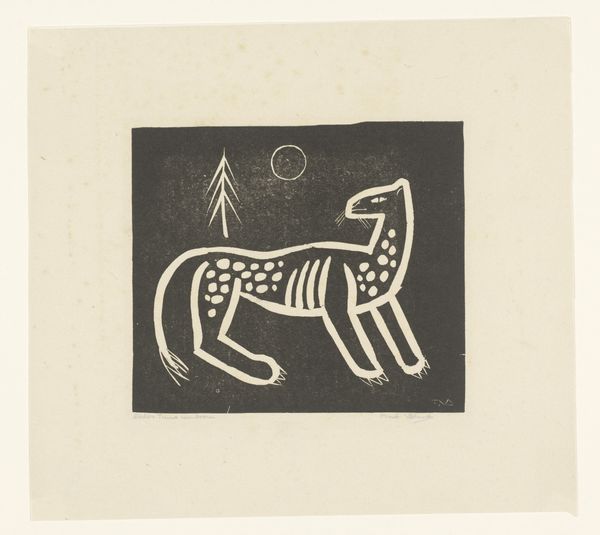
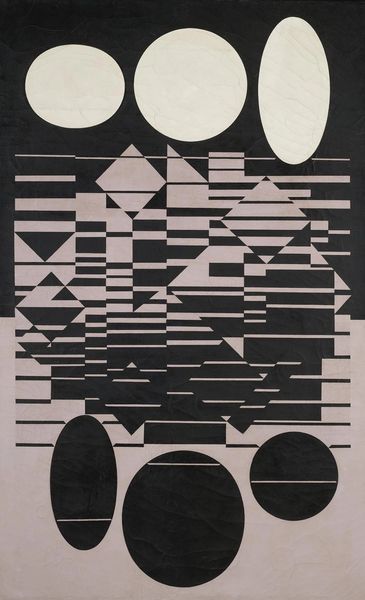
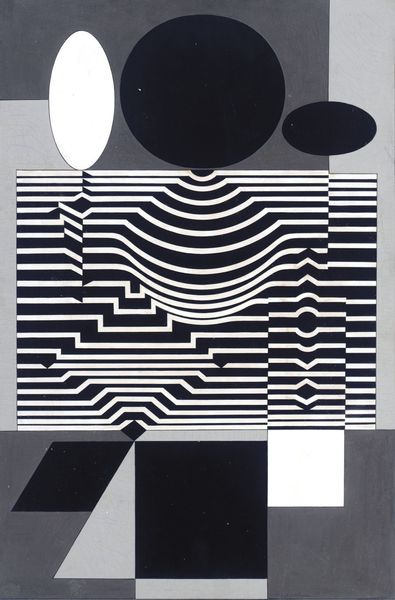
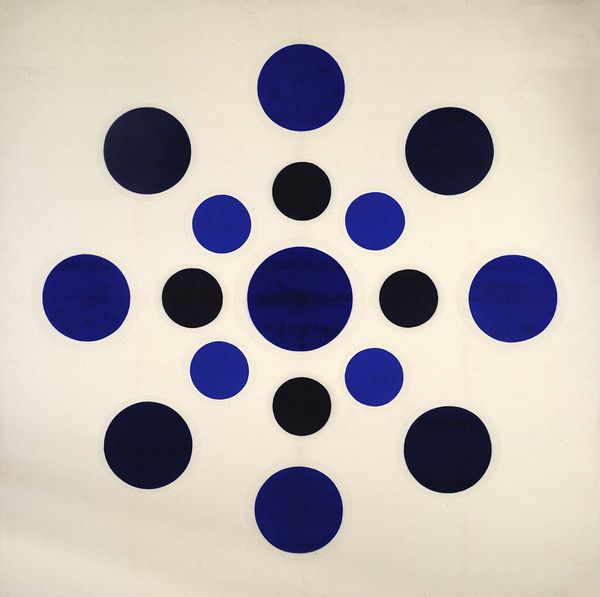
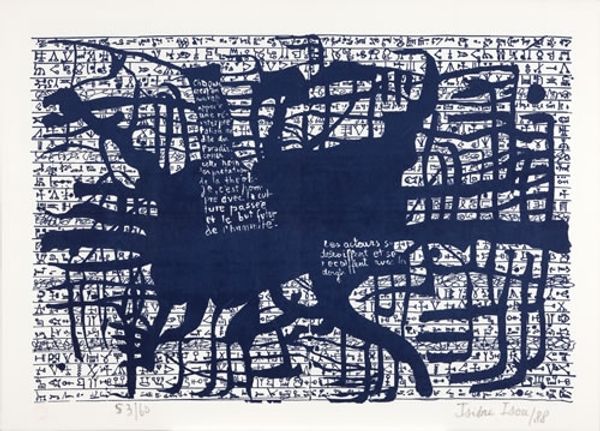
Curator: Here we have Victor Vasarely’s "The Leopard," created in 1978. It’s an acrylic print exhibiting his signature Op Art style. What are your first thoughts? Editor: Striking! The contrast is so graphic. A seemingly simple composition, but the distorted grid of spots creates this incredible illusion of depth and movement. It’s playful yet almost menacing. Curator: The animal, reduced to geometric forms, becomes almost like a vessel for cultural projections about wildness, nature and power. Notice the single, striking blue eye. Blue as a symbol of royalty, divine power? Editor: Precisely. It’s interesting how the spots function as both pattern and texture, denying any sense of a realistic, three-dimensional form. The flat, unmodulated color enhances the image's power as pure surface. Do you read the flattening as referencing image culture? Curator: Potentially. We might think about heraldry or bestiary traditions—symbols of status and identity rendered for a modern world. But I'd argue the leopard form taps into more primal cultural layers, predating heraldry even, think cave paintings of animals representing a conduit to power, virility or survival. Editor: That connects with the sense of contained energy it projects, doesn’t it? The simplification focuses attention on form and rhythm and really amplifies that kinetic potential, hinting at raw dynamism, a captured wildness. Curator: An almost talismanic image, capturing something timeless in what appears at first glance to be a very modern language of geometric abstraction. Editor: Absolutely. Deconstructing the animal while simultaneously heightening its symbolic charge, its power. Curator: Ultimately, Vasarely offers us not just an image, but a lens through which to view how we project meaning and value onto animal symbols. Editor: A potent intersection of the abstract and the deeply ingrained iconographic traditions around animal representation, wouldn't you say?
Comments
No comments
Be the first to comment and join the conversation on the ultimate creative platform.
 React
React Comment