
Curatorial notes
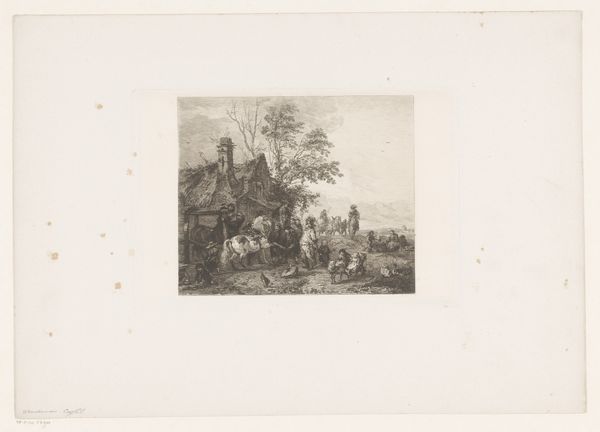
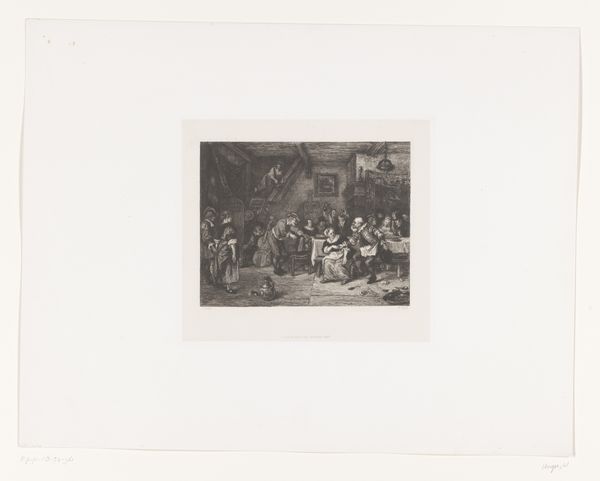
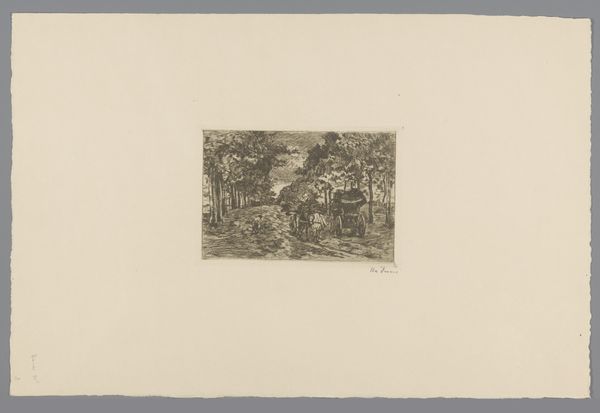
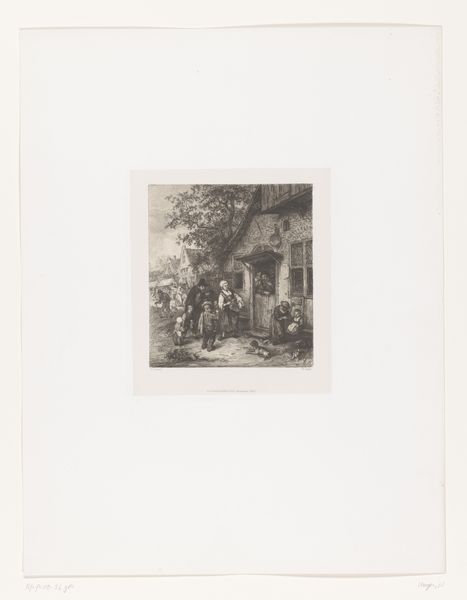
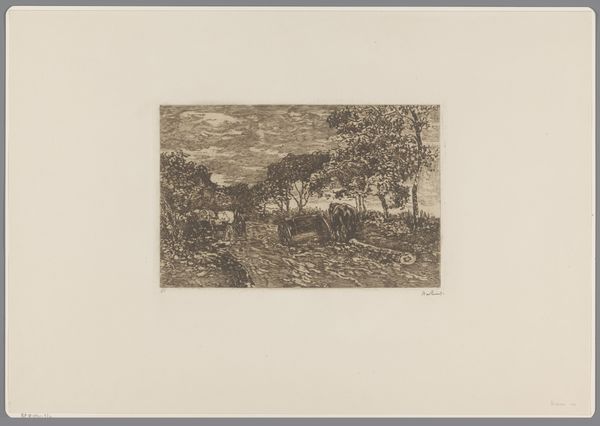
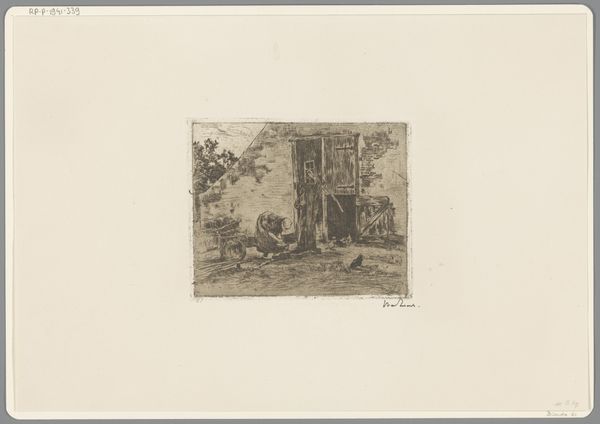
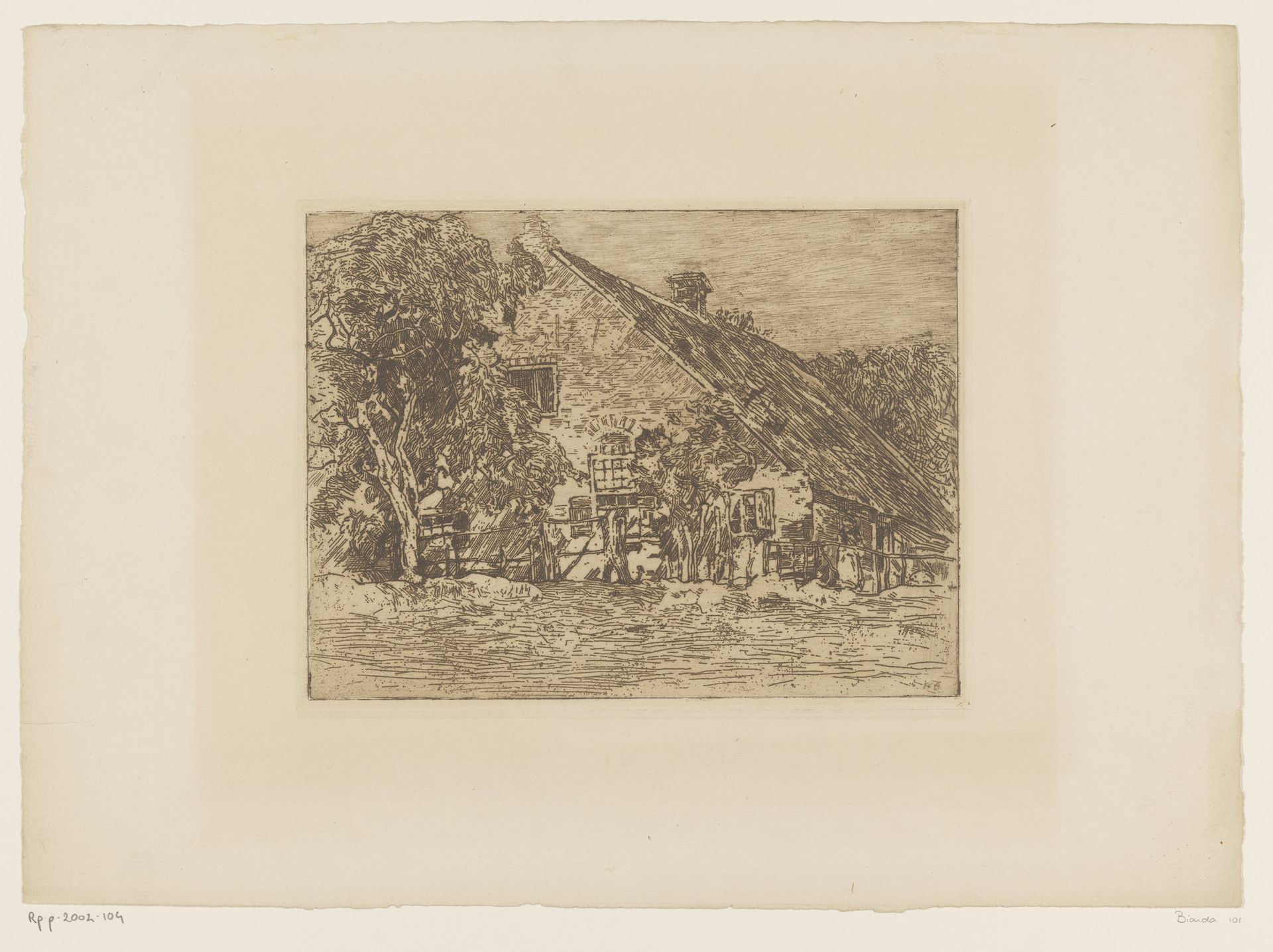
Editor: Here we have "Boerenwoning," an etching by Willem de Zwart, created around 1898-1899. It feels incredibly detailed for an etching, capturing the texture of the building and foliage. What can you tell us about it? Curator: Looking at this work, I immediately think about the labor involved in its creation and what it signifies. Consider the copper plate used for the etching: its source, the process of creating the image in reverse through painstaking work with acid. And look at the subject: not a grand estate, but a vernacular structure. How does this choice of subject matter – a simple farmhouse – democratize art, pulling away from depictions of the wealthy elite? Editor: That’s a perspective I hadn't considered. How does the technique itself reflect those social implications? Curator: Well, etching, unlike painting, allowed for multiple reproductions. Think about the access this afforded. Was it making art more readily available to a wider audience, challenging established power structures that tied art to the wealthy and elite? Or was it more about finding a new market among a rising middle class? What do you think about the notion of printmaking and its possible relation to modern industrial processes and accessibility in that era? Editor: It’s fascinating to consider the parallel between industrial production and the replication allowed by etching. It does open up so much to discuss: accessibility, changing class structures... Thanks for widening my perspective! Curator: And I appreciate your observations about the artwork's detail. Thinking about the means of production adds so much depth.