About this artwork
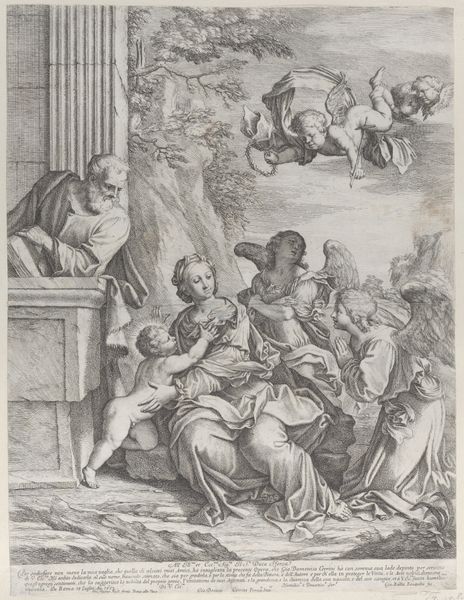
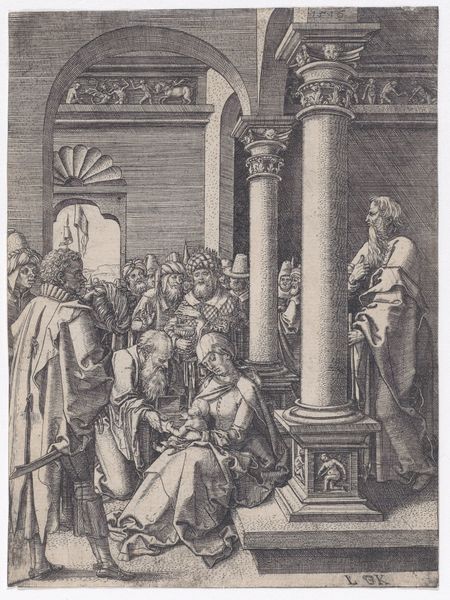
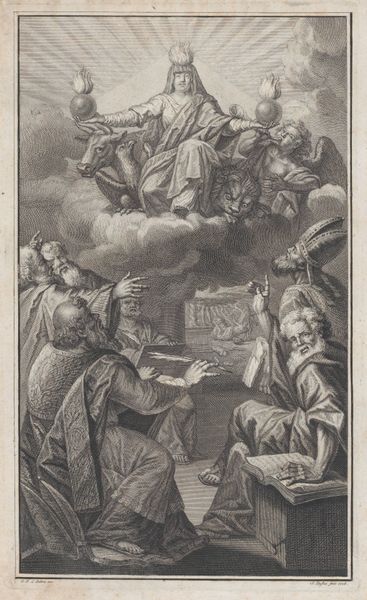
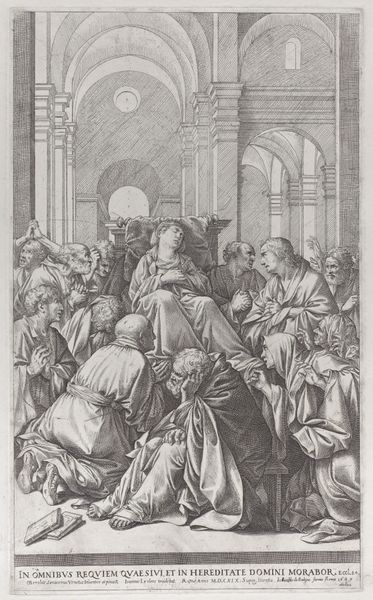
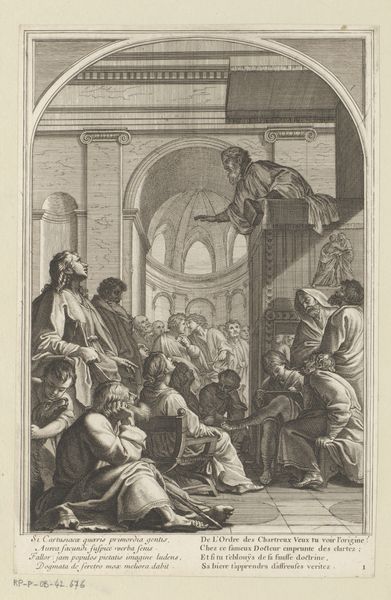
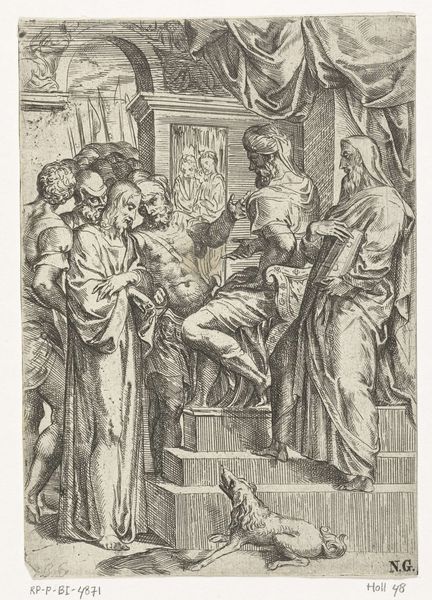
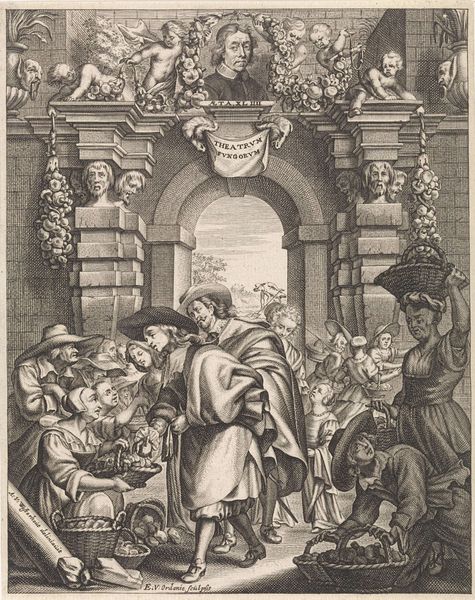
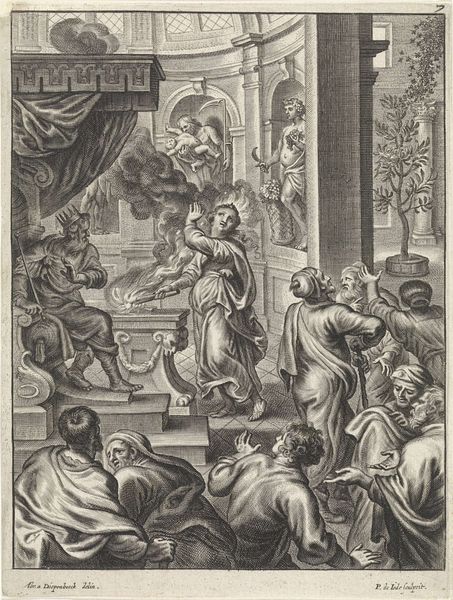
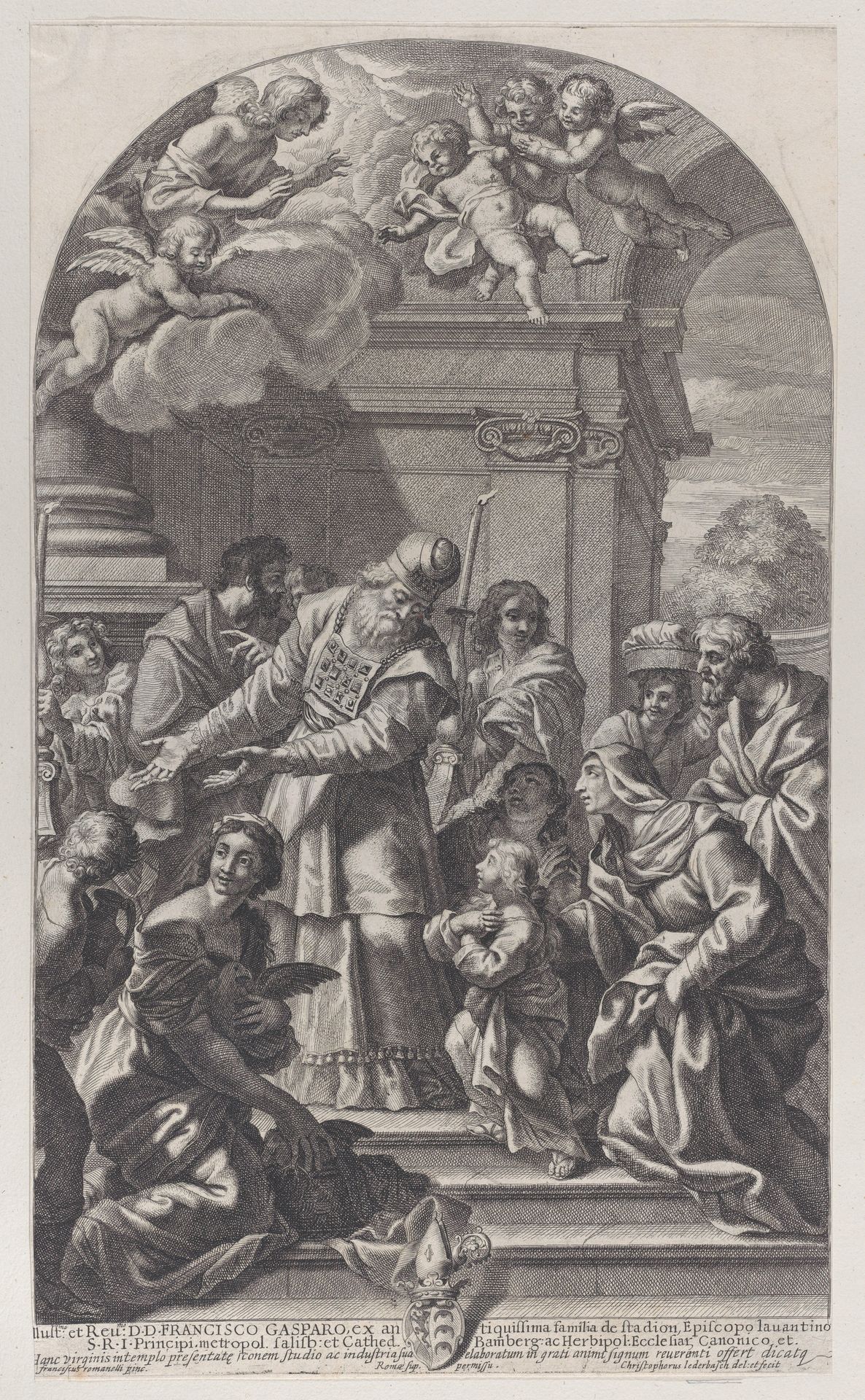
Christoph Lederwasch created this engraving, "The Presentation of the Virgin in the Temple," sometime between 1670 and 1705. The work depicts a young Mary being presented to the temple, a popular subject in Baroque art that signifies devotion and religious instruction. Made in the Holy Roman Empire, this print reflects the Catholic Church's continued influence in the region. Lederwasch's choice of subject matter and his technical skill speak to the powerful patronage system of the era. The detailed depiction of the temple, the clothing of the figures, and the expressive faces all contribute to the image's meaning. It’s worth considering how the institutional church cultivated artists, and what that meant for artistic expression at the time. To fully understand this work, you might investigate the culture of the Holy Roman Empire, especially the religious environment. Archival records of Lederwasch's patrons might also reveal the purpose behind the creation and dissemination of prints like these. By studying the social and institutional context, we can better grasp its significance.
The presentation of the Virgin in the Temple
1670 - 1680

Christoph Lederwasch
1651 - 1705
The Metropolitan Museum of Art
Metropolitan Museum of Art, New York, NYArtwork details
- Medium
- drawing, print, engraving
- Dimensions
- Sheet (Trimmed): 18 7/16 × 10 7/8 in. (46.9 × 27.6 cm)
- Location
- Metropolitan Museum of Art, New York, NY
- Copyright
- Public Domain
Tags
drawing
narrative-art
baroque
figuration
history-painting
engraving
Comments
Be the first to share your thoughts about this work.
About this artwork
Christoph Lederwasch created this engraving, "The Presentation of the Virgin in the Temple," sometime between 1670 and 1705. The work depicts a young Mary being presented to the temple, a popular subject in Baroque art that signifies devotion and religious instruction. Made in the Holy Roman Empire, this print reflects the Catholic Church's continued influence in the region. Lederwasch's choice of subject matter and his technical skill speak to the powerful patronage system of the era. The detailed depiction of the temple, the clothing of the figures, and the expressive faces all contribute to the image's meaning. It’s worth considering how the institutional church cultivated artists, and what that meant for artistic expression at the time. To fully understand this work, you might investigate the culture of the Holy Roman Empire, especially the religious environment. Archival records of Lederwasch's patrons might also reveal the purpose behind the creation and dissemination of prints like these. By studying the social and institutional context, we can better grasp its significance.
Comments
Be the first to share your thoughts about this work.