print, engraving
#
neoclacissism
# print
#
15_18th-century
#
genre-painting
#
history-painting
#
engraving
Dimensions: height 210 mm, width 148 mm
Copyright: Rijks Museum: Open Domain
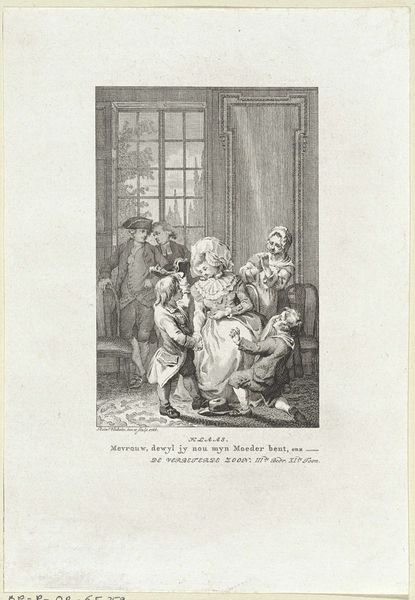
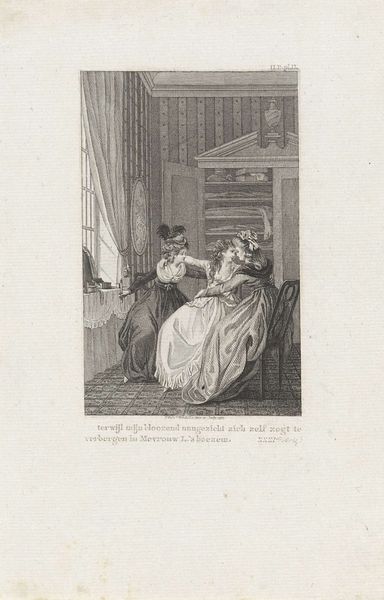
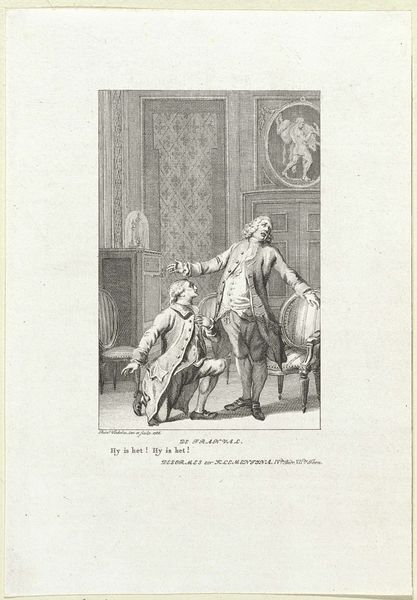
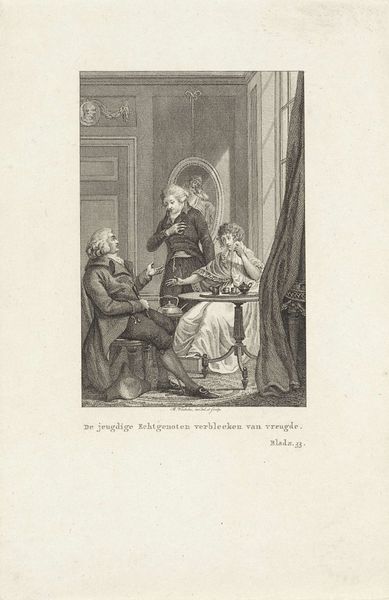
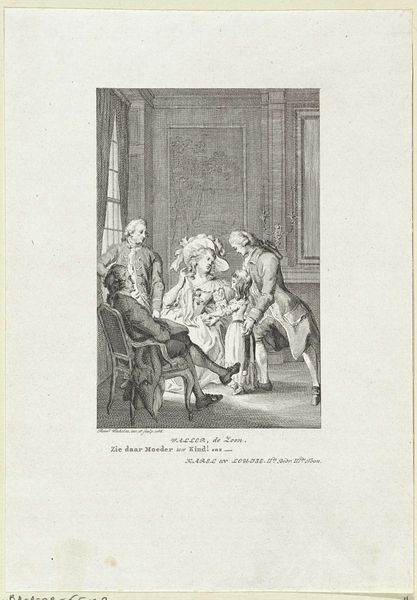
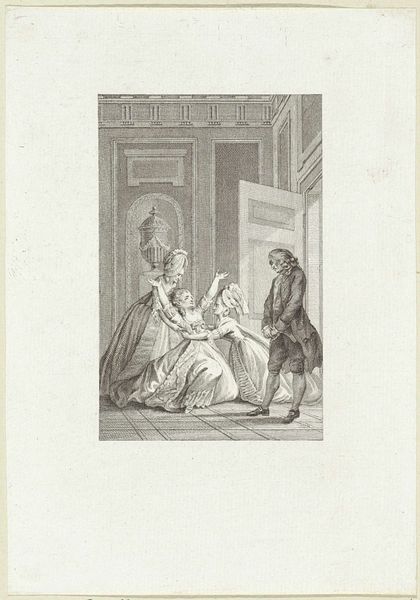
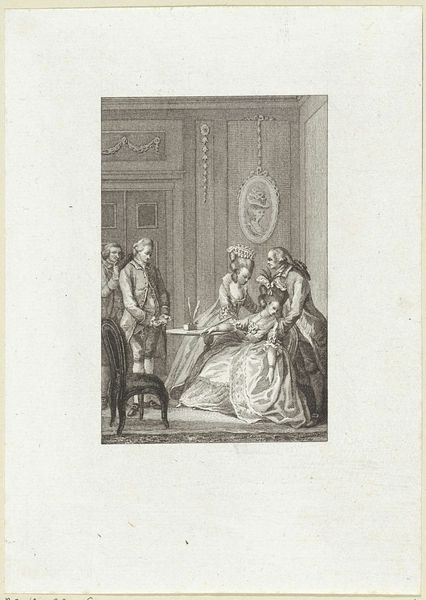
This engraving by Reinier Vinkeles, made sometime before his death in 1816, depicts a scene of supplication, rich with the symbolism of power and humility. A man and woman are kneeling at the feet of a gentleman, an act laden with historical weight. Kneeling, a gesture found across cultures and epochs, signifies submission, respect, or repentance. Think of medieval depictions of knights kneeling before their lords, or biblical scenes of worshippers prostrating before deities. This posture transcends mere physical action; it embodies a psychological and emotional surrender. The act of kneeling evokes primal, subconscious associations. It can be linked to vulnerability and a desire for protection, echoing the power dynamics deeply ingrained in our collective memory. Even today, we see echoes of this gesture in various rituals and social interactions, revealing its enduring presence in the human psyche. This visual language speaks to our shared, deeply rooted understanding of authority and submission, engaging viewers on a profound, often unspoken level. This symbolic posture shows the cyclical nature of human expression, how gestures evolve yet retain echoes of their past.
Comments
No comments
Be the first to comment and join the conversation on the ultimate creative platform.
 Collect
 React
React Comment
More like this