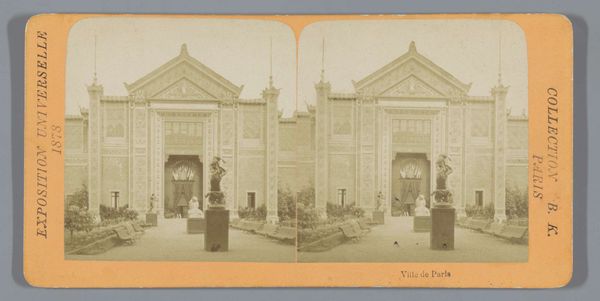
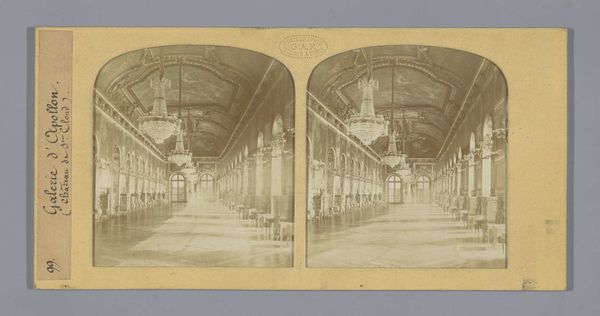
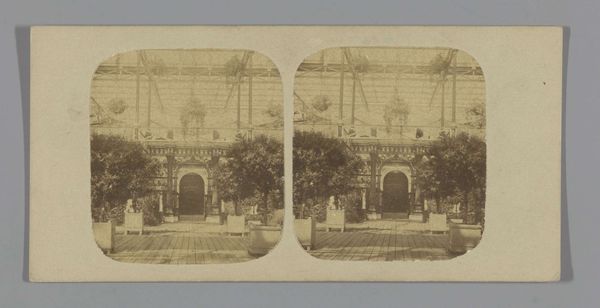
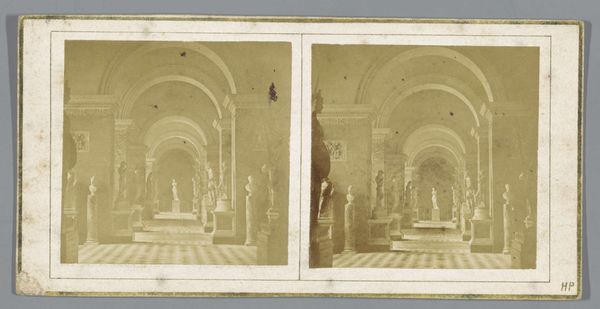
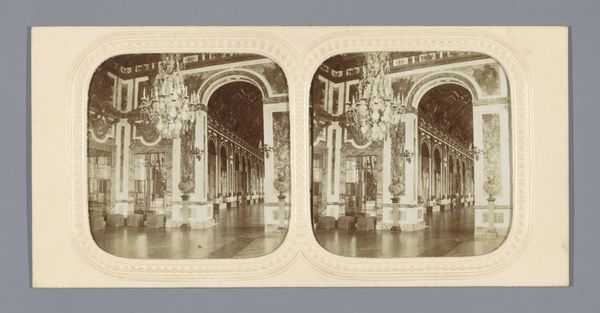
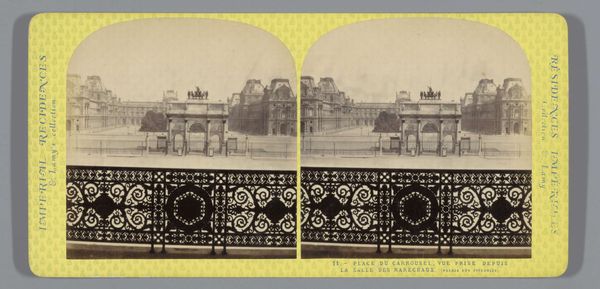
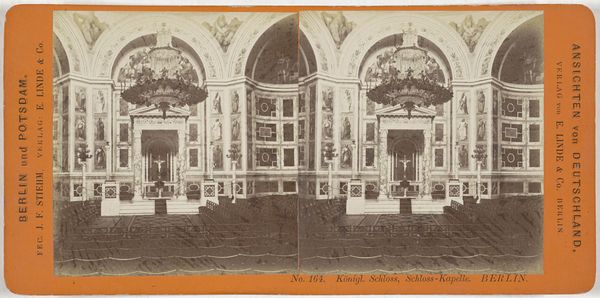
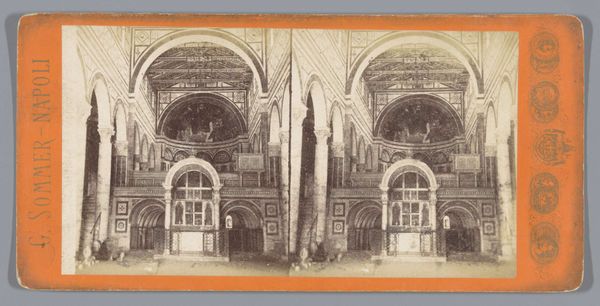
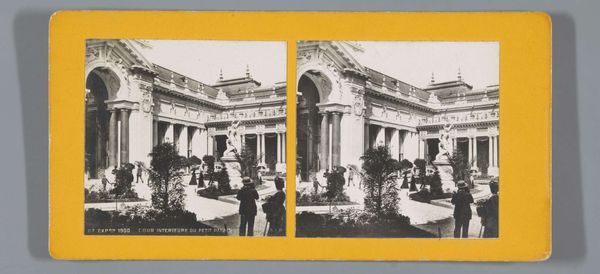
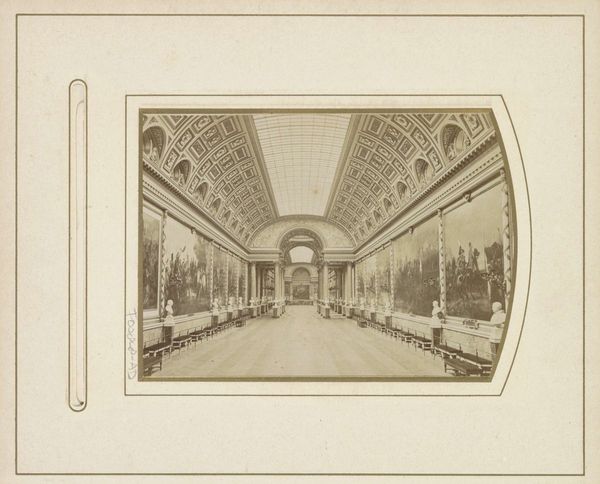
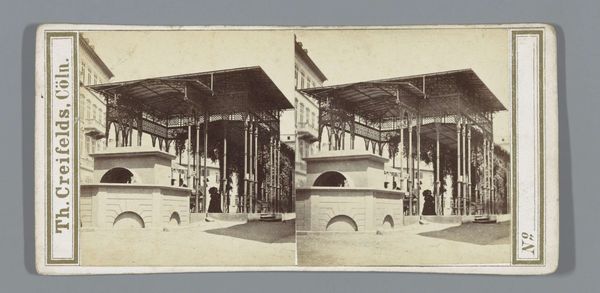
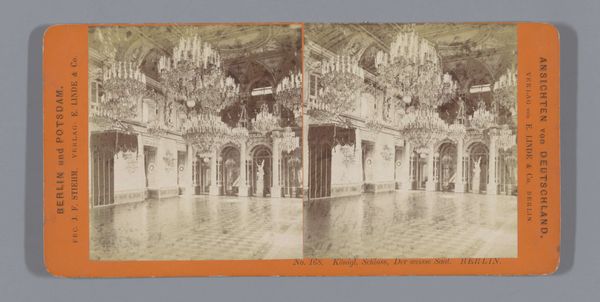
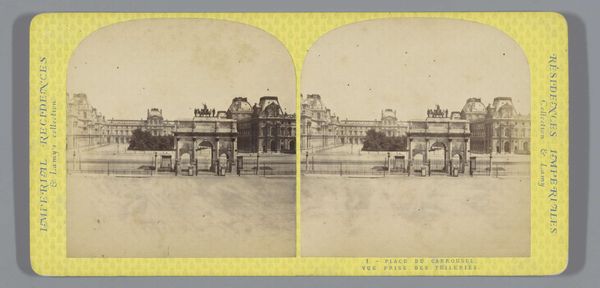
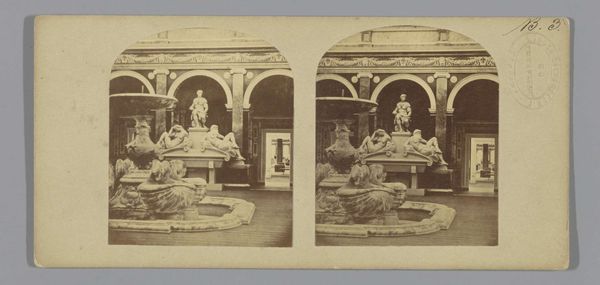
Palais du Champ de Mars tijdens de Wereldtentoonstelling van 1878 1878
0:00
0:00

adolpheblock
Rijksmuseum
Dimensions: height 88 mm, width 176 mm
Copyright: Rijks Museum: Open Domain
Editor: Here we have Adolphe Block's "Palais du Champ de Mars tijdens de Wereldtentoonstelling van 1878," an albumen print from 1878 housed at the Rijksmuseum. I'm struck by the grand architecture; it evokes a sense of immense ambition, even though it's a rather faded image. How do you interpret this work? Curator: What resonates most profoundly for me is the structure itself, not merely as a building, but as a symbol. Notice the colossal arches and the orderly placement of the statues. Do they perhaps suggest a striving towards enlightenment, mirroring the era’s optimistic embrace of progress through science and industry? Editor: Yes, the arches especially do remind me of Neoclassical architecture, aiming for this ideal form. Curator: Precisely! Consider then, how such architectural motifs functioned. They weren't simply aesthetic choices but powerful signifiers. The Palais, designed for the Exposition Universelle, acted as a container for collective dreams, showcasing innovation and advancement. Each nation represented hoped to reflect glory on itself through progress on display within the grounds of the Palais. Editor: So, it's almost like a visual language, where architectural elements communicate the values of the time. Curator: Exactly. It is also intriguing to consider that we see no thronging crowds, as must have been typical. That quiet allows us to imagine not the momentary event, but the long-term aspirations it evokes, reflecting back our present hopes for the future of technology and civilization. Editor: I hadn't thought about the absence of people contributing to that feeling. Thanks! It’s amazing to think about all the layers of meaning embedded in a single image. Curator: Indeed. Reflecting on symbols enables us to unpack layers of history.
Comments
No comments
Be the first to comment and join the conversation on the ultimate creative platform.
 Collect
 React
React Comment
More like this