About this artwork
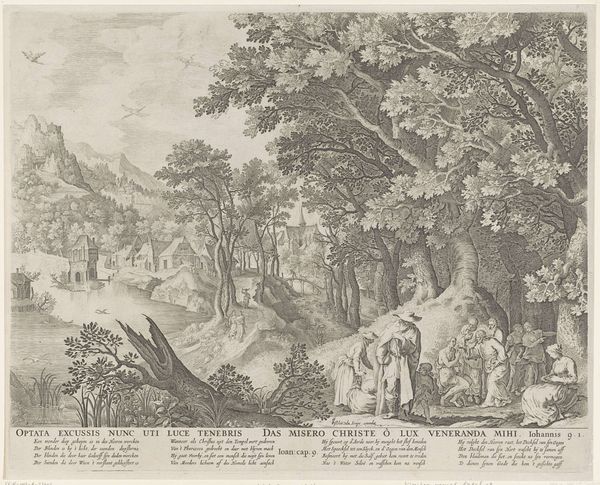
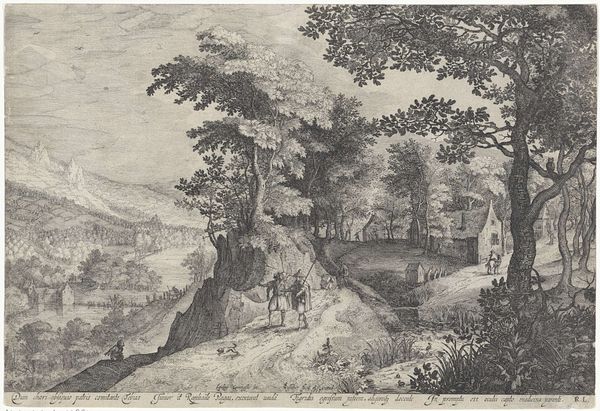
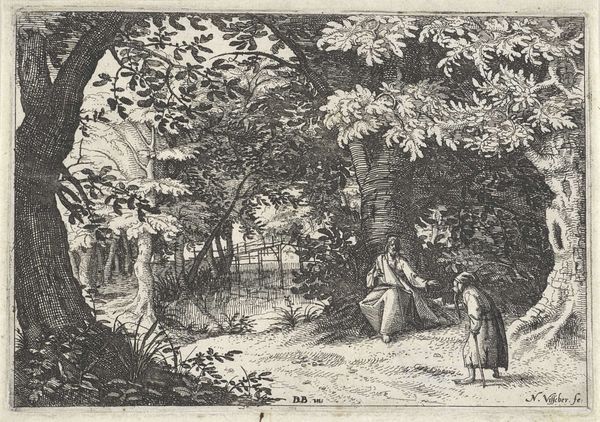
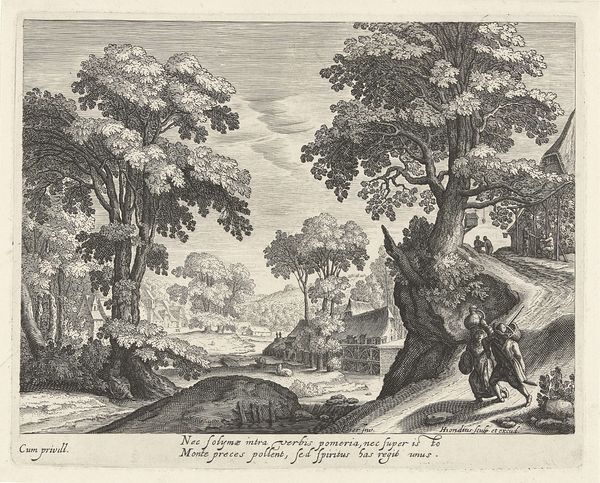
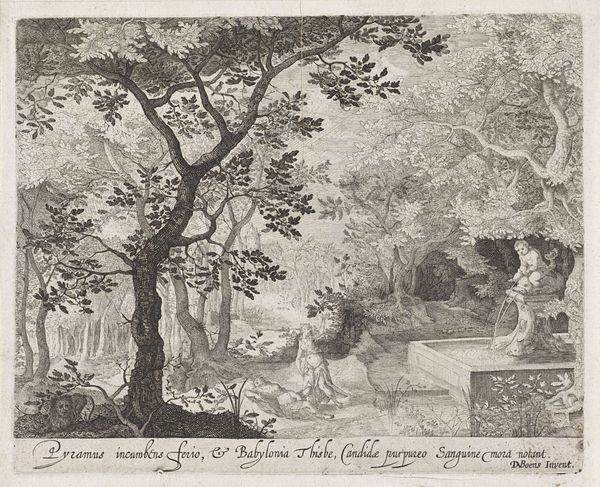
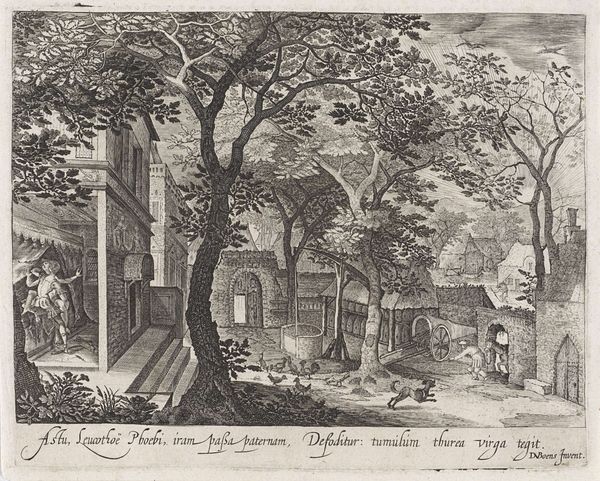
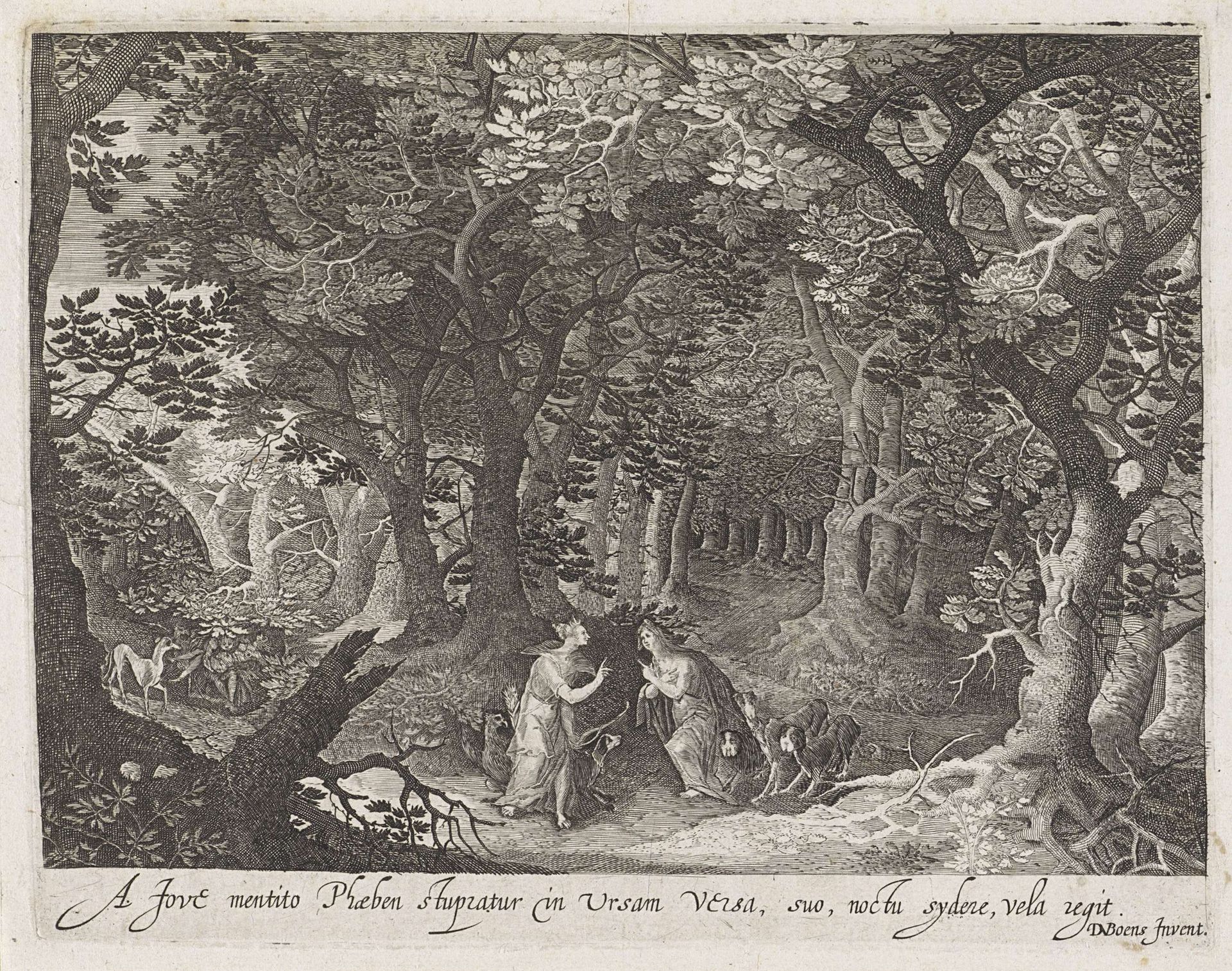
Editor: So, this is "Jupiter and Callisto," a 17th-century engraving, artist unknown, from the Rijksmuseum collection. It’s incredibly detailed; almost oppressively so. What first strikes me is the dramatic contrast between the light figures in the dark forest, hinting at something secretive… How do you interpret this work? Curator: It is a striking contrast, isn't it? This engraving really taps into the symbolic language of classical mythology. Notice how the density of the forest not only obscures but perhaps *protects* a concealed drama? Do you recognize any specific iconography that stands out to you in that respect? Editor: Well, obviously, the title suggests we're seeing Jupiter… maybe in disguise, given the phrase *A Jove mentito Pheben*, "Phoebus lies to Jove." Then there's Callisto, of course, and...are those deer meant to be symbolic too? Curator: The deer can represent innocence or the hunt, playing on the vulnerability of Callisto, who, in Ovid's Metamorphoses, was a huntress sworn to chastity. This print isn't merely illustrating a story; it's conjuring a narrative charged with power, transformation, and perhaps even a veiled warning about deceptive appearances. The forest, acting as both witness and accomplice, speaks volumes. Editor: So, the setting isn't just scenic; it actively participates in the unfolding drama. It's almost like the forest is complicit in Jupiter's disguise, keeping the secret alongside him. Curator: Precisely. Engravings such as this one were not mere decorations but vehicles of moral and mythological contemplation. They invited viewers to interpret a narrative with visual literacy attuned to symbolic weight. What do you take away now, considering all of this? Editor: I'm now considering not only what the figures *are*, but what they *represent.* This engraving invites deeper inspection that reveals a rich symbolic language about vulnerability and deception, as well as power, hidden behind a beautiful surface. Curator: Indeed, it reminds us that images, like myths, are layers of meaning, ever ready to speak to us across time.

Artwork details
- Medium
- print, engraving
- Dimensions
- height 159 mm, width 206 mm
- Location
- Rijksmuseum
- Copyright
- Rijks Museum: Open Domain
Tags
Comments
Share your thoughts
About this artwork
Editor: So, this is "Jupiter and Callisto," a 17th-century engraving, artist unknown, from the Rijksmuseum collection. It’s incredibly detailed; almost oppressively so. What first strikes me is the dramatic contrast between the light figures in the dark forest, hinting at something secretive… How do you interpret this work? Curator: It is a striking contrast, isn't it? This engraving really taps into the symbolic language of classical mythology. Notice how the density of the forest not only obscures but perhaps *protects* a concealed drama? Do you recognize any specific iconography that stands out to you in that respect? Editor: Well, obviously, the title suggests we're seeing Jupiter… maybe in disguise, given the phrase *A Jove mentito Pheben*, "Phoebus lies to Jove." Then there's Callisto, of course, and...are those deer meant to be symbolic too? Curator: The deer can represent innocence or the hunt, playing on the vulnerability of Callisto, who, in Ovid's Metamorphoses, was a huntress sworn to chastity. This print isn't merely illustrating a story; it's conjuring a narrative charged with power, transformation, and perhaps even a veiled warning about deceptive appearances. The forest, acting as both witness and accomplice, speaks volumes. Editor: So, the setting isn't just scenic; it actively participates in the unfolding drama. It's almost like the forest is complicit in Jupiter's disguise, keeping the secret alongside him. Curator: Precisely. Engravings such as this one were not mere decorations but vehicles of moral and mythological contemplation. They invited viewers to interpret a narrative with visual literacy attuned to symbolic weight. What do you take away now, considering all of this? Editor: I'm now considering not only what the figures *are*, but what they *represent.* This engraving invites deeper inspection that reveals a rich symbolic language about vulnerability and deception, as well as power, hidden behind a beautiful surface. Curator: Indeed, it reminds us that images, like myths, are layers of meaning, ever ready to speak to us across time.
Comments
Share your thoughts