About this artwork
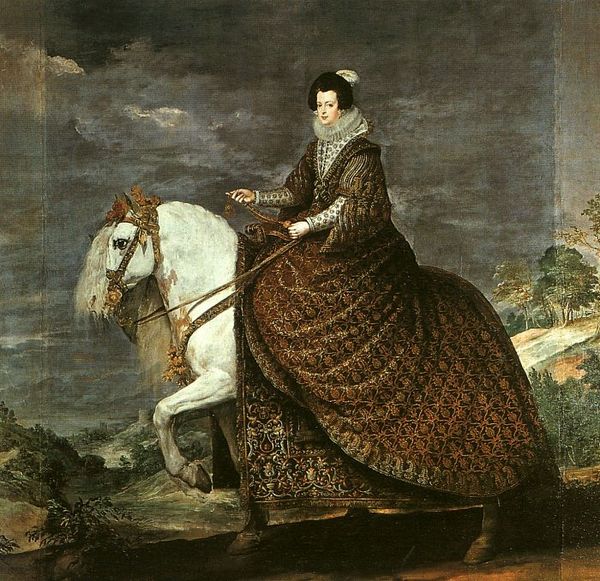
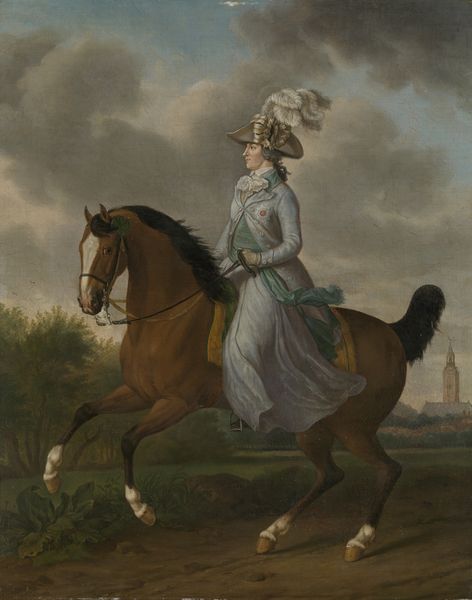
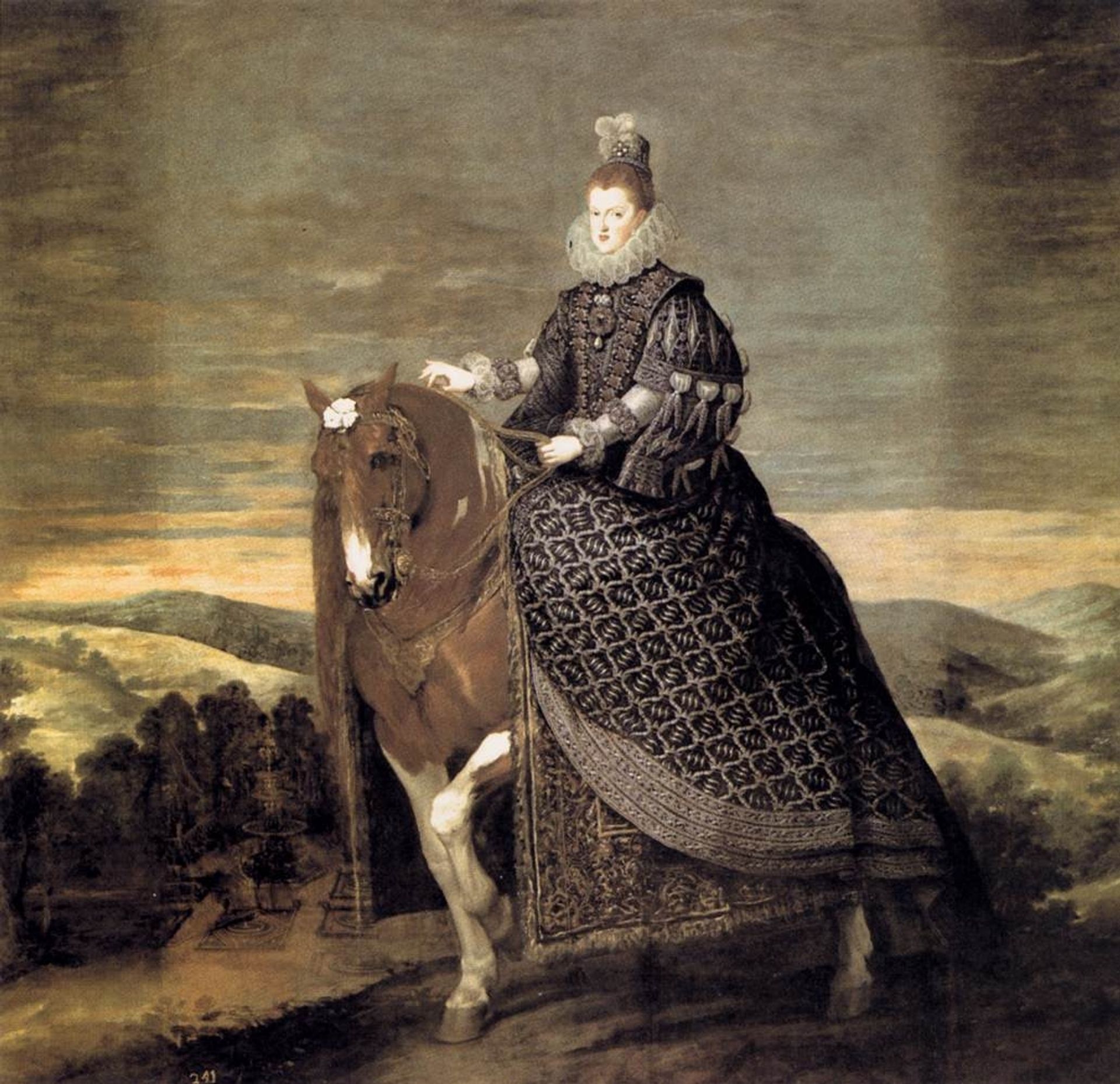
Diego Velázquez painted this equestrian portrait of Queen Margaret of Austria, which now hangs in the Museo del Prado. The portrait presents a study in contrasts, from the Queen’s pale, almost ethereal face, framed by the stiff white ruff and delicate headdress, to the rich, dark patterns of her voluminous dress, and the more earthy tones of the horse and landscape. Velázquez deploys a limited palette, relying on subtle gradations of tone to create depth and texture. Note how the Queen’s attire cascades down the side of the horse, almost merging with the landscape itself. This serves to emphasise the Queen's status, linking her to the land and people over which she reigns. Velázquez destabilizes the traditional equestrian portrait, where the horse and rider are typically symbols of power. Consider how this portrait invites us to reflect on the intersections of power, representation, and identity in the context of the Spanish court. The contrast between the detailed rendering of the dress and the more fluid treatment of the landscape destabilizes any fixed interpretation, encouraging continuous re-evaluation.
Portrait of Queen Margaret of Austria
1635

Diego Velázquez
1599 - 1660Location
Museo del Prado, Madrid, SpainArtwork details
- Medium
- painting, oil-paint
- Dimensions
- 297 x 309 cm
- Location
- Museo del Prado, Madrid, Spain
- Copyright
- Public domain
Tags
Comments
Share your thoughts
About this artwork
Diego Velázquez painted this equestrian portrait of Queen Margaret of Austria, which now hangs in the Museo del Prado. The portrait presents a study in contrasts, from the Queen’s pale, almost ethereal face, framed by the stiff white ruff and delicate headdress, to the rich, dark patterns of her voluminous dress, and the more earthy tones of the horse and landscape. Velázquez deploys a limited palette, relying on subtle gradations of tone to create depth and texture. Note how the Queen’s attire cascades down the side of the horse, almost merging with the landscape itself. This serves to emphasise the Queen's status, linking her to the land and people over which she reigns. Velázquez destabilizes the traditional equestrian portrait, where the horse and rider are typically symbols of power. Consider how this portrait invites us to reflect on the intersections of power, representation, and identity in the context of the Spanish court. The contrast between the detailed rendering of the dress and the more fluid treatment of the landscape destabilizes any fixed interpretation, encouraging continuous re-evaluation.
Comments
Share your thoughts