textile
studio photography
advertising product shot
product studio photography
product shot
lifestyle product photography
textile
product design photgrpaphy
metallic object render
graphic design product photography
product photography
product render
indigenous-americas
Dimensions: 3 1/2 x 6 1/4 x 10 in. (8.89 x 15.88 x 25.4 cm) (each)
Copyright: No Known Copyright
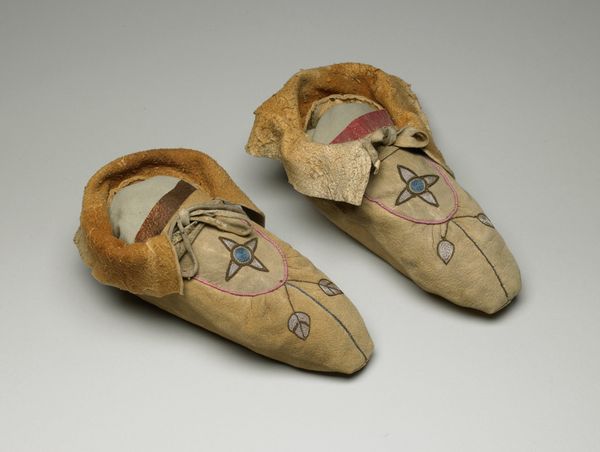
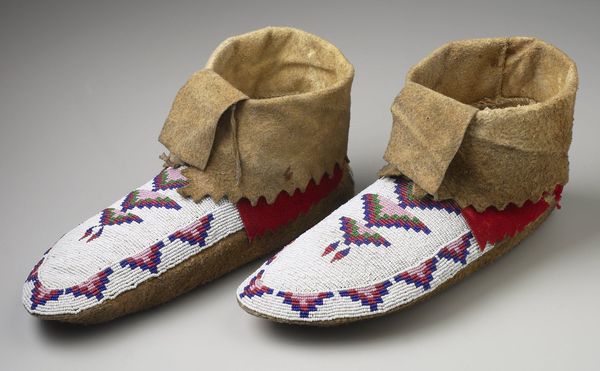
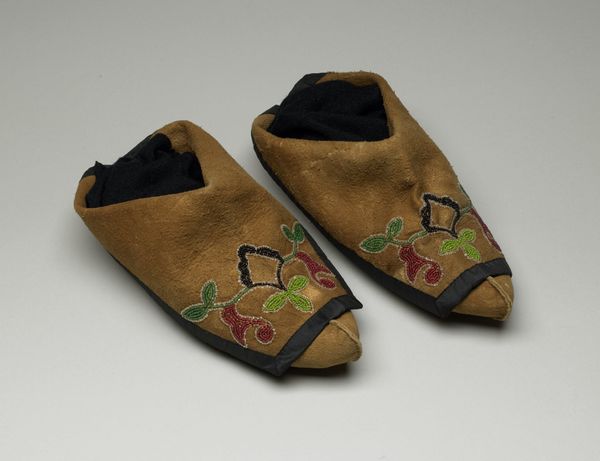
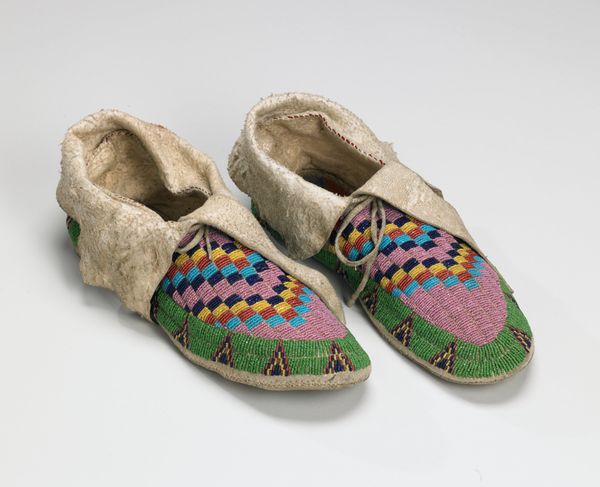
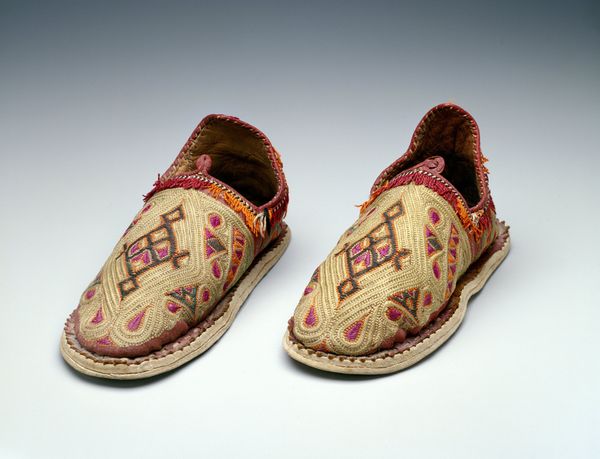
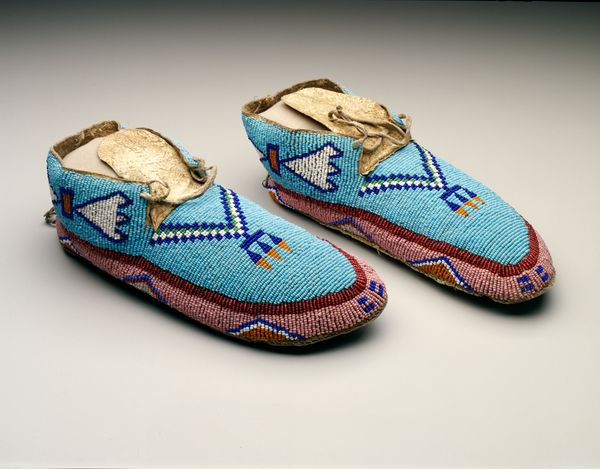
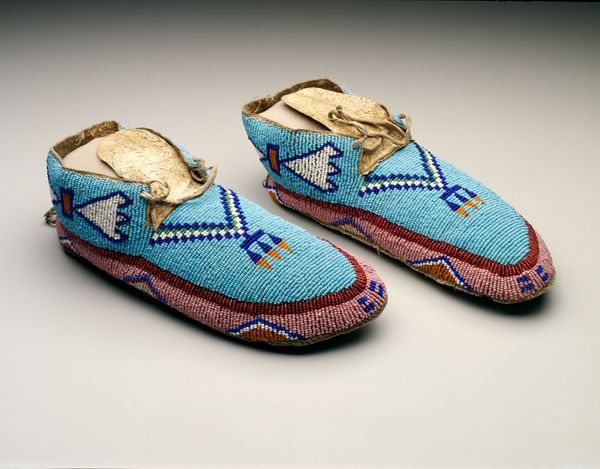
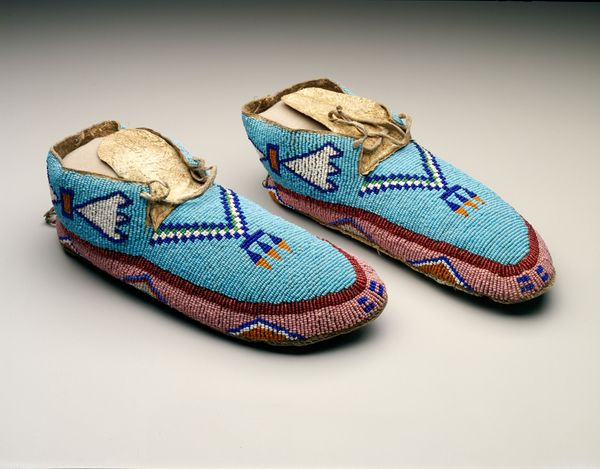
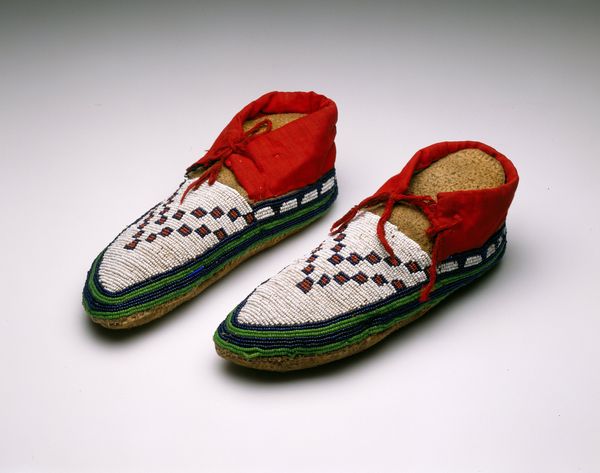
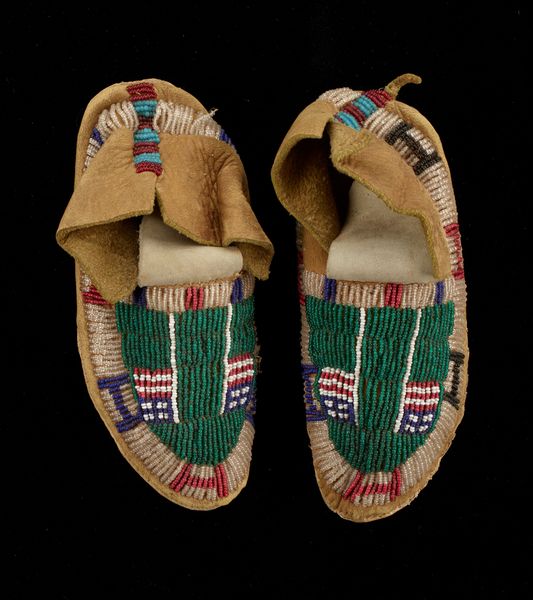
Editor: We’re looking at a pair of moccasins, created around the 20th century, displayed at the Minneapolis Institute of Art. They look incredibly soft and detailed! What's striking is the contrast between the simple form and the intricate beadwork. What story do you see these moccasins telling us? Curator: These moccasins are more than just footwear; they're powerful cultural signifiers. Think about the hands that crafted them, likely women, within indigenous communities where such skills were traditionally passed down. How do you think their function transcends the practical, entering the realm of cultural preservation and even resistance? Editor: Resistance? How so? Curator: Consider the history of indigenous populations. Forcing assimilation was attempted in myriad ways. By maintaining traditional crafts like beadwork, and creating objects like these moccasins, these communities actively resisted cultural erasure. What do you notice about the design, perhaps colors or patterns that might further signify cultural identity? Editor: The colors are vibrant, pinks, purples… It feels very personal. Like the wearer had a real say in what they look like, despite the historical context. Curator: Exactly! The visual elements reflect identity, community bonds, and narratives untold. Also consider how museums play a role: do they empower Indigenous voices or perpetuate historical imbalances in the narratives presented? Editor: It's a lot to consider. I will definitely think of these when I go to museums! Curator: And hopefully it makes you consider museums and cultural artifacts differently from now on. Every piece, even the seemingly simplest moccasin, carries stories of resilience and cultural pride within a complex historical framework.
Comments

Clothing was the principal medium for artistic expression amongst the Dené of the Northwest Territories. Primarily made of moosehide and beaver fur adorned with quills, shells, and beads, highly ornamented ceremonial clothes and shoes were important status symbols. Moccasins like these would have shown the wealth and prestige of their wearer. They were made by Sarah Hardisty, a Dené woman who is a master of the disappearing art of quillworking. She utilized a complex double-quilled technique to create the intricate multi-colored vamp decoration.


Join the conversation
Join millions of artists and users on Artera today and experience the ultimate creative platform.