c. mid 1830s
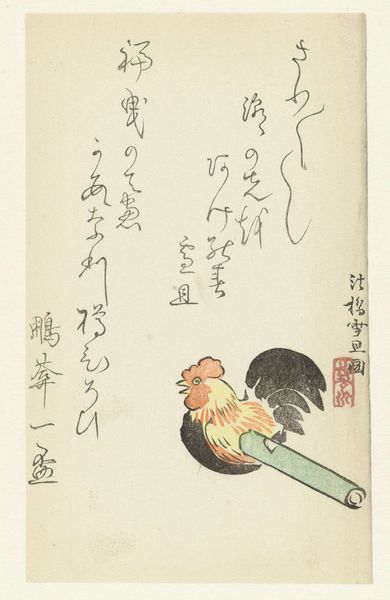
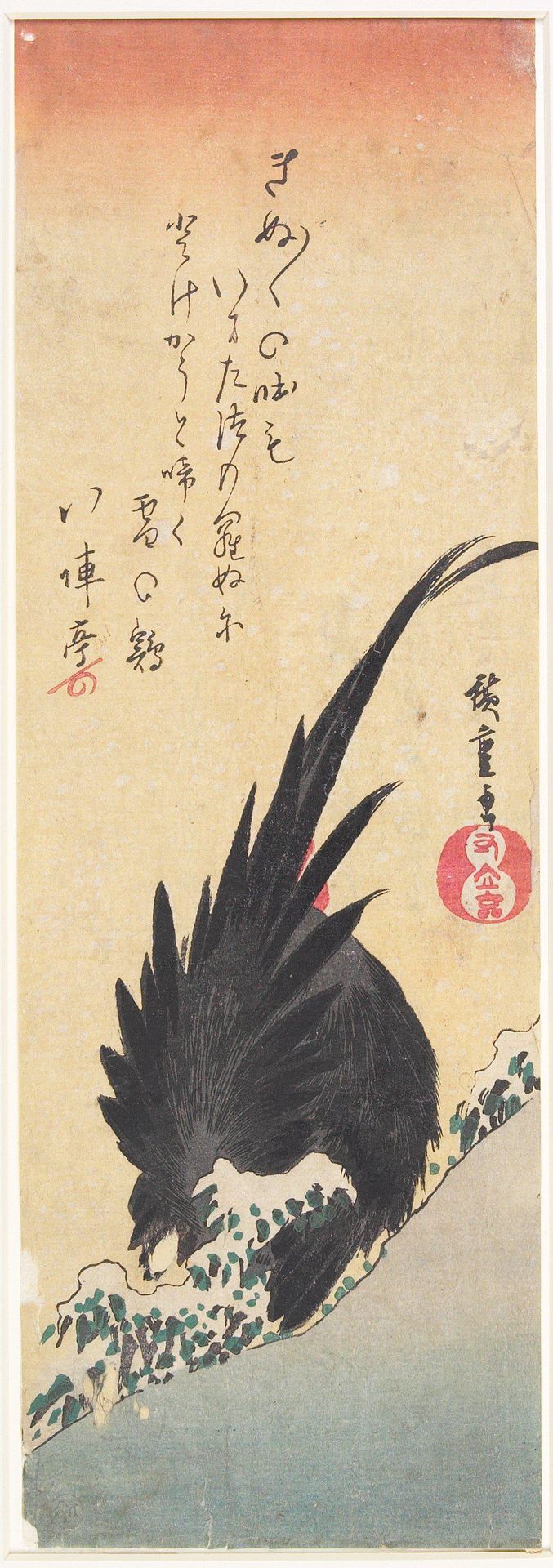
Rooster on a Snowy Hillside


Listen to curator's interpretation
Curatorial notes
Editor: We are looking at "Rooster on a Snowy Hillside," a woodblock print in ink by Utagawa Hiroshige from around the mid-1830s. It's deceptively simple; the stark black rooster against the muted colors feels both vulnerable and defiant. How do you interpret this work? Curator: The rooster is a loaded image. Think about its historical role across cultures - from a symbol of vigilance in ancient Rome, to a sacred bird in some African traditions, or even just as a farm animal. Hiroshige plants the bird in a snow-covered landscape, doesn't he? Editor: Yes, a lonely hillside. Curator: Exactly. The snowy setting could represent a moment of stark clarity or even a period of hardship, couldn't it? In Japanese culture, the rooster also heralds the new day. So we have both vulnerability and resilience here, side-by-side. Does that pairing ring true for you? Editor: Definitely. I hadn’t considered all those layers. The rooster’s posture, head down, pecking in the snow…it does convey a sense of survival. Curator: Consider too the haiku alongside the image. Often these poems serve not to explain, but to resonate. Are the bird and text separate? Or does one echo the other? Are we seeing a specific rooster, or is Hiroshige hinting at broader societal themes of perseverance during turbulent times? Editor: That connection to the poem adds another level to the interpretation. It's fascinating how much symbolism can be packed into such a seemingly simple image. I'll never look at a rooster the same way. Curator: Nor will I. The interplay between naturalism and symbolism… it's a lasting testament to art's power.