About this artwork
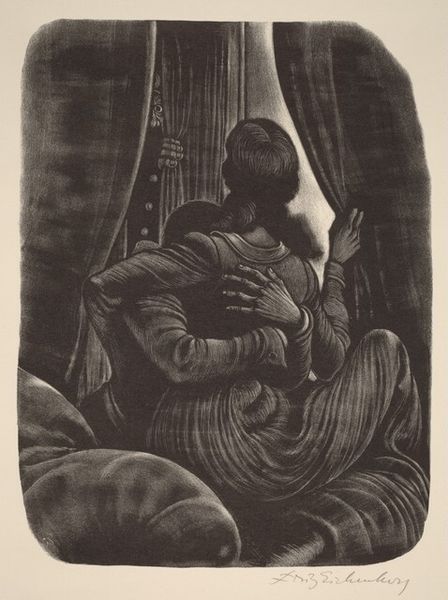
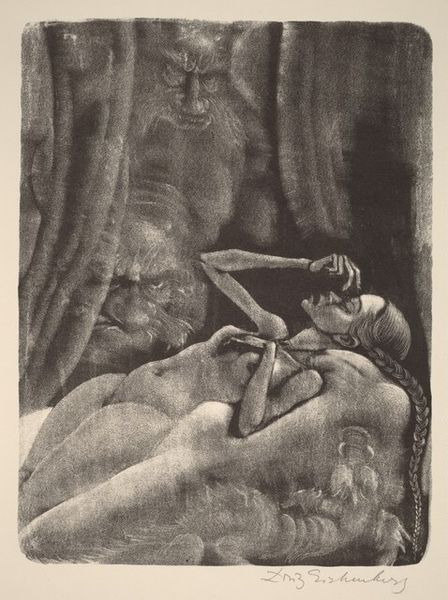
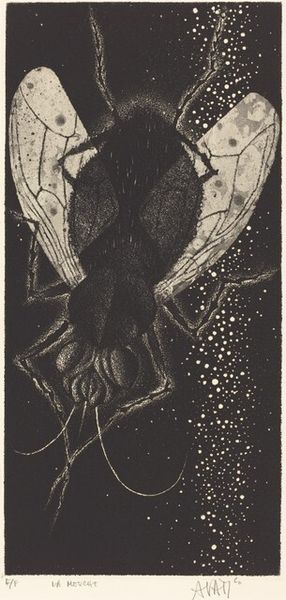
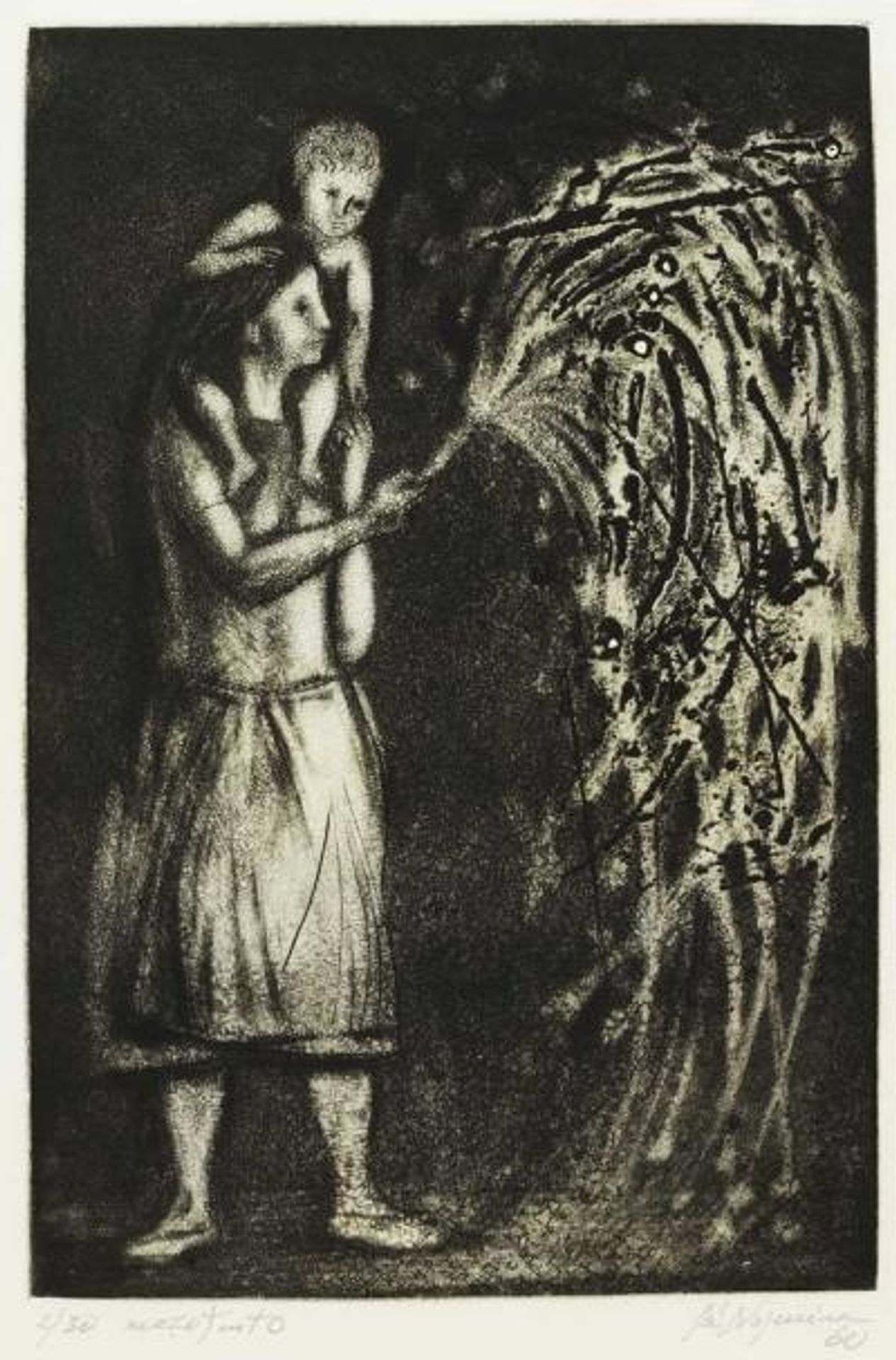
This image, "Mezzo tinto," is an etching by Portuguese artist Sá Nogueira. The term "mezzo tinto" actually means "half-tone" in Italian, and refers to a printmaking process that relies on careful gradations of light and dark. Here, the artist uses the technique to create a dreamlike image, a mother with a child perched on her shoulders, confronting a mysterious, spectral form. The mezzotint process is labor-intensive; the artist roughens the plate evenly to create tone, then carefully burnishes areas to produce lighter values, all by hand. The resulting print has a rich, velvety quality that’s really unlike any other technique. Nogueira’s choice of this demanding, traditional medium speaks to a deep engagement with the history of printmaking. But the image itself – with its psychological intensity and ambiguous narrative – brings the old technique firmly into the modern world, showing how the most traditional of processes can express contemporary concerns.

Artwork details
- Medium
- print, mezzotint
- Copyright
- Sa Nogueira,Fair Use
Tags
Comments
Share your thoughts
About this artwork
This image, "Mezzo tinto," is an etching by Portuguese artist Sá Nogueira. The term "mezzo tinto" actually means "half-tone" in Italian, and refers to a printmaking process that relies on careful gradations of light and dark. Here, the artist uses the technique to create a dreamlike image, a mother with a child perched on her shoulders, confronting a mysterious, spectral form. The mezzotint process is labor-intensive; the artist roughens the plate evenly to create tone, then carefully burnishes areas to produce lighter values, all by hand. The resulting print has a rich, velvety quality that’s really unlike any other technique. Nogueira’s choice of this demanding, traditional medium speaks to a deep engagement with the history of printmaking. But the image itself – with its psychological intensity and ambiguous narrative – brings the old technique firmly into the modern world, showing how the most traditional of processes can express contemporary concerns.
Comments
Share your thoughts