About this artwork
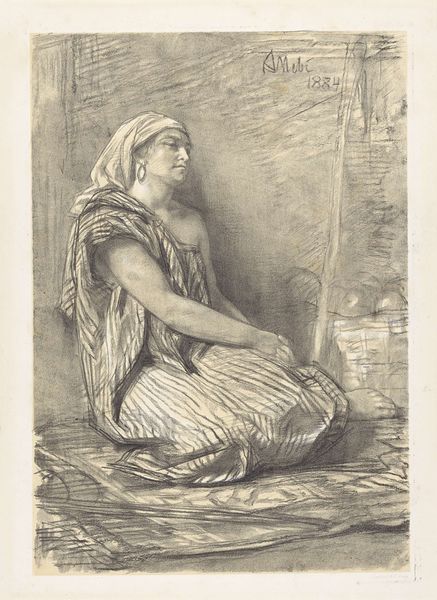
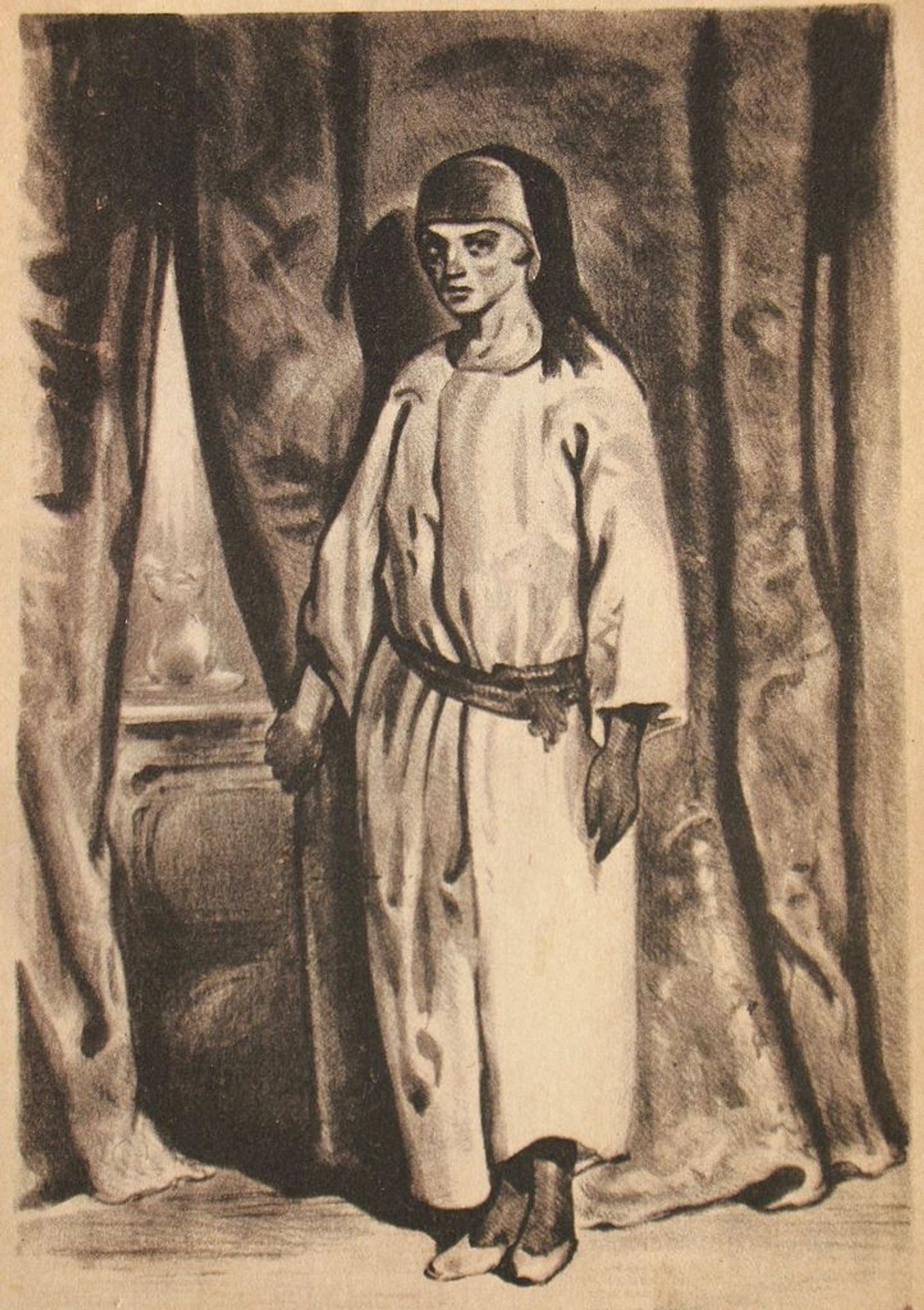
Paul Gavarni sketched Ali, the mute Nubian slave of the Count of Monte Cristo, sometime in the 1830s. Here, the exoticized figure of Ali is draped in what Europeans imagined as oriental attire, complete with a turban and sash. The turban, particularly, carries a heavy weight of cultural meaning. Throughout history, it has signified nobility, religious piety, or simply "otherness." Yet, in the context of 19th-century Orientalism, as seen here, it often became a symbol of subjugation, a visible marker of the East as perceived by the West. Consider the evolution of head coverings in art – from the elaborate headdresses of Renaissance nobility to the simple veils of early Christian Madonnas. Each tells a story of power, faith, and cultural identity. Here, the emotional depth lies in the silence and gaze of Ali. His expression, captured by Gavarni, speaks volumes about the complex interplay between observer and observed, master and servant, and the enduring power of representation. The image subtly hints at the psychological landscape of slavery, engaging us on a subconscious level. This cyclical progression of symbols, ever resurfacing and evolving, reminds us that the past is always present, subtly influencing our perceptions and interpretations.
A slave to the Count of Monte Cristo, the mute Nubian Ali in 1829 or 1838
1846

Artwork details
- Medium
- drawing, charcoal
- Copyright
- Public domain
Tags
Comments
Share your thoughts
About this artwork
Paul Gavarni sketched Ali, the mute Nubian slave of the Count of Monte Cristo, sometime in the 1830s. Here, the exoticized figure of Ali is draped in what Europeans imagined as oriental attire, complete with a turban and sash. The turban, particularly, carries a heavy weight of cultural meaning. Throughout history, it has signified nobility, religious piety, or simply "otherness." Yet, in the context of 19th-century Orientalism, as seen here, it often became a symbol of subjugation, a visible marker of the East as perceived by the West. Consider the evolution of head coverings in art – from the elaborate headdresses of Renaissance nobility to the simple veils of early Christian Madonnas. Each tells a story of power, faith, and cultural identity. Here, the emotional depth lies in the silence and gaze of Ali. His expression, captured by Gavarni, speaks volumes about the complex interplay between observer and observed, master and servant, and the enduring power of representation. The image subtly hints at the psychological landscape of slavery, engaging us on a subconscious level. This cyclical progression of symbols, ever resurfacing and evolving, reminds us that the past is always present, subtly influencing our perceptions and interpretations.
Comments
Share your thoughts