drawing, pencil
drawing
baroque
form
pencil
history-painting
Dimensions: height 226 mm, width 176 mm
Copyright: Rijks Museum: Open Domain
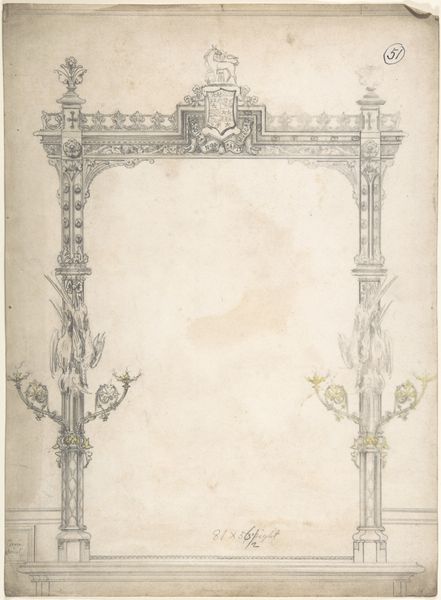
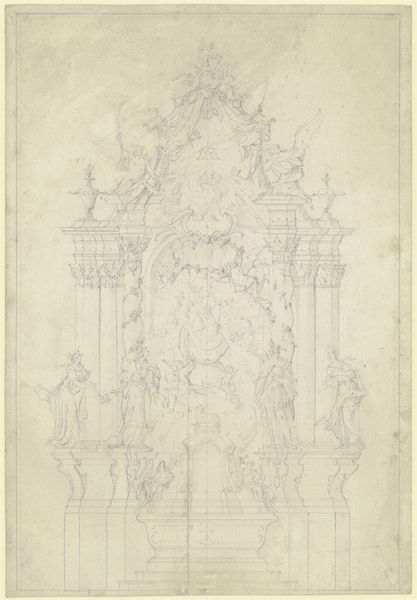
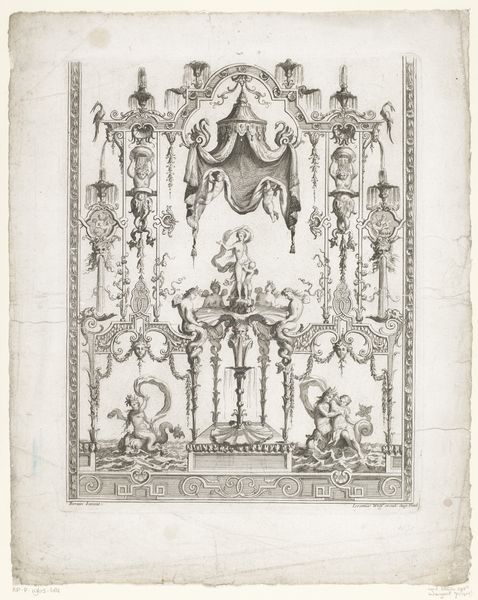
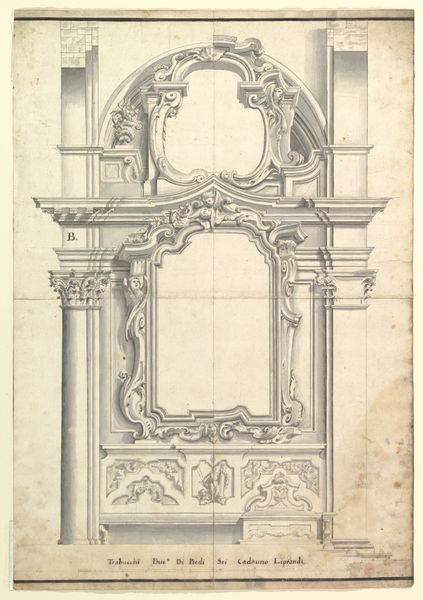
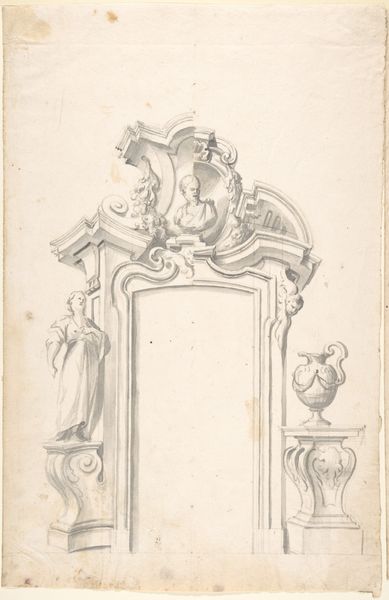
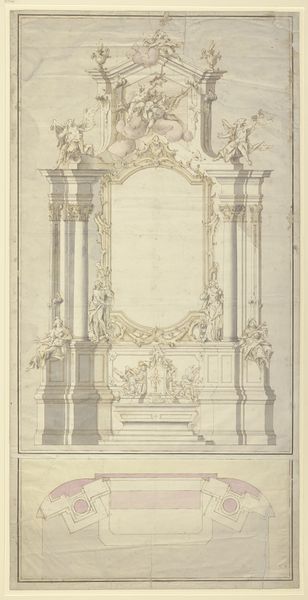
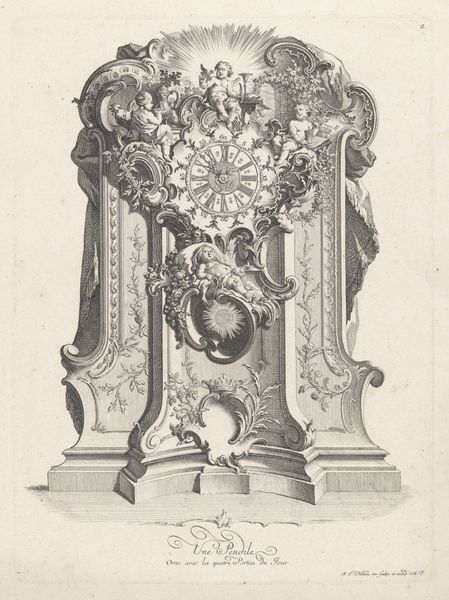
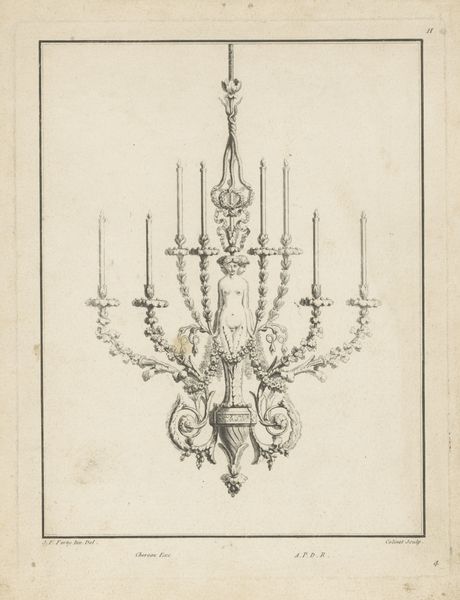
This is Karl Bier's architectural design for a confessional, rendered in pen and grey ink with a wash on paper. At first glance, the eye is drawn to the elaborate ornamentation. The baroque flourishes cascade and interweave, creating a sense of dynamic movement. Note how Bier uses linear perspective, receding into the depth of the paper, to enhance the three-dimensional effect of his design. Consider the implications of such a structure. Here, the architectural design embodies a paradox: a space meant for private confession is adorned with flamboyant display. In this way, Bier destabilizes the conventional understanding of the confessional as a place of humility. The confessional’s design elevates it beyond a mere functional object, challenging the traditional connotations of secrecy and shame. Ultimately, Bier's confessional design, with its fusion of the sacred and the aesthetic, underscores the complex interplay between art, architecture, and cultural values. It invites us to continually question and reinterpret the meanings embedded within artistic forms.
Comments
No comments
Be the first to comment and join the conversation on the ultimate creative platform.
 React
React Comment