1928
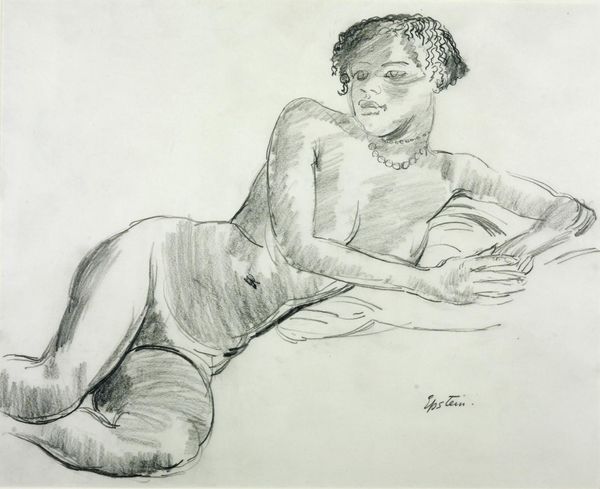
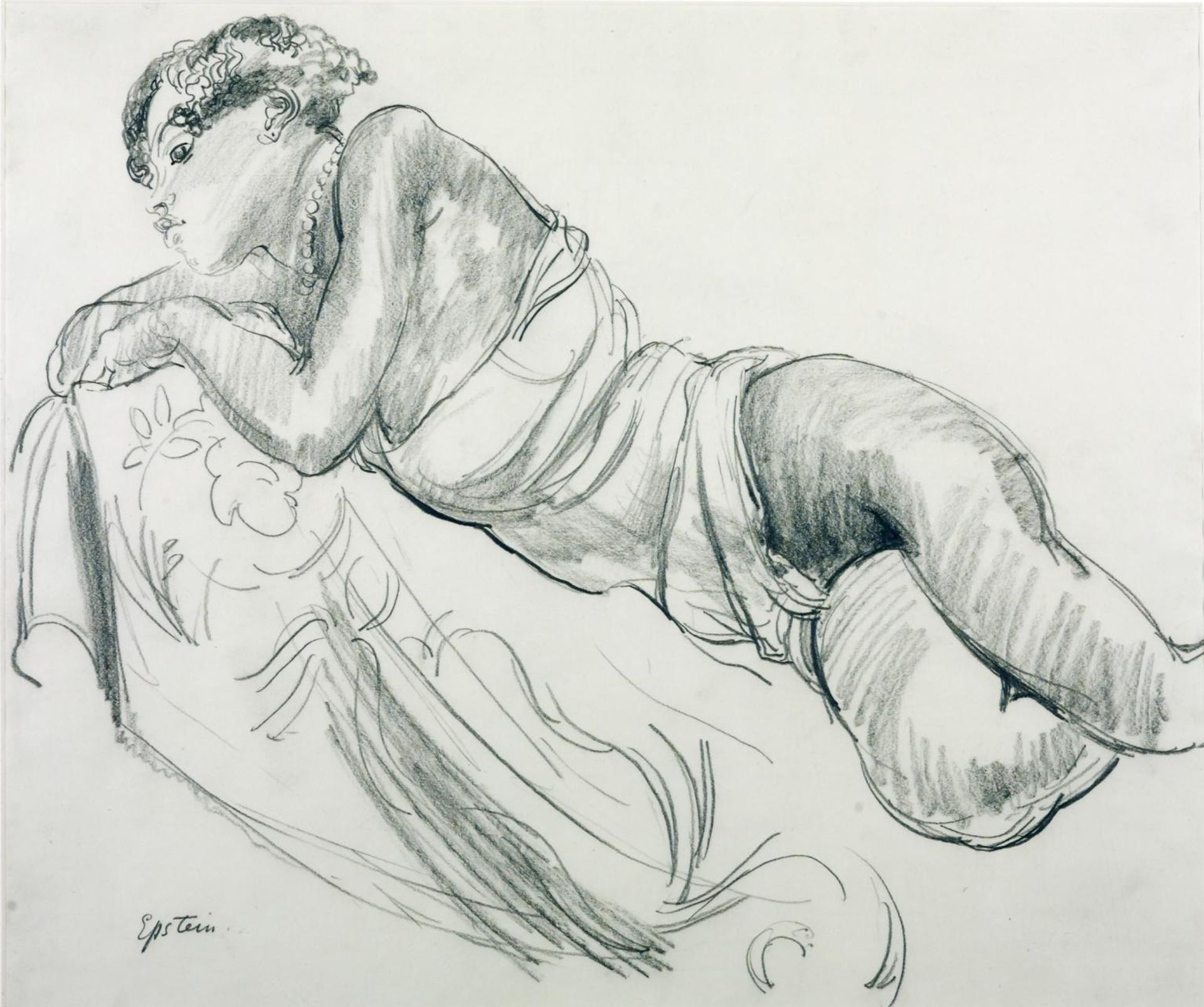
The Little Negress

Listen to curator's interpretation
Curatorial notes
Curator: Here we have Sir Jacob Epstein's "The Little Negress," a drawing held at the Tate. It measures roughly 47 by 55 centimeters. Editor: The girl's pose is so languid. The drawing’s simplicity and softness give it an intimate, almost dreamlike quality. Curator: Epstein’s interest in non-western art informed his work. Consider the context—early 20th century Europe grappling with colonialism. The material reality is a paper support receiving marks, but what meaning is being produced? Editor: The pearls hint at a kind of forced gentility, a symbol of imposed refinement. It's a powerful image carrying the weight of cultural exchange and perhaps exploitation. Curator: Indeed. The title itself, freighted with colonial-era language, demands critical assessment of power dynamics, representation, and the artist’s role. Editor: These lines allow us to contemplate the cultural narratives embedded in such a seemingly simple portrait. Curator: Ultimately, this work raises crucial questions about the complexities of art, labor, and the gaze.