About this artwork
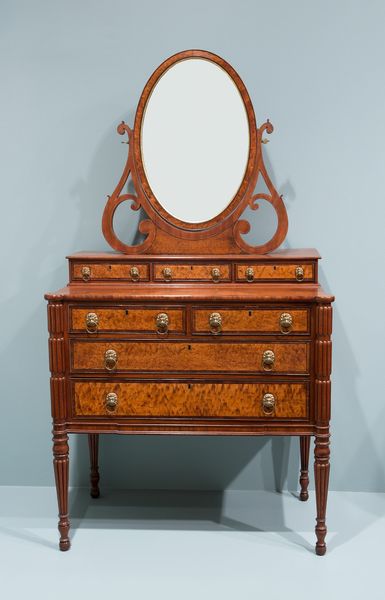
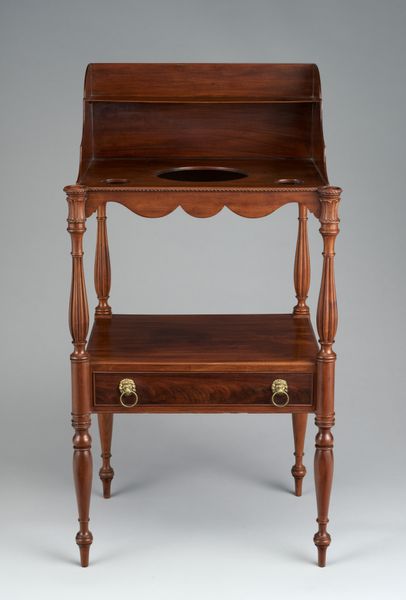
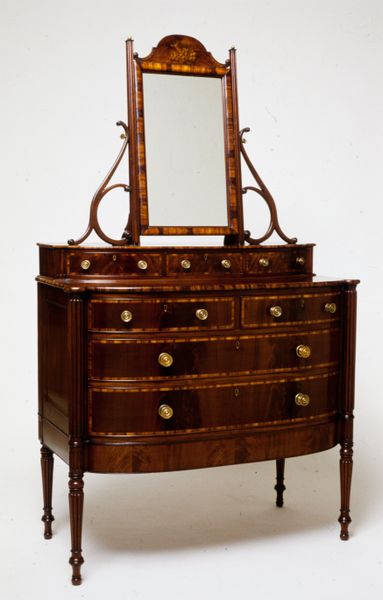
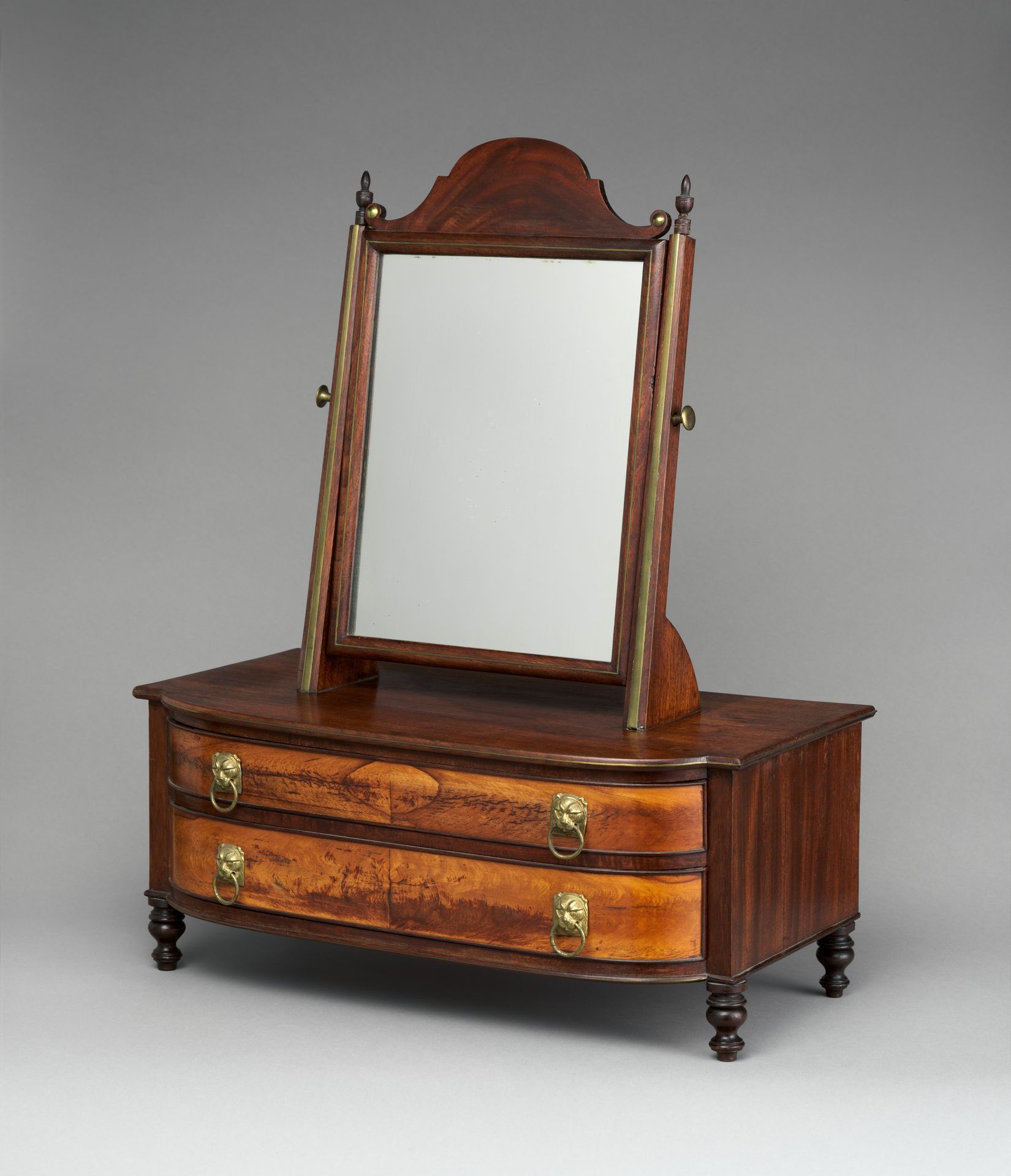
This dressing glass was crafted by Thomas Seymour around the turn of the 19th century, during a time when the decorative arts were embracing the neoclassical style. Made of mahogany, with light wood inlays and gilded brass accents, this object reflects the refined tastes of its time. Pieces like this would have been found in the homes of the upper classes, serving as a stage for the rituals of beautification and the construction of feminine identity. The mirror itself invites contemplation on the gazes and expectations that shaped women's lives. What does it mean to present yourself to the world through this looking glass, and who are you performing for? The lion head drawer pulls might be a subtle nod to power and status. The dressing glass offers a glimpse into the lives of women navigating the complexities of beauty, identity, and social standing.
Dressing glass
1810 - 1815


Artwork details
- Dimensions
- 23 x 18 1/4 x 9 1/2 in. (58.4 x 46.4 x 24.1 cm)
- Location
- Metropolitan Museum of Art, New York, NY
- Copyright
- Public Domain
Tags
Comments
Share your thoughts
About this artwork
This dressing glass was crafted by Thomas Seymour around the turn of the 19th century, during a time when the decorative arts were embracing the neoclassical style. Made of mahogany, with light wood inlays and gilded brass accents, this object reflects the refined tastes of its time. Pieces like this would have been found in the homes of the upper classes, serving as a stage for the rituals of beautification and the construction of feminine identity. The mirror itself invites contemplation on the gazes and expectations that shaped women's lives. What does it mean to present yourself to the world through this looking glass, and who are you performing for? The lion head drawer pulls might be a subtle nod to power and status. The dressing glass offers a glimpse into the lives of women navigating the complexities of beauty, identity, and social standing.
Comments
Share your thoughts