About this artwork
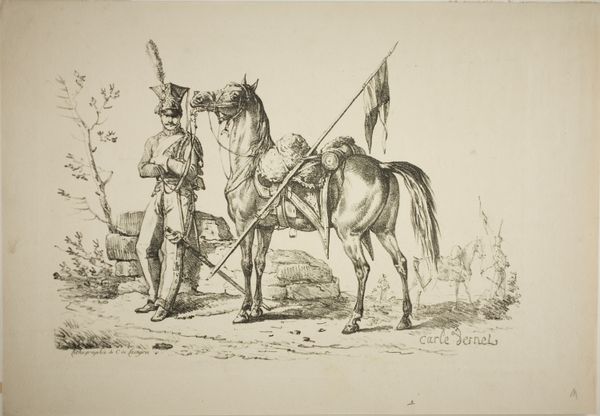
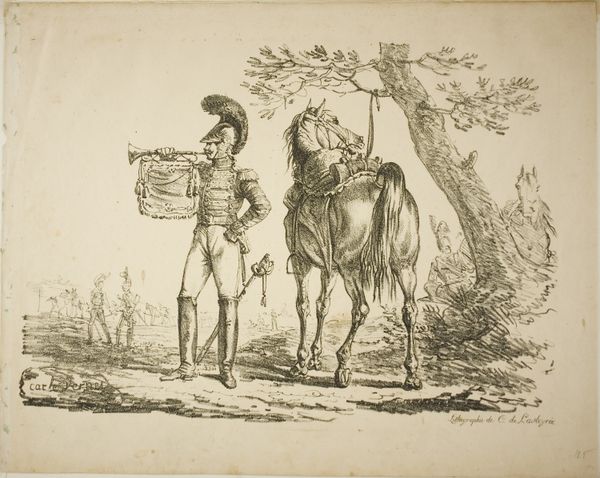
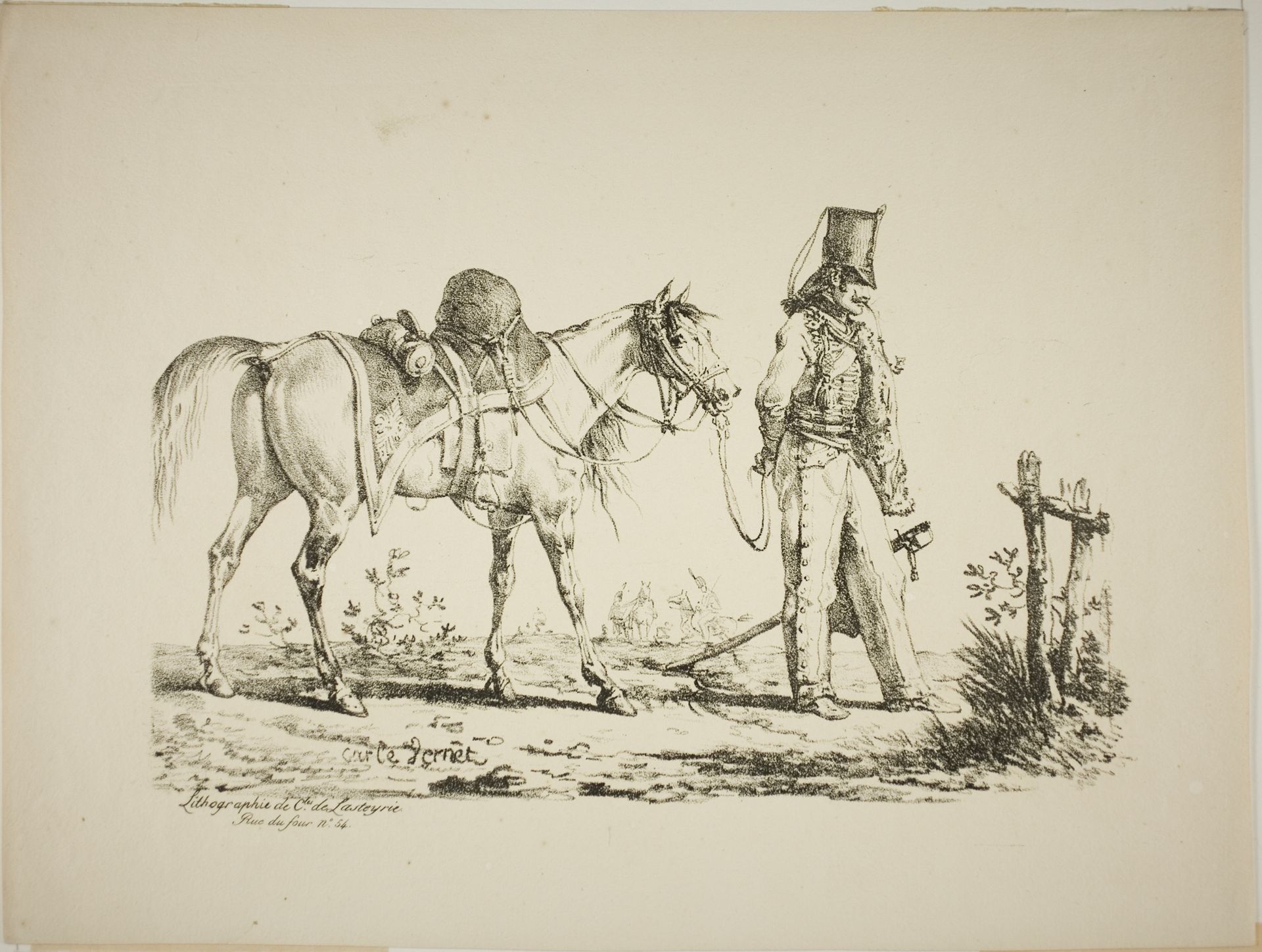
Carle Vernet created this lithograph titled *Hussard Walking in Front of his Horse, Smoking a Pipe*. The print offers us a glimpse into the visual culture of the French military, likely dating to the late 18th or early 19th century. Vernet, who came from a family of painters, captured a hussard, a light cavalry soldier, in a moment of apparent repose. What does it mean to depict a soldier not in battle, but in a quiet, almost pastoral scene? The hussard, with his ornate uniform and the ever-present pipe, embodies a particular kind of masculinity. The hussards were known for their courage, but also their flamboyant style. Vernet seems to soften this image, by showing us a figure in contemplation, connected to his horse, in a moment of rest. Consider how the print invites us to reflect on the complexities of military identity beyond the battlefield. It is a reminder that even symbols of power have moments of quiet reflection, a space to consider what they are doing, and what they have done.
Hussard Walking in Front of his Horse, Smoking a Pipe
8 - 1817


Artwork details
- Medium
- drawing, lithograph, print, paper, ink
- Dimensions
- 175 × 289 mm (image); 276 × 366 mm (sheet)
- Location
- The Art Institute of Chicago
- Copyright
- Public Domain
Tags
Comments
Share your thoughts
About this artwork
Carle Vernet created this lithograph titled *Hussard Walking in Front of his Horse, Smoking a Pipe*. The print offers us a glimpse into the visual culture of the French military, likely dating to the late 18th or early 19th century. Vernet, who came from a family of painters, captured a hussard, a light cavalry soldier, in a moment of apparent repose. What does it mean to depict a soldier not in battle, but in a quiet, almost pastoral scene? The hussard, with his ornate uniform and the ever-present pipe, embodies a particular kind of masculinity. The hussards were known for their courage, but also their flamboyant style. Vernet seems to soften this image, by showing us a figure in contemplation, connected to his horse, in a moment of rest. Consider how the print invites us to reflect on the complexities of military identity beyond the battlefield. It is a reminder that even symbols of power have moments of quiet reflection, a space to consider what they are doing, and what they have done.
Comments
Share your thoughts