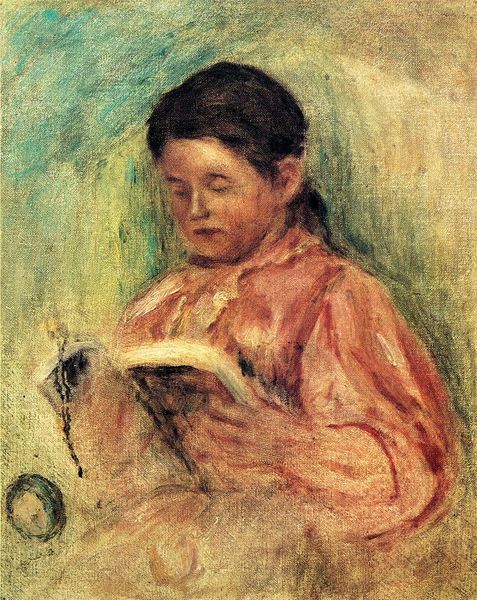
1896
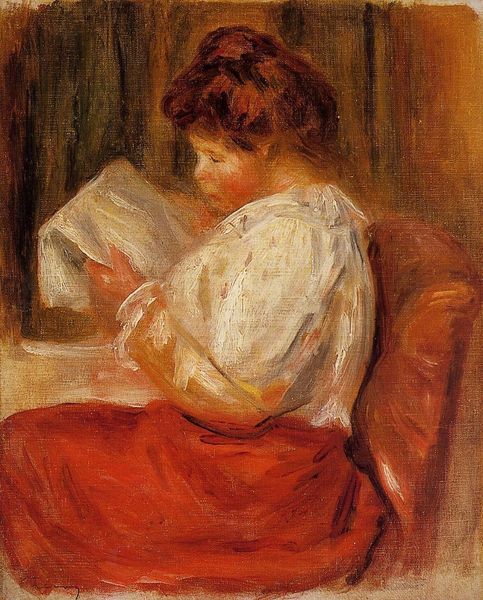
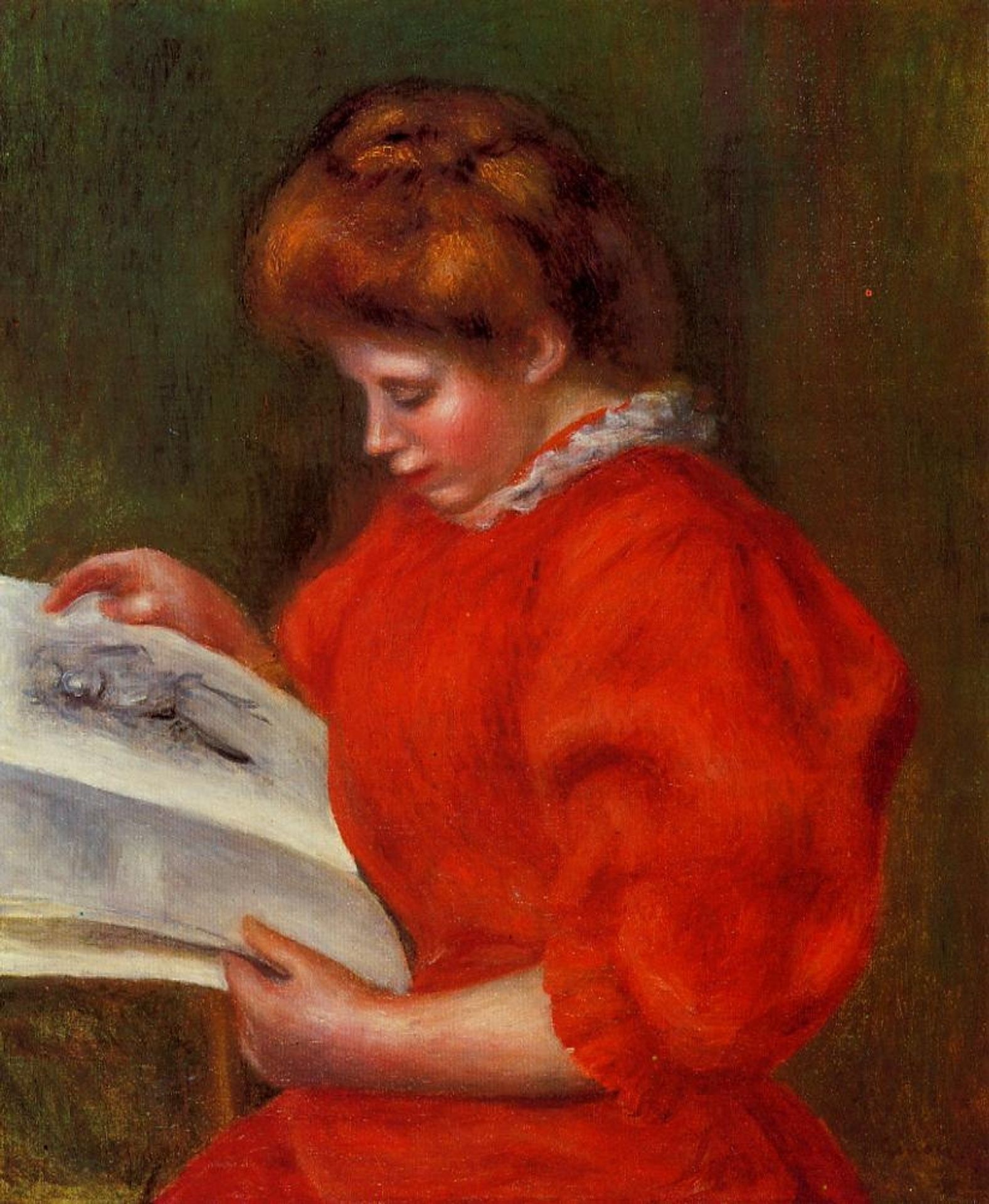
Young Woman Looking at a Print

Pierre-Auguste Renoir
1841 - 1919Location
Private CollectionListen to curator's interpretation
Curatorial notes
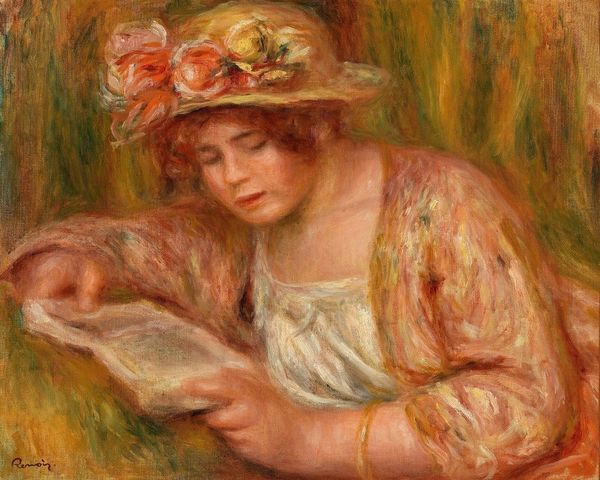
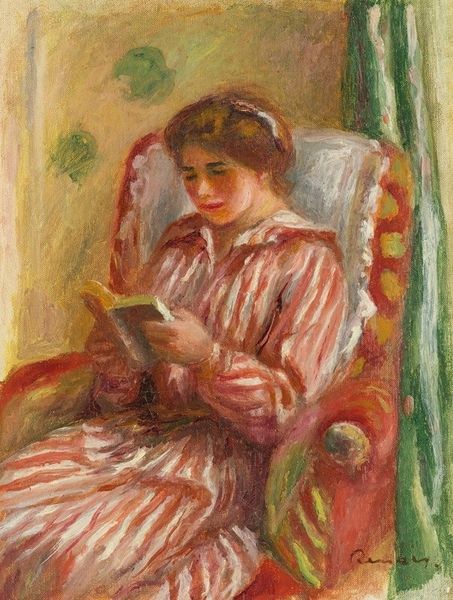
Pierre-Auguste Renoir, a leading painter in the development of the Impressionist style, painted "Young Woman Looking at a Print." Renoir's Impressionist paintings often depicted women in domestic or leisure settings. This is a painting of a young woman, eyes cast down, dressed in bright red, absorbed in looking at a print. The artwork emphasizes the experience of reading and the interior life of women in late nineteenth-century France, at a time when women were demanding greater access to education. The woman's engagement with the print may hint at the expansion of cultural and intellectual horizons for women, but it also reflects a societal expectation for women to be cultured. The woman’s downcast gaze and still composure, however, hints at the complex negotiation women navigate as they seek intellectual stimulation within constrained social roles. Looking at this painting prompts us to consider the historical shifts in women's education and their cultural roles. The personal and the political intertwine, inviting us to reflect on the ongoing journey toward equality and recognition.