


Curatorial notes
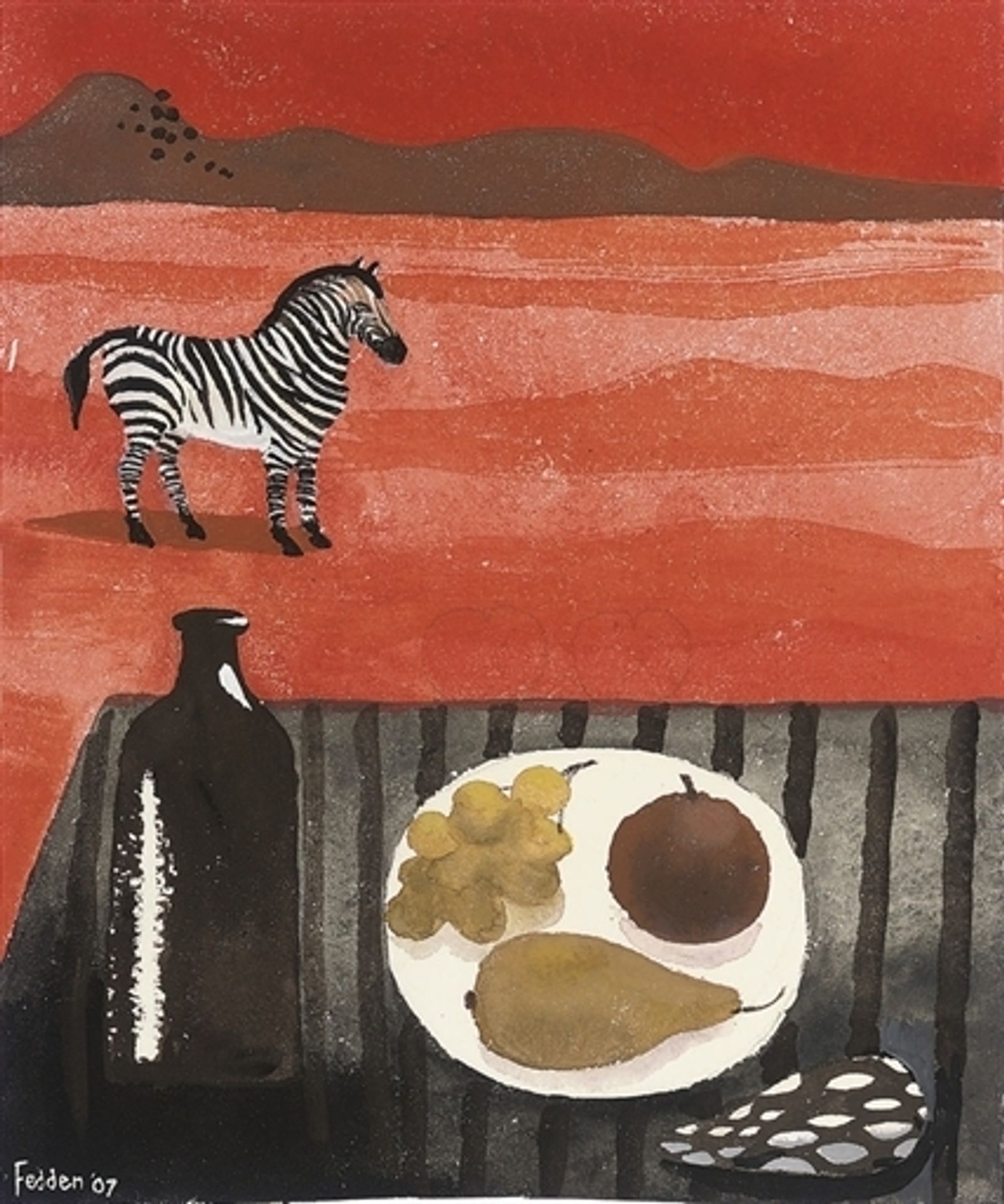
Curator: Here we have Mary Fedden’s "Zebra," a mixed-media painting from 2007. It's quite striking. Editor: My immediate impression is one of whimsy tinged with something almost unsettling. The starkness of the zebra against that fiery orange backdrop, juxtaposed with the domestic still life…it’s an odd combination. Curator: Absolutely. Fedden, though working in the 21st century, channels a certain naïve art sensibility, a sort of deliberate simplicity. I find it compelling to think about the socio-political contexts of the era. The post-9/11 world was saturated with heightened awareness of global conflict and ecological crises, do you think this sense of contrast may hint at a desire to reimagine those anxieties with something much softer and bucolic? Editor: Perhaps, and if so, then Fedden subverts it! Looking at the imagery itself, the zebra is not merely a zebra; it is a symbol of wildness imposed onto this strangely calm landscape of the quotidian. The dark bottle is reminiscent of a classical Dutch still life, which clashes dramatically with the almost cartoonish rendering of the fruit. The artist is drawing upon the cultural significance of colonial expansion into the African landscape and representing it in stark color, while reminding us of the beauty and simplicity of everyday life. The combination presents an interesting perspective when considered alongside our modern colonial presence on foreign land and constant battle to control foreign elements. Curator: That's a fantastic reading. Do you feel like the objects contribute towards Fedden's wider oeuvre? Editor: The stripes! Fedden incorporates stripes into multiple artworks. Here, it unifies the exotic and the mundane— the Zebra, the zebra patterned rock, and the table cloth are united under one banner. If anything, it signifies an interconnected relationship with wild things. What do you think it all means when taken together? Curator: Considering it through a post-colonial lens, it brings to light questions of exoticism, domesticity, and perhaps a critique of Western consumption. We often consume “nature” or elements of it – through aestheticization, souvenirs, or even, the ownership implied within still life tradition itself. Editor: Yes! I really like the challenge that this artist sets. It causes you to look deep inside to question every fiber of meaning. It's playful yet deeply important and has something here to satisfy every mind in our audience. Curator: Indeed, a work that speaks volumes in its seemingly gentle language. Thank you for drawing out these critical and intriguing perspectives.