About this artwork
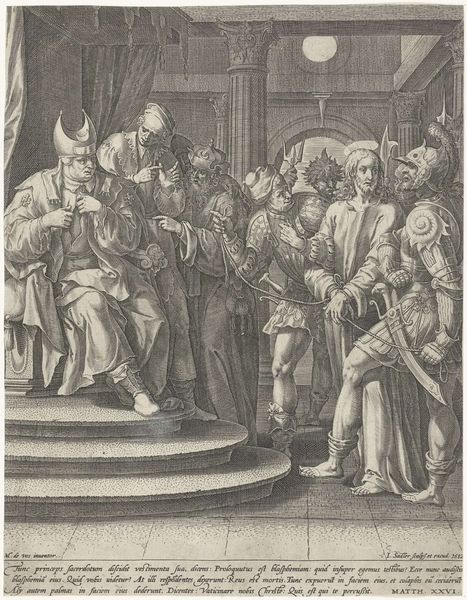
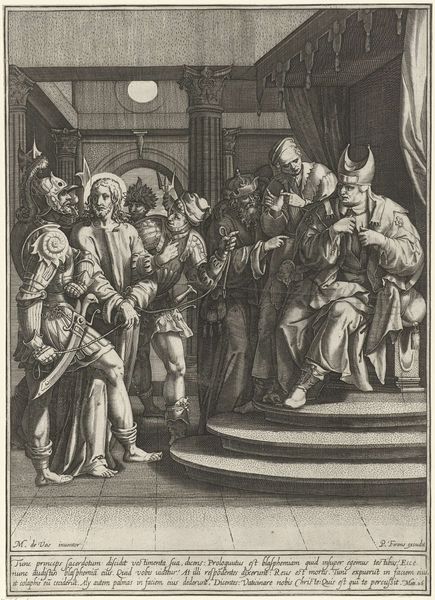
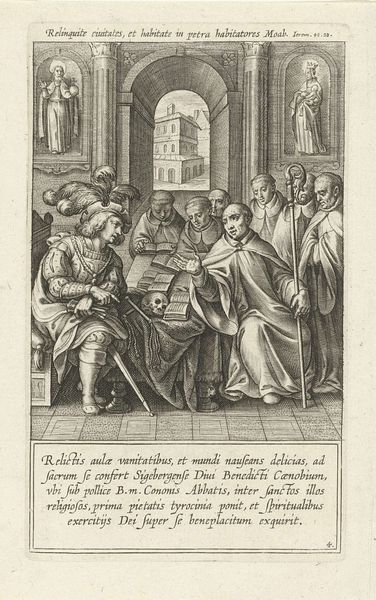
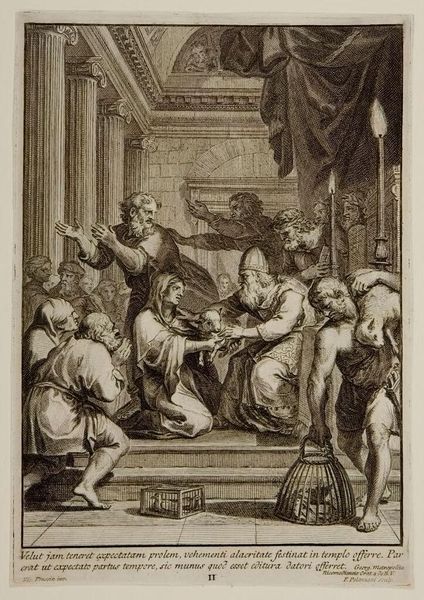
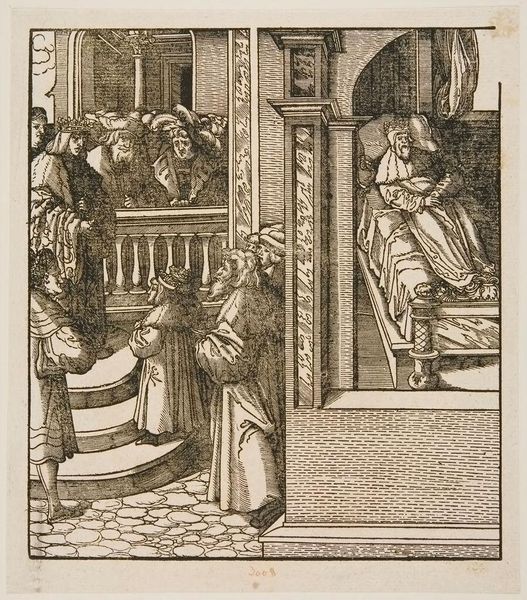
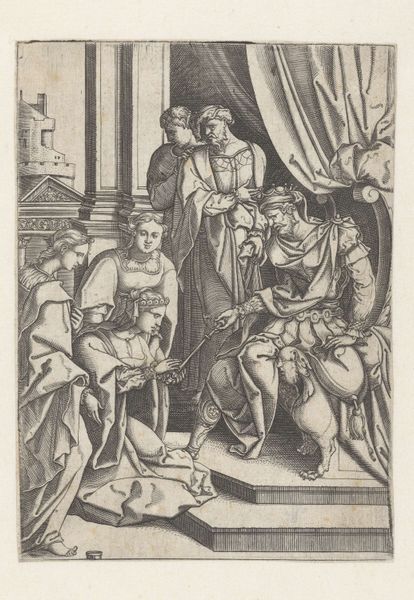
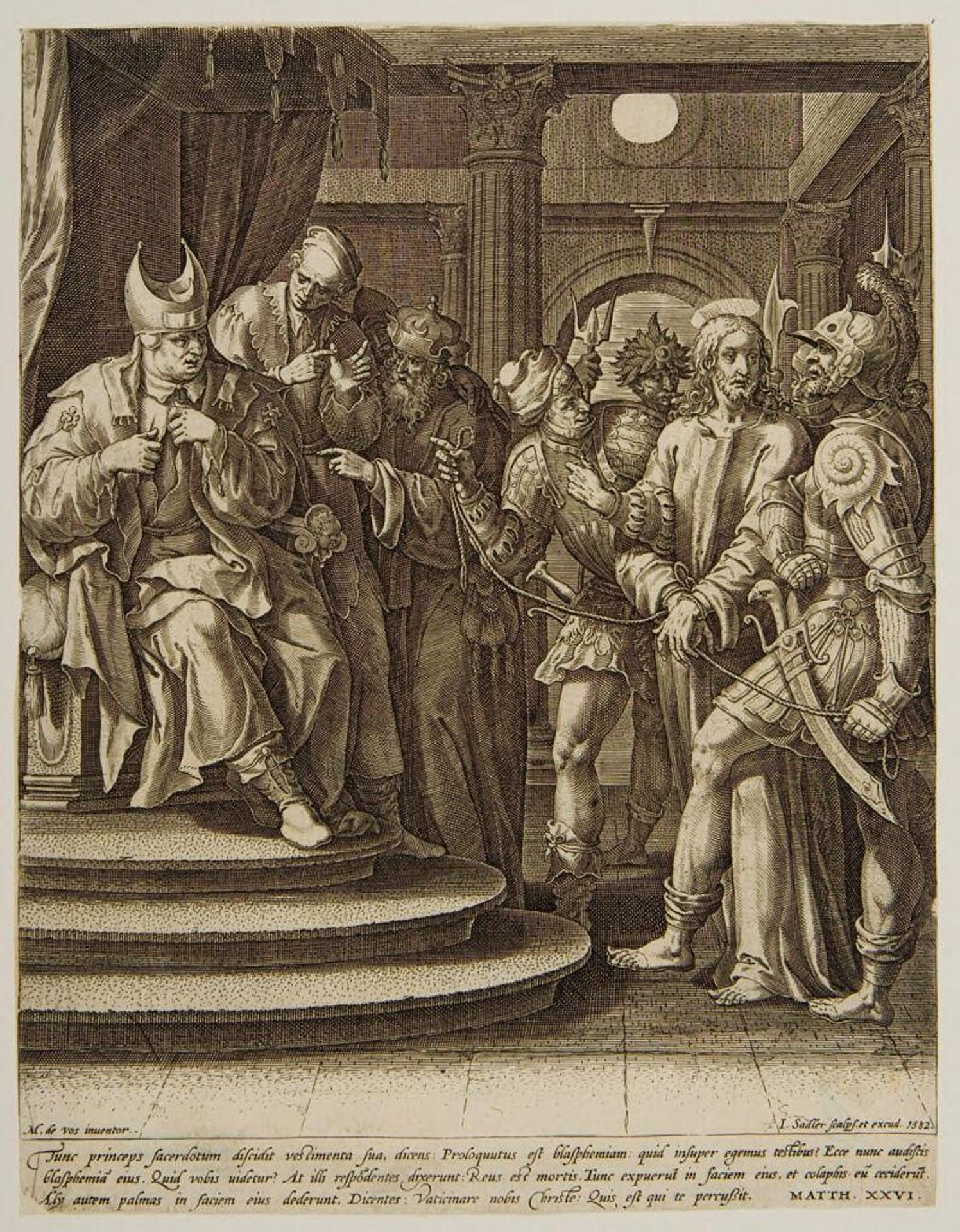
Curator: Johann Sadeler I, a Flemish artist active in the late 16th century, created this print, "Christ Before the High Priest, Caiaphas." It's currently held at the Harvard Art Museums. Editor: The mood is certainly severe. I'm struck by the contrast of light and shadow, creating a somber scene dominated by the High Priest's imposing figure. Curator: Look closely at the textures Sadeler achieves through the engraving process. The robes, the metalwork on the guards' armor—it's a testament to the skill and labor involved in printmaking during this era. These prints were circulated widely, influencing religious and social thought. Editor: Yes, the cross-hatching defines form, and the composition directs my eye to Christ's stoic resignation. Note the almost geometric arrangement of the figures; the artist's formal control intensifies the narrative. Curator: The act of distributing these engravings allowed for mass consumption of religious ideas, directly impacting how viewers perceived these biblical stories. Editor: I see how the formal elements and their execution work in concert to reinforce the artwork's emotional and symbolic weight. Curator: Considering the print's function as a tool for disseminating religious narratives enhances the gravity of the scene depicted. Editor: The print's enduring appeal clearly lies in its ability to merge skilled craftsmanship with profound theological concepts.
Christ Before the High Priest, Caiaphas 16th-17th century


Artwork details
- Location
- Harvard Art Museums
- Copyright
- CC0 1.0
Comments
No comments
About this artwork
Curator: Johann Sadeler I, a Flemish artist active in the late 16th century, created this print, "Christ Before the High Priest, Caiaphas." It's currently held at the Harvard Art Museums. Editor: The mood is certainly severe. I'm struck by the contrast of light and shadow, creating a somber scene dominated by the High Priest's imposing figure. Curator: Look closely at the textures Sadeler achieves through the engraving process. The robes, the metalwork on the guards' armor—it's a testament to the skill and labor involved in printmaking during this era. These prints were circulated widely, influencing religious and social thought. Editor: Yes, the cross-hatching defines form, and the composition directs my eye to Christ's stoic resignation. Note the almost geometric arrangement of the figures; the artist's formal control intensifies the narrative. Curator: The act of distributing these engravings allowed for mass consumption of religious ideas, directly impacting how viewers perceived these biblical stories. Editor: I see how the formal elements and their execution work in concert to reinforce the artwork's emotional and symbolic weight. Curator: Considering the print's function as a tool for disseminating religious narratives enhances the gravity of the scene depicted. Editor: The print's enduring appeal clearly lies in its ability to merge skilled craftsmanship with profound theological concepts.
Comments
No comments