
Curatorial notes
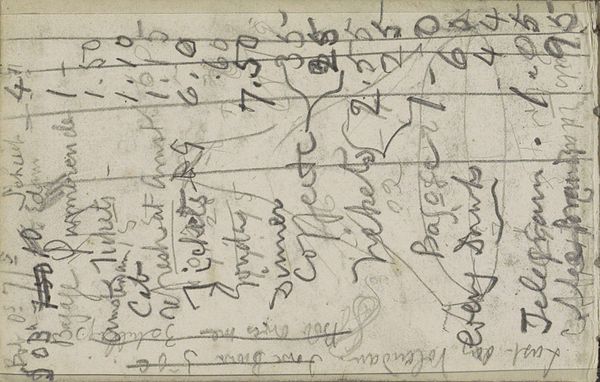
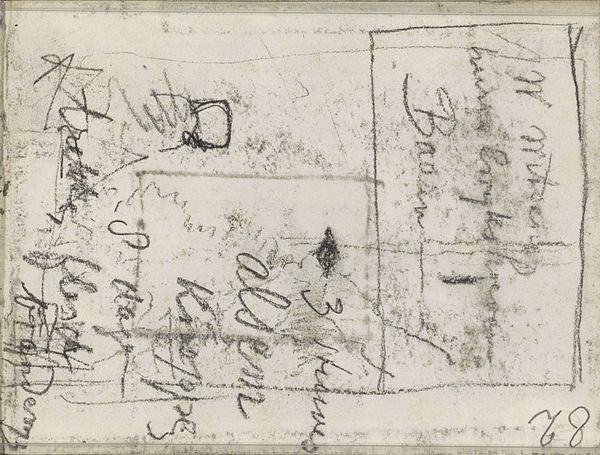
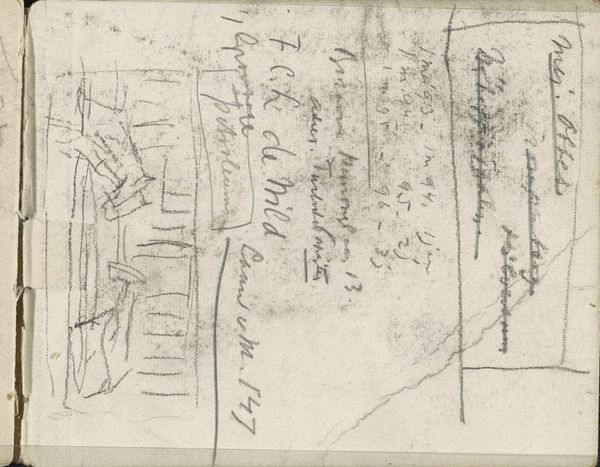
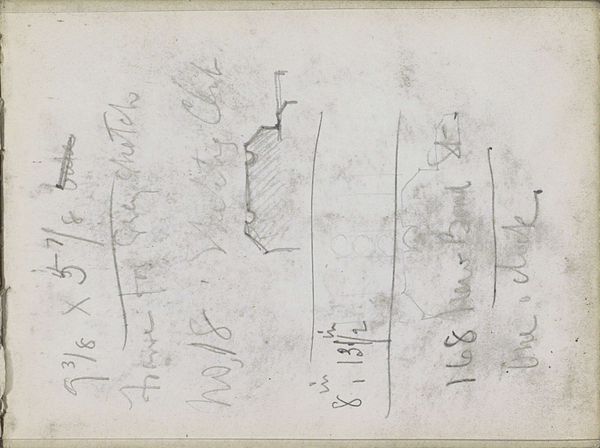
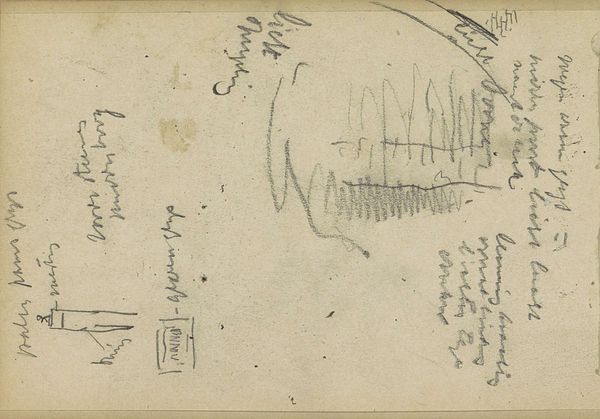
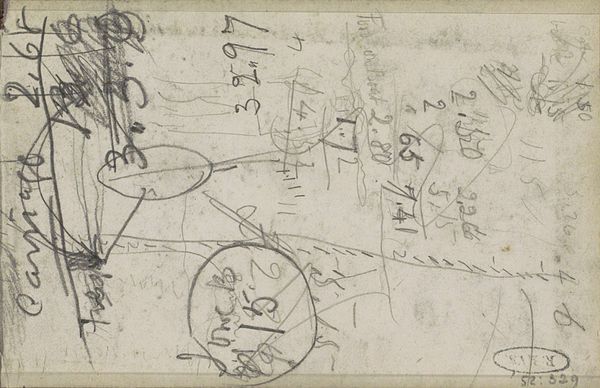
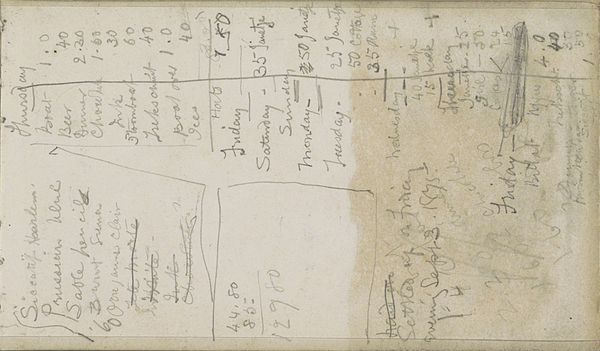
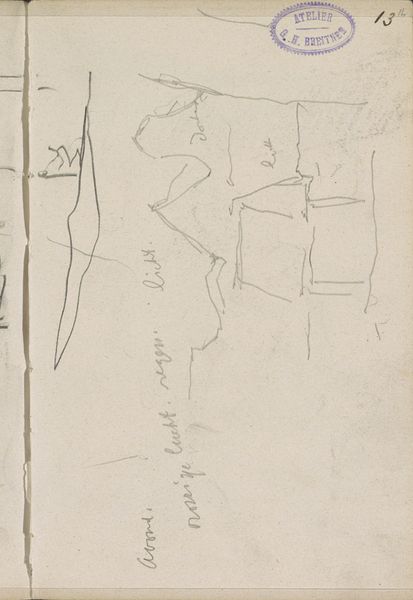
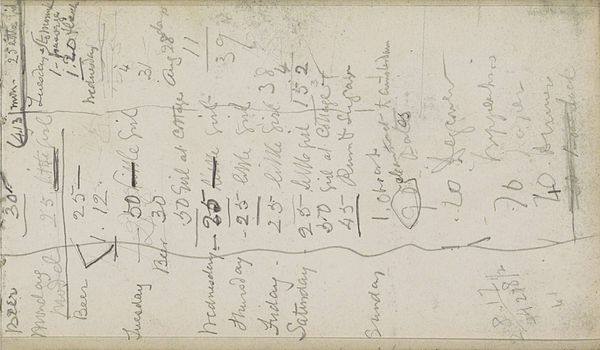
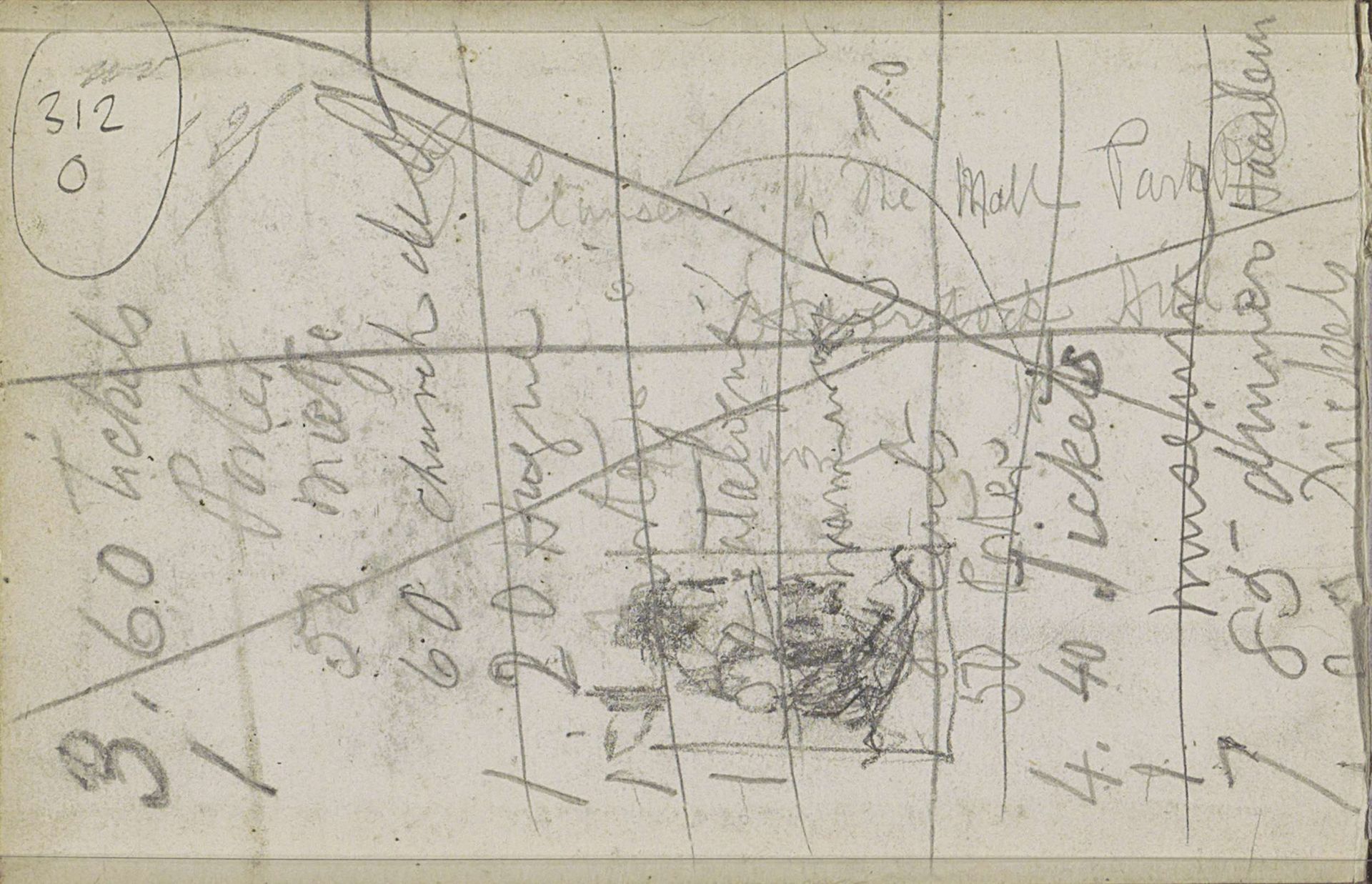
Editor: We’re looking at "Notities" from 1875 by George Clausen, a pencil drawing on paper. It looks like a page from a sketchbook, filled with what seem to be scattered notes and doodles. It’s a bit chaotic and hard to decipher. What do you see in this piece? Curator: Immediately, the apparent disorder jumps out, but it hints at something deeper. Lines score across, bisecting words like "tickets" and names such as "Haarlem." There’s an energy here, a hurried collection of moments captured in graphite. It feels almost like a palimpsest, with layers of meaning fighting to be seen. Notice how even the numbers are fragmented. Do you get the sense that we’re viewing something intensely personal, almost a private visual language? Editor: Definitely, it feels very intimate, like glimpsing someone’s raw thought process. I'm drawn to the recurring words; they must hold some significance for the artist. Curator: Precisely. Consider what "tickets," "museum," "dinner," all together, might represent. They point to experiences, travels, maybe social engagements. The image operates like a memory palace—each word a prompt, sparking associations. How do these words and images connect to *your* experiences of leisure, perhaps the anxiety and anticipation associated with them? Editor: I guess I never thought about how simple words in a drawing can conjure so many cultural connections. Curator: That's exactly the beauty of the symbolic image! It holds meaning that extends beyond the literal, tapping into cultural memory and our own psychological landscapes. Editor: Seeing it this way makes me realize there’s more than chaos; there's a story here waiting to be pieced together. Thanks for shedding light on it! Curator: My pleasure. Hopefully, now, everyone will find even the mundane moments in their own life and reflect on the deep layers of meaning it carries.