Dimensions: 16 7/16 x 13 3/16 in. (41.75 x 33.5 cm) (image)19 3/4 x 15 5/16 in. (50.17 x 38.89 cm) (leaf, overall)19 15/16 x 15 15/16 x 1 1/4 in. (50.6 x 40.5 x 3.2 cm) (entire album, overall, closed)
Copyright: Public Domain
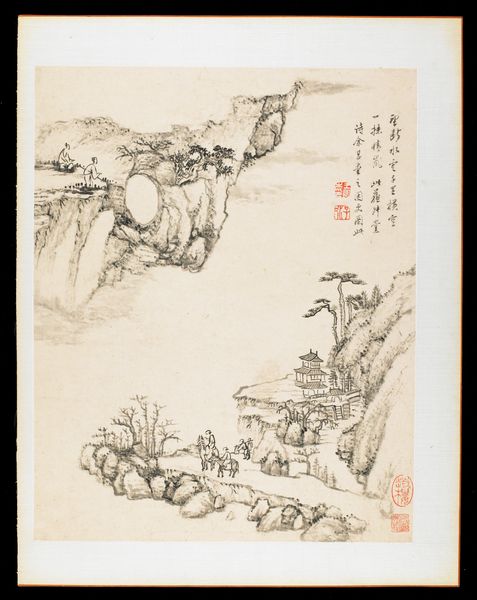
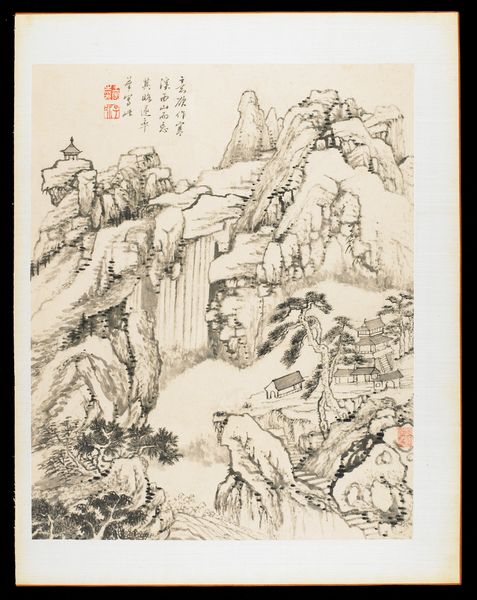
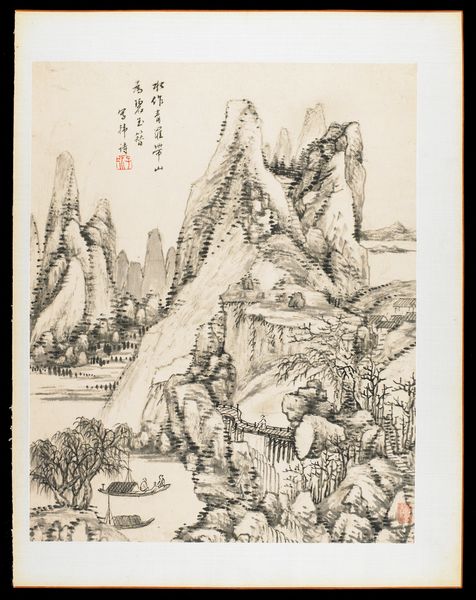
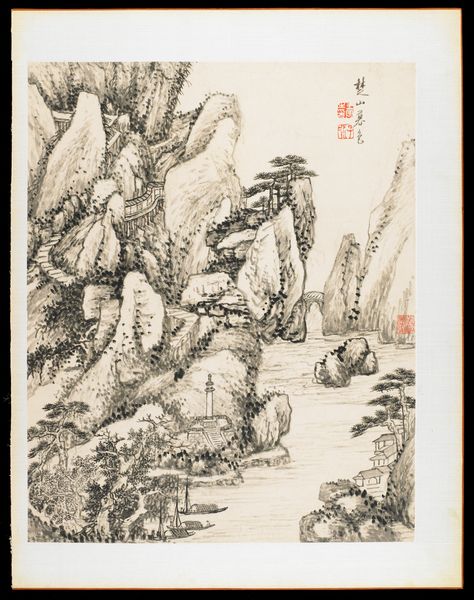
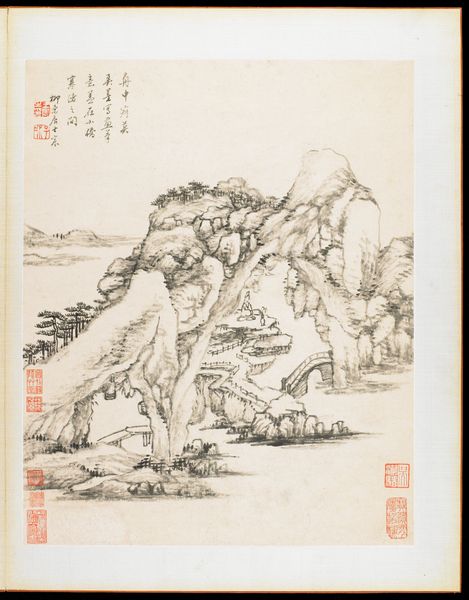
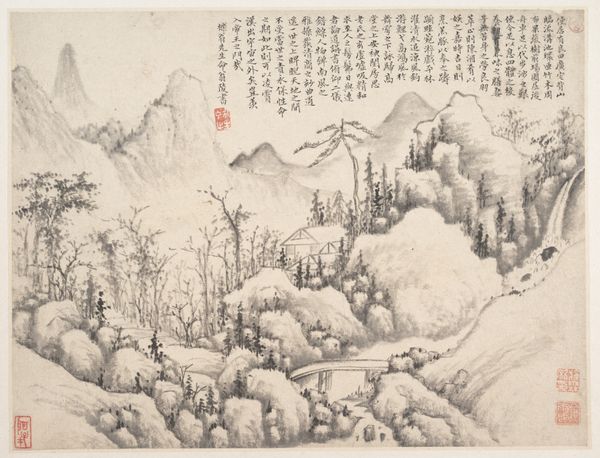
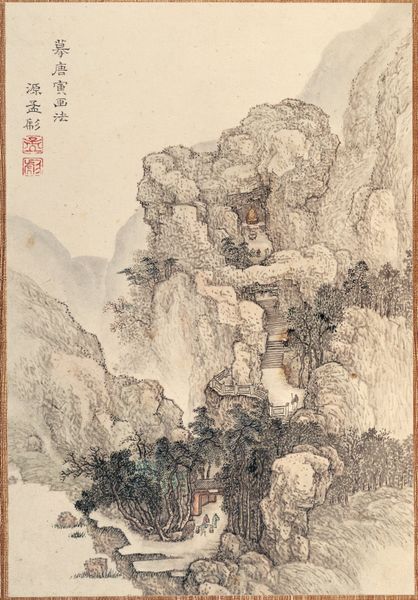
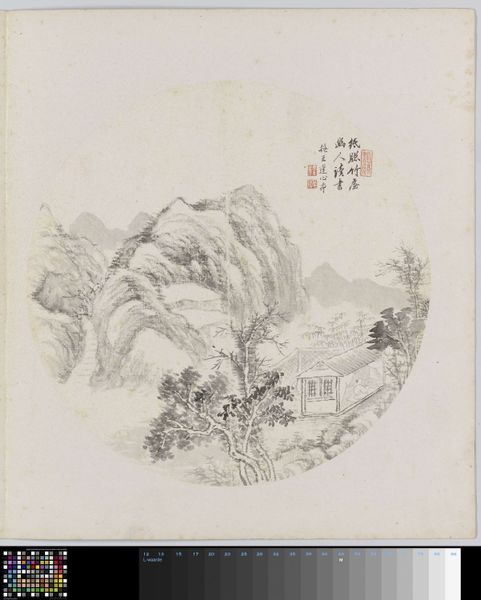
Curator: This piece is titled "Album Leaf" by Wang Chen, created around 1774. It’s an ink drawing on paper, part of the collection here at the Minneapolis Institute of Art. Editor: The first thing that strikes me is how much this landscape pulls you in. There’s a winding path leading up into what looks like a village nestled amongst the mountains. The monochrome palette adds to its quiet, almost dreamlike quality. Curator: Wang Chen was a celebrated artist during the Qing Dynasty, and this work really exemplifies the scholarly tradition of landscape painting. It’s not just about depicting a real place, but also conveying a sense of harmony and order within the universe, reflecting Confucian ideals that were strongly favored at the imperial court. Editor: Right. It's loaded with symbolic elements. Mountains, in Chinese art, traditionally represent stability and the emperor's power. The water flowing suggests wealth and its constant movement. I can also see tiny figures in the scene—what's their purpose? Curator: Those figures serve multiple functions. On the surface they serve as a contrast to the vastness of nature. Philosophically, they are reminders of our connection with the natural world; they highlight our place within the cosmos and a gentle hint to the need to reflect, observe and contemplate the self within all this greatness. More practically, in art-historical terms, they emphasize scale and spatial depth to the pictorial space. Editor: You know, looking closer, I find something melancholic. Despite the beauty and the apparent harmony, the ink strokes are quick and deliberate. Perhaps it reflects the artist's own feelings or some commentary on the era. Curator: That's an interesting perspective, particularly given the Qianlong Emperor's ambition to oversee the most prosperous period of the Qing Dynasty and maintain absolute power. We need to appreciate, however, that these works were frequently commissioned to reaffirm those ideological commitments of empire, creating spaces of retreat where power could be consolidated. Editor: I suppose, either way, "Album Leaf" stands as both a beautiful composition and a poignant visual document from the late 18th century. Curator: Indeed. And analyzing Wang Chen's work in light of its patronage reveals so much about artistic production under state influence, the projection of imperial power, and even the expression of individual agency within an institutional context.
Comments

minneapolisinstituteofart about 2 years ago
⋮
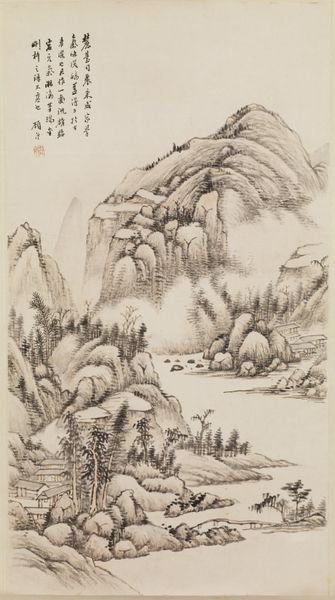
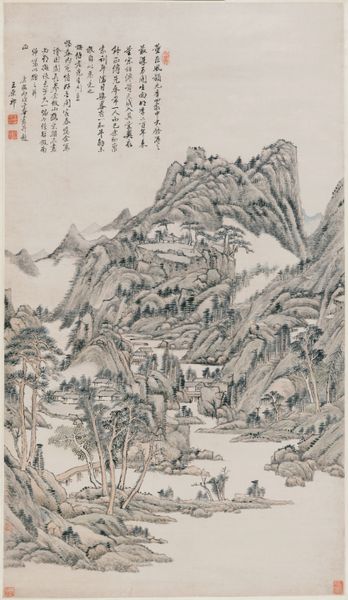
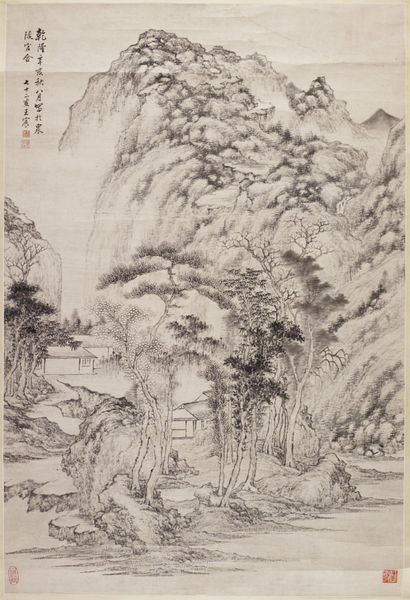
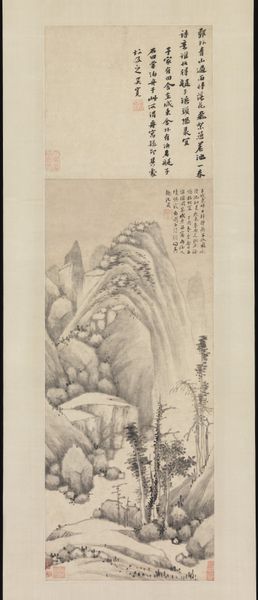
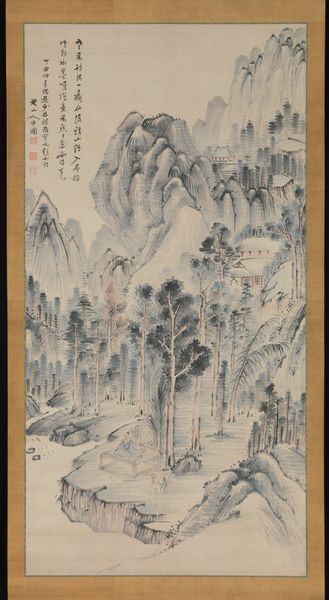
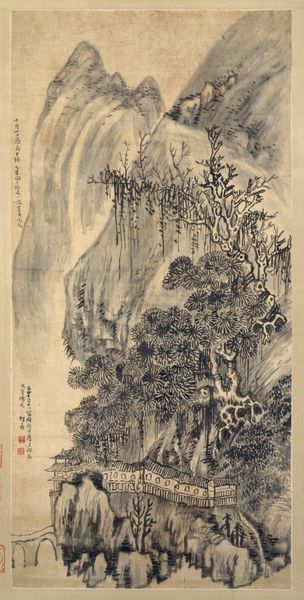
Born in Kiangsu province, Wang Ch'en was a descendant of the great literatus Wang Shih-min and a great grandson of the artist Wang Yuan-ch'i. He served for a while in the Grand Secretariat and as a prefect in Hunan province. Wang's illustrious family heritage strengthened his reputation as an orthodox painter and he is one of the so-called Four Minor Wangs of the later Ch'ing. Wang's inscriptions here indicate that the basis for this album of large landscapes was the natural scenery of Ch'u, a Warring States (480-221 BCE) kingdom located south of the Yangtze River. In 1774, Wang was serving as a low-level official in this region. His inscriptions also mention earlier poets and painters whose conceptual and stylistic influences along with natural scenery inspired the various scenes here, which were based on sketches made at the sites themselves. The inscriptions read: 1) The landscape of Ch'u is extremely scenic. I came across one place and sketched it but neglected to ask its name. 2) One morning I entered the sea in search of Li Po; looking in vain among the paintings of mere mortals for the "Immortal of Ink." 3) The ceremonial burial mounds and Szechuan are neat. This is a scene of entering the gorge. 4) I have used the brushwork of Shu-ming (Wang Meng) to paint the style of Old Man Sung-hsueh (Chao Meng-fu). There is resemblance because they are from the same family.


Join the conversation
Join millions of artists and users on Artera today and experience the ultimate creative platform.
 Collect
More like this