silver, metal, sculpture
#
3d sculpting
#
silver
#
metal
#
jewellry advertising photography
#
jewelry design
#
collage layering style
#
fashion and textile design
#
sculptural image
#
historical fashion
#
wearable design
#
sculpture
#
jewelry
#
bridal fashion
Dimensions: 17 1/8 x 1 1/2 in. (43.5 x 3.81 cm)
Copyright: Public Domain
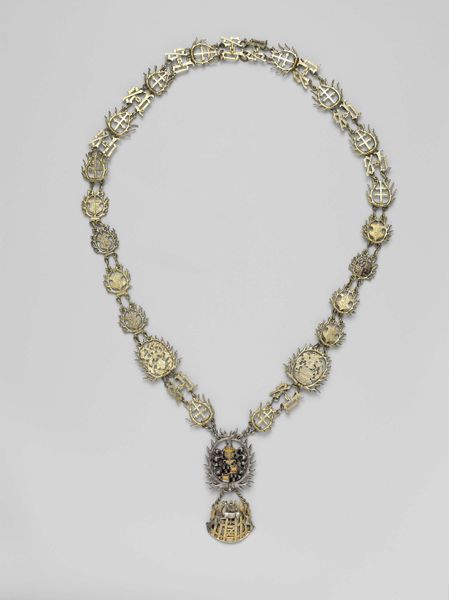
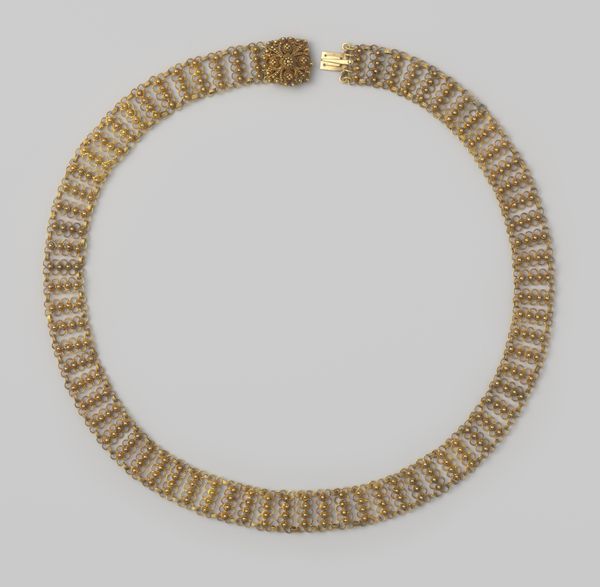
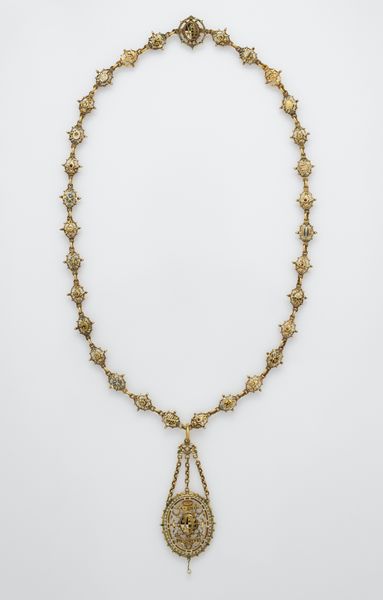
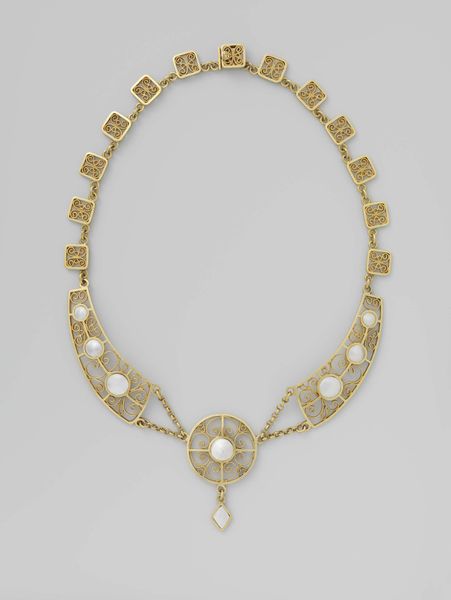
Curator: This necklace, crafted from silver in the 20th century, provides a glimpse into the artistic traditions of Beta Israel, also known as Falasha. It’s currently held in the collection of the Minneapolis Institute of Art. Editor: My first impression is of a potent simplicity. The stark silver and geometric composition – particularly that central Star of David – speak to a grounded sense of cultural identity. Curator: Precisely! The Star of David, of course, is a potent symbol within Jewish identity and experience, but consider that the Beta Israel community faced particular challenges maintaining and expressing that identity. Editor: Can you elaborate on those challenges? Understanding the Beta Israel community’s unique history, particularly in Ethiopia and their eventual migration to Israel, shapes how we interpret such pieces of wearable art. Curator: Absolutely. This necklace represents a link to the community’s distinct form of Judaism, one practiced for centuries in relative isolation. Jewelry such as this functioned as a form of cultural preservation, of defiant, aesthetic self-expression in a world often hostile to their existence. Editor: And silver, the material choice itself. Its relationship to ritual, to purity, perhaps also economic realities facing the Beta Israel. How do those social factors influence the necklace’s construction and use? Curator: Consider the meticulous metalwork. The repetition of form creates visual rhythm, and speaks to a refined craftsmanship, a dedication to artistry within the community despite outside pressures. These weren't mere decorative pieces; they were declarations. Editor: So, viewed through a lens of resistance and resilience, what might the impact of pieces like this be for future generations? What dialogues do they inspire around cultural heritage and self-representation? Curator: It stands as an example of how art serves as a historical marker, and speaks to theBeta Israel experience, as an intersectional narrative involving identity, faith and power. It calls for ongoing dialogue. Editor: Definitely. Thank you, I found that context exceptionally powerful. It reminds us to consider not just what we see, but also the unseen forces shaping the artwork's very existence.
Comments

minneapolisinstituteofart over 2 years ago
⋮
The Jewish Diaspora has a long history in Ethiopia—all the way back to King Solomon and the Queen of Sheba (950 BCE), according to some traditions. Ethiopians who practice Judaism call themselves Beta Israel, “From the House of Israel.” This necklace features the Magen David (Star of David), one of the most universally recognized symbols of the Jewish faith. Many who wear the Star believe it offers good fortune and protection from evil spirits.


Join the conversation
Join millions of artists and users on Artera today and experience the ultimate creative platform.
 Collect
More like this