2007
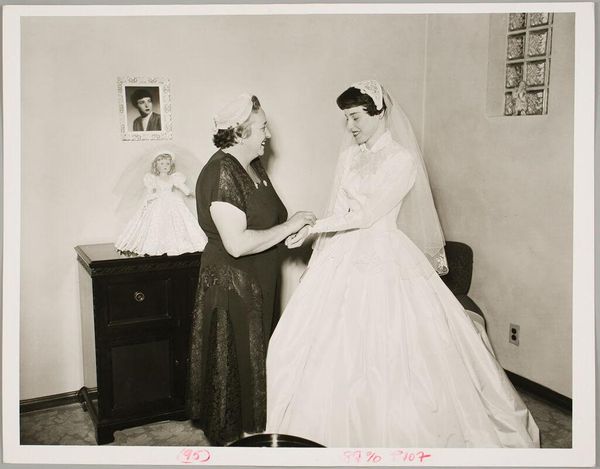
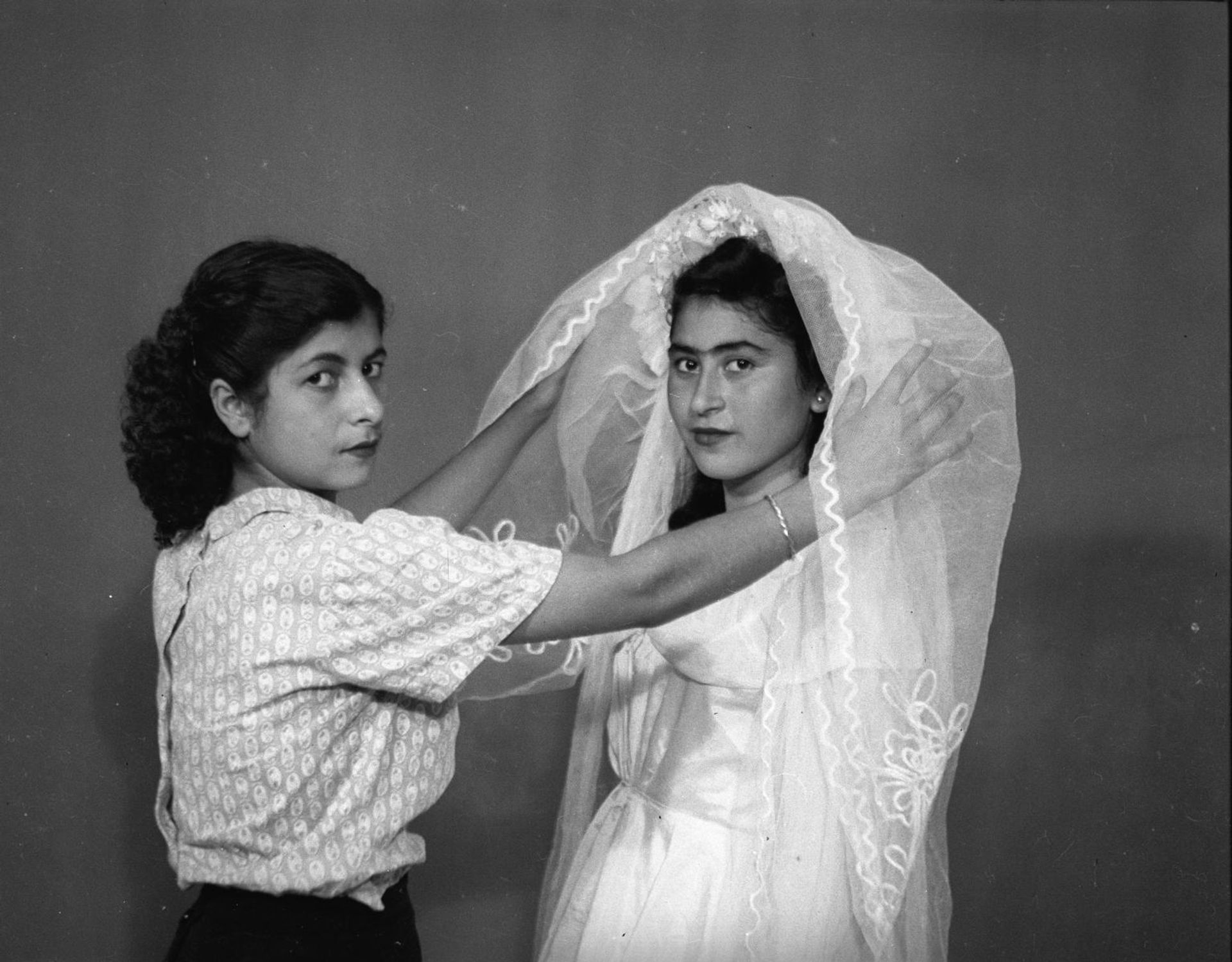
Anonymous. Studio Shehrazade, Saida, Lebanon, early 1960s. Hashem el Madani

Listen to curator's interpretation
Curatorial notes
Curator: This gelatin silver print, attributed to Hashem el Madani, is titled "Anonymous. Studio Shehrazade, Saida, Lebanon, early 1960s," part of Akram Zaatari's exploration of the Arab Image Foundation. It measures about 19 by 24 centimeters. Editor: It's striking how the image seems to capture a moment of transition, a young woman being adorned in her bridal veil. There's a palpable sense of expectation and vulnerability. Curator: Right, the process behind studio portraiture in that era is fascinating. Madani, working in Saida, Lebanon, essentially ran a photo production line. These weren't simply snapshots, but carefully constructed images fulfilling social needs. Editor: Absolutely. And the anonymity speaks volumes. Whose gaze are we intercepting? It prompts questions about societal roles, gendered expectations within Lebanese culture at the time, and the performance of identity. Curator: The veil itself, its texture and the labor involved in its creation, is important. It embodies the material culture of weddings, the economic realities behind such displays, and the standardized visual language of marriage. Editor: It's a tender moment, but also a powerful statement on the pressures and traditions surrounding women's lives. Considering Lebanon's complex history, this image becomes a potent site for examining social norms and cultural identity. Curator: Seeing it through that lens offers a rich understanding of material culture. Editor: Indeed, it urges us to question the image's role in shaping and reflecting those power dynamics.