About this artwork
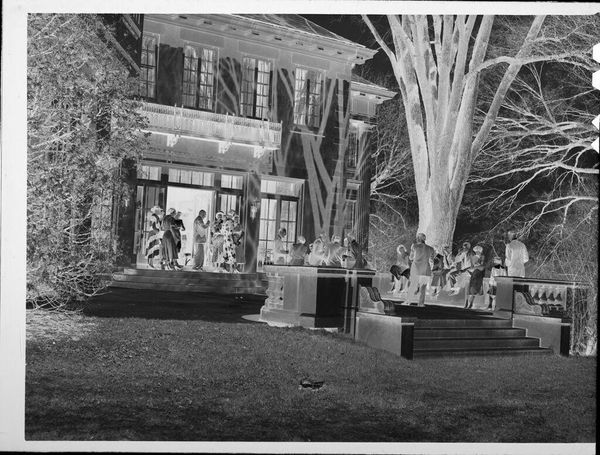
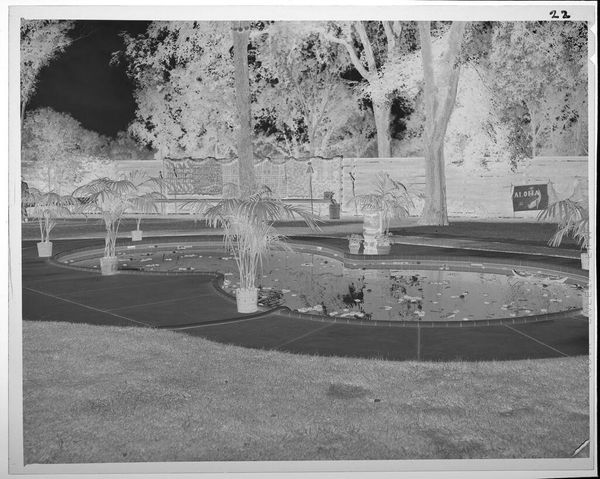
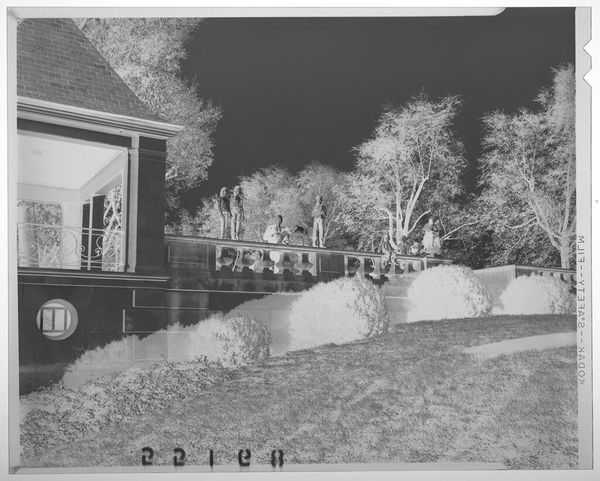
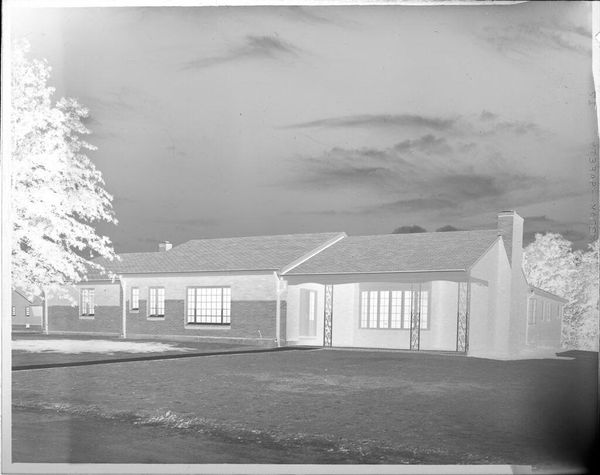
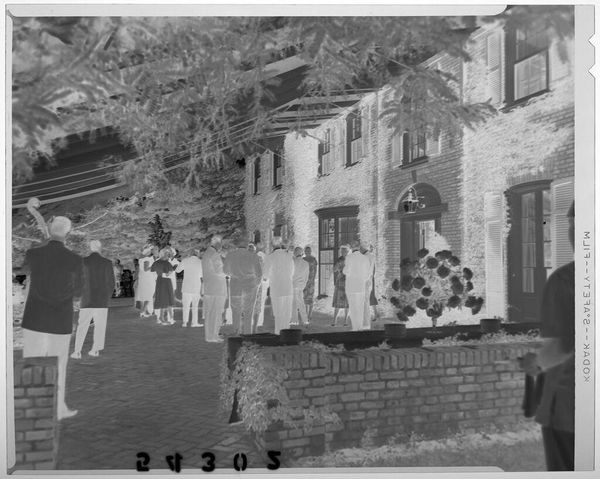
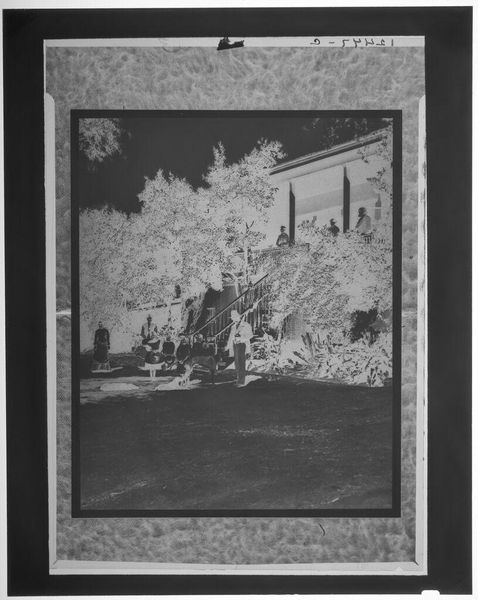
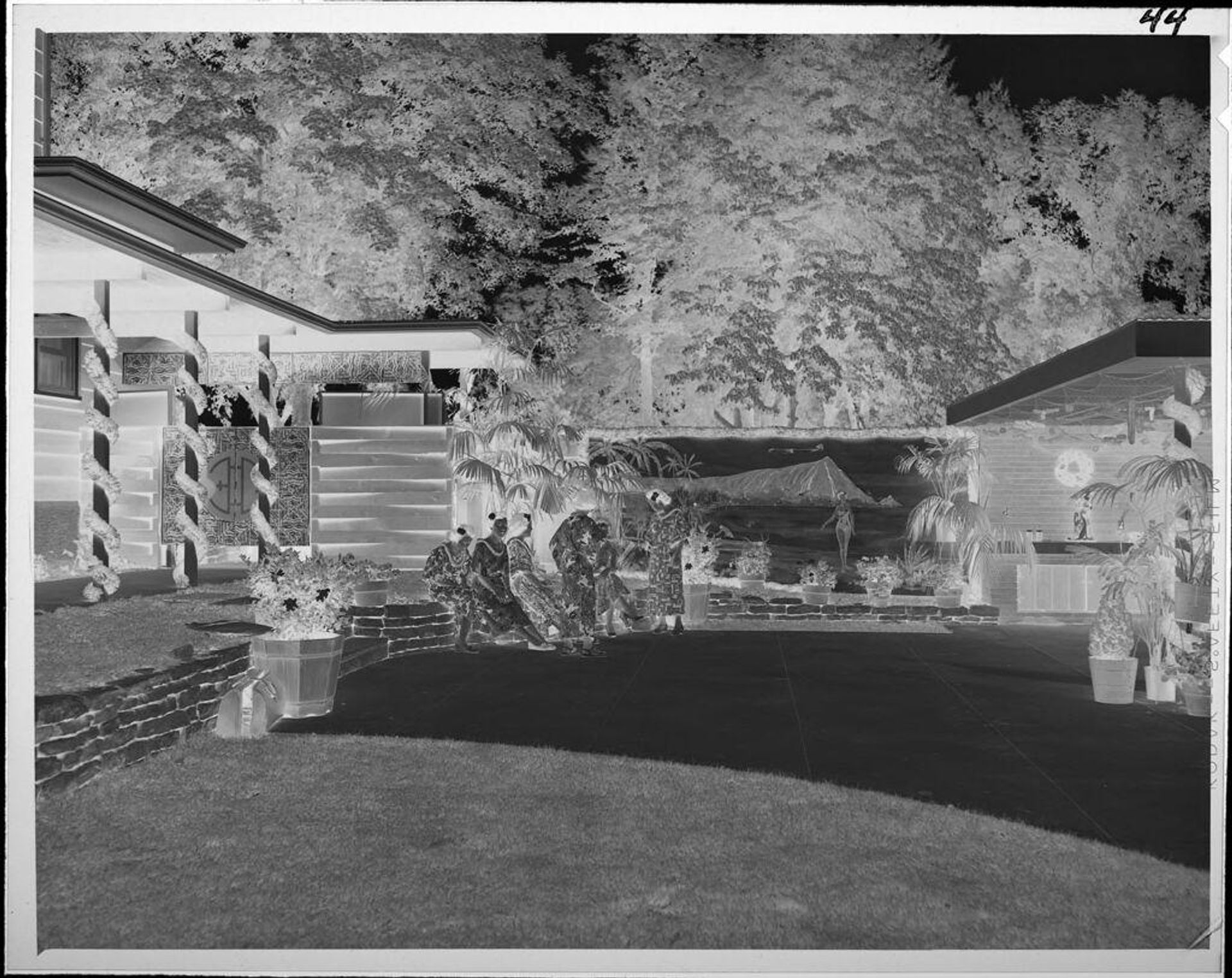
Curator: This is an untitled photograph, attributed to Lucian and Mary Brown, and its subject is a backyard decorated for a luau. Editor: My first impression is that the mood feels uncanny, with the reversed tones rendering a familiar scene oddly unsettling. Curator: Indeed. The image presents a constructed paradise. It's interesting to think about the labor involved in creating this temporary escapist environment. The decorations, the mural... they all represent a certain consumption of "Hawaiian" culture. Editor: Absolutely. And the photograph itself is another layer of production. What materials were used for these decorations? The textures of the fabrics, the plants, the mural paint… it all speaks to a certain level of material excess. Curator: It also raises questions about authenticity and cultural appropriation, doesn't it? Whose vision of paradise are we seeing here, and at whose expense? Editor: Precisely. Focusing on the materiality and construction allows us to unpack these complex social dynamics. Curator: Seeing the luau as a constructed reality helps us question dominant narratives about leisure, labor, and cultural exchange. Editor: For me, the image really highlights the constructed nature of these displays and the labor involved in creating such illusions.
Untitled (back yard decorated for luau)
c. 1950

Artwork details
- Dimensions
- 10.16 x 12.7 cm (4 x 5 in.)
- Location
- Harvard Art Museums
- Copyright
- CC0 1.0
Comments
Share your thoughts
About this artwork
Curator: This is an untitled photograph, attributed to Lucian and Mary Brown, and its subject is a backyard decorated for a luau. Editor: My first impression is that the mood feels uncanny, with the reversed tones rendering a familiar scene oddly unsettling. Curator: Indeed. The image presents a constructed paradise. It's interesting to think about the labor involved in creating this temporary escapist environment. The decorations, the mural... they all represent a certain consumption of "Hawaiian" culture. Editor: Absolutely. And the photograph itself is another layer of production. What materials were used for these decorations? The textures of the fabrics, the plants, the mural paint… it all speaks to a certain level of material excess. Curator: It also raises questions about authenticity and cultural appropriation, doesn't it? Whose vision of paradise are we seeing here, and at whose expense? Editor: Precisely. Focusing on the materiality and construction allows us to unpack these complex social dynamics. Curator: Seeing the luau as a constructed reality helps us question dominant narratives about leisure, labor, and cultural exchange. Editor: For me, the image really highlights the constructed nature of these displays and the labor involved in creating such illusions.
Comments
Share your thoughts