About this artwork
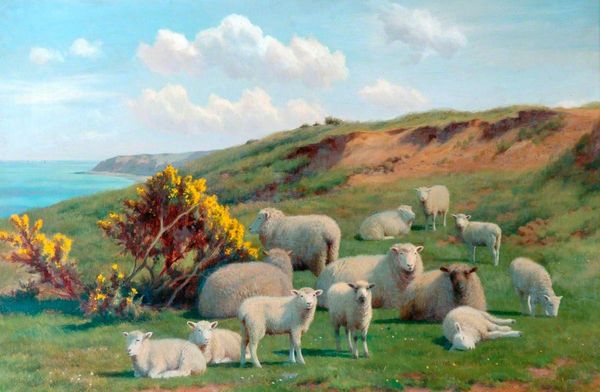
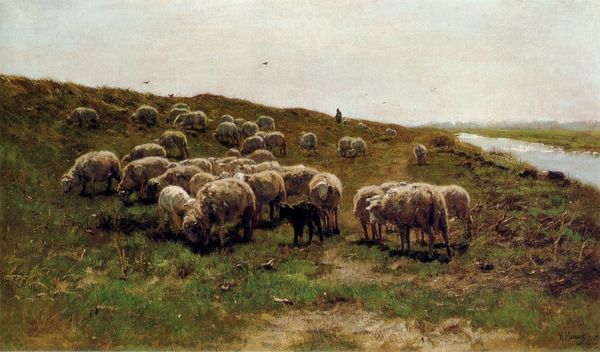
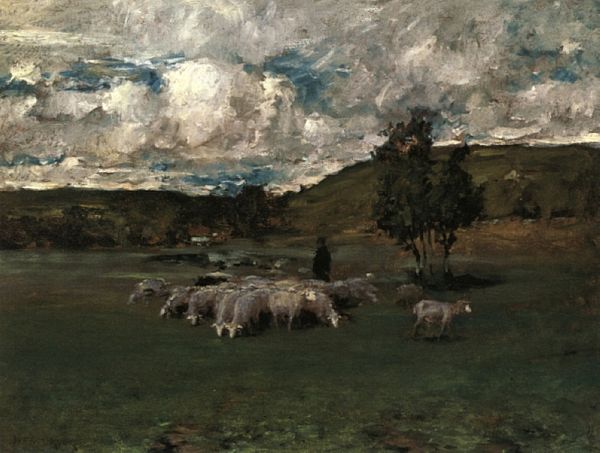
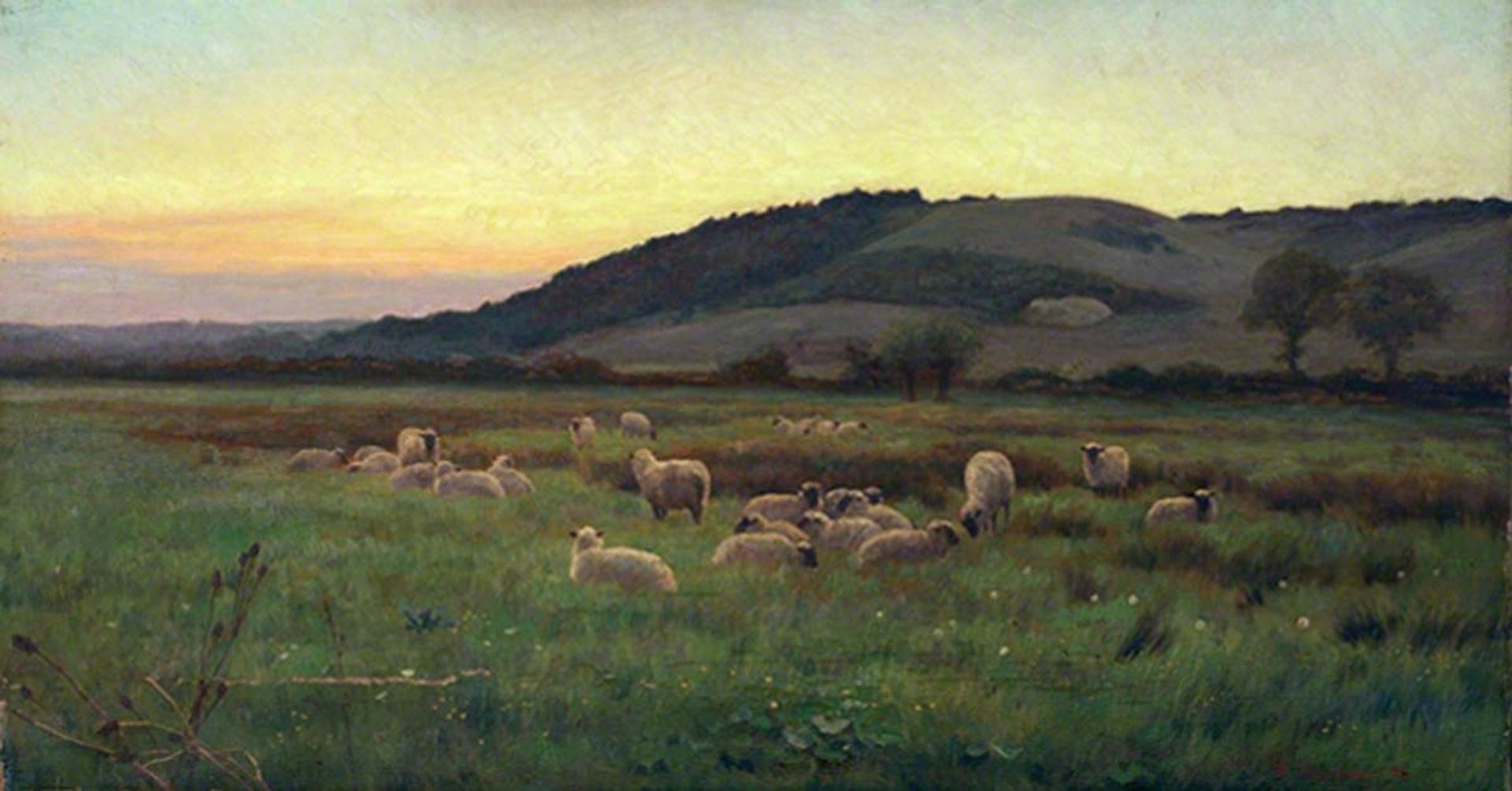
William Sidney Cooper made this oil on canvas painting of Whitchurch Hill, Oxfordshire, in the late nineteenth or early twentieth century. In this period, rural England was seen as the idyllic heart of the nation. The painting evokes a sense of tranquility, with sheep grazing peacefully in a lush field under a serene sky. Cooper presents an image of untouched pastoral beauty that can be understood in relation to the agricultural depression of the 1870s to 1890s, a time when cheap imports of grain undercut domestic production and forced many farmers off their land. Paintings such as this offered an appealing vision of continuity. Cooper's success depended upon an art market whose collectors often sought refuge from the social and economic uncertainties of British modernity. As historians, we look at the painting not just for its aesthetic qualities, but for what it tells us about the culture and society that produced it, using a variety of sources, from economic data to exhibition reviews to letters and diaries.

Artwork details
- Medium
- plein-air, oil-paint
- Copyright
- William Sidney Cooper,Fair Use
Tags
Comments
Share your thoughts
About this artwork
William Sidney Cooper made this oil on canvas painting of Whitchurch Hill, Oxfordshire, in the late nineteenth or early twentieth century. In this period, rural England was seen as the idyllic heart of the nation. The painting evokes a sense of tranquility, with sheep grazing peacefully in a lush field under a serene sky. Cooper presents an image of untouched pastoral beauty that can be understood in relation to the agricultural depression of the 1870s to 1890s, a time when cheap imports of grain undercut domestic production and forced many farmers off their land. Paintings such as this offered an appealing vision of continuity. Cooper's success depended upon an art market whose collectors often sought refuge from the social and economic uncertainties of British modernity. As historians, we look at the painting not just for its aesthetic qualities, but for what it tells us about the culture and society that produced it, using a variety of sources, from economic data to exhibition reviews to letters and diaries.
Comments
Share your thoughts