About this artwork
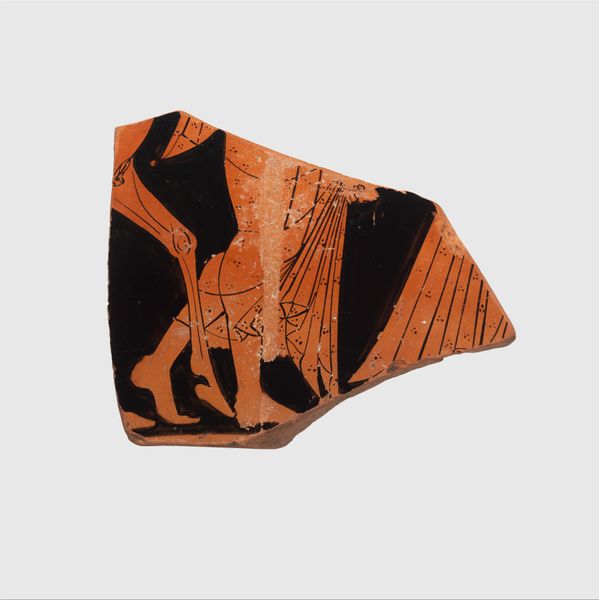
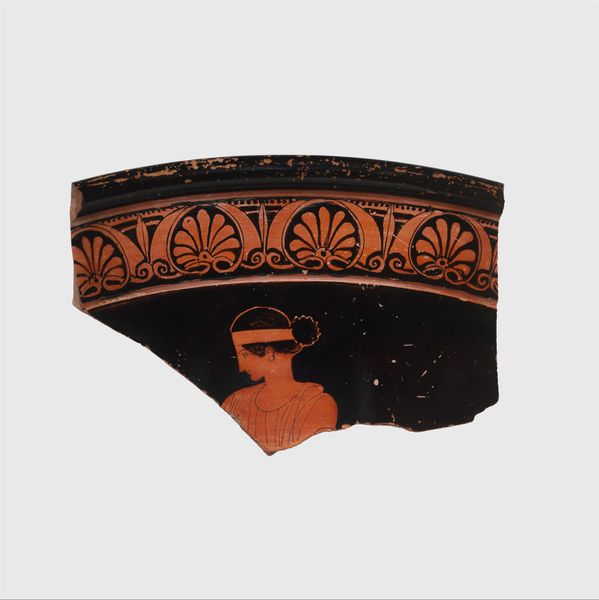
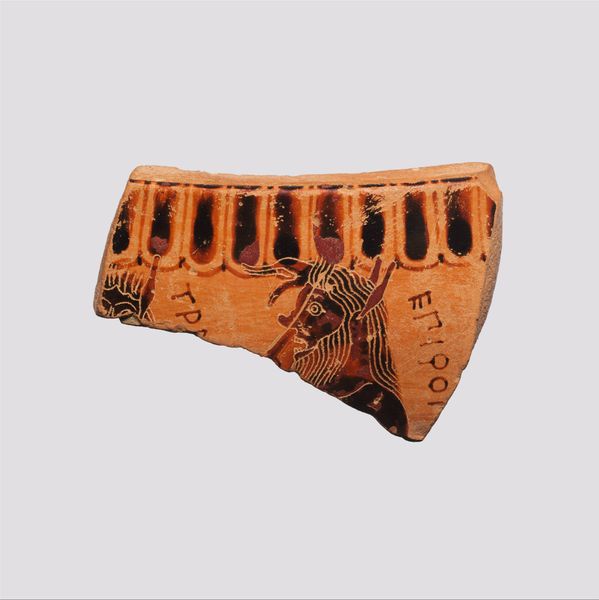
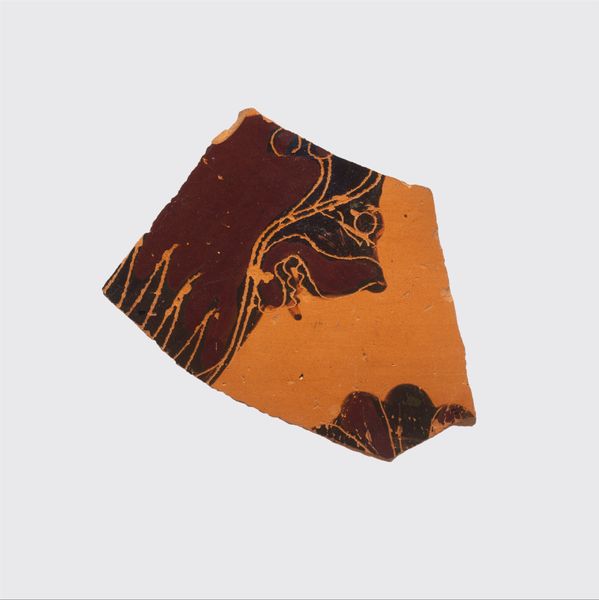
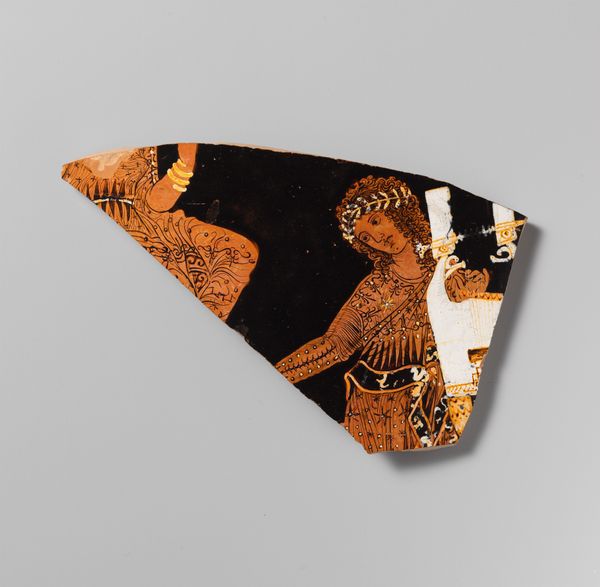
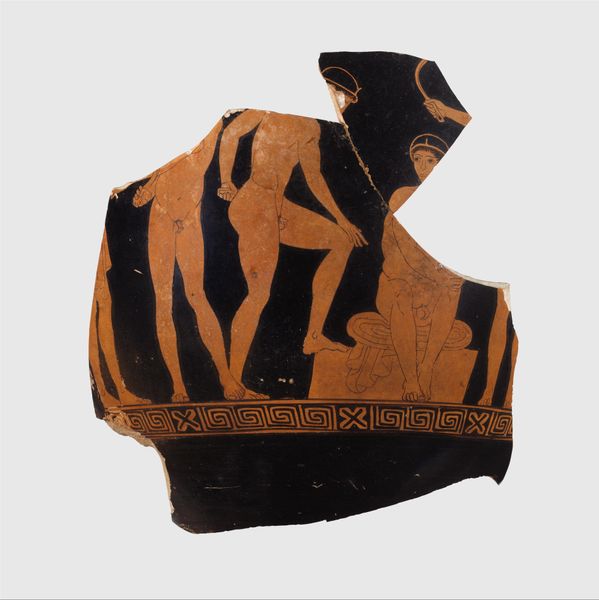
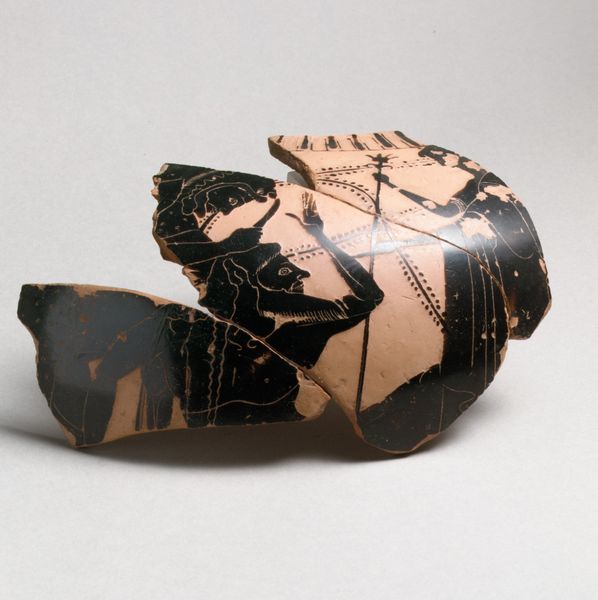
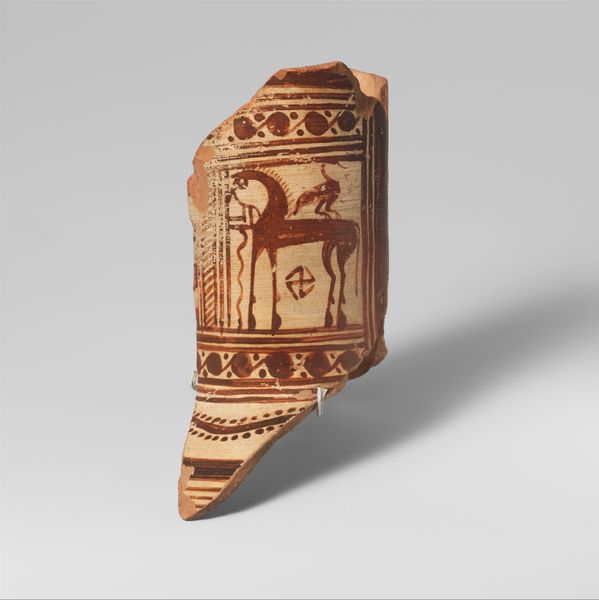
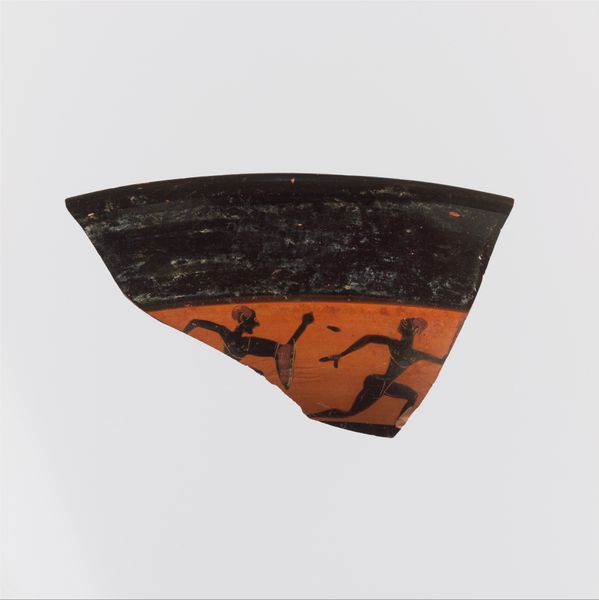
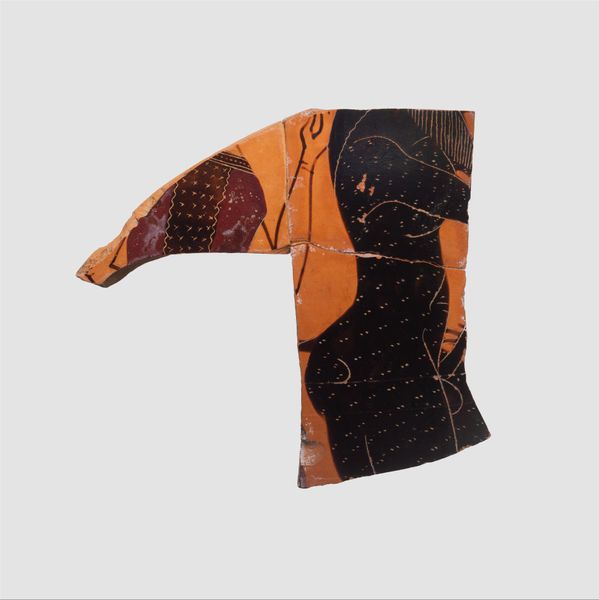
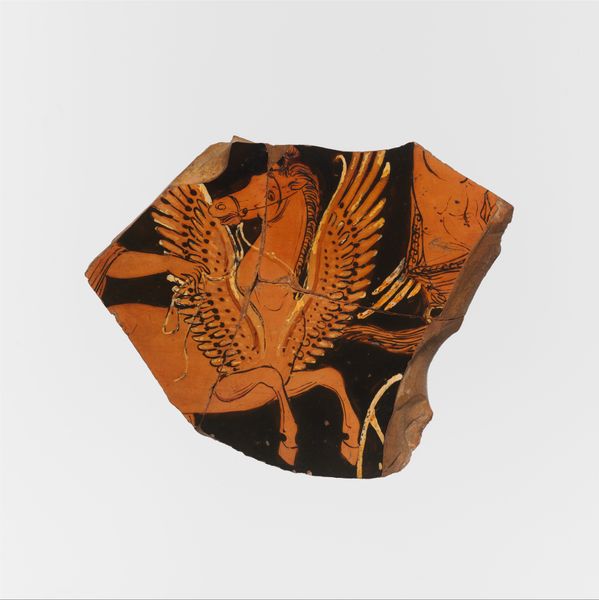
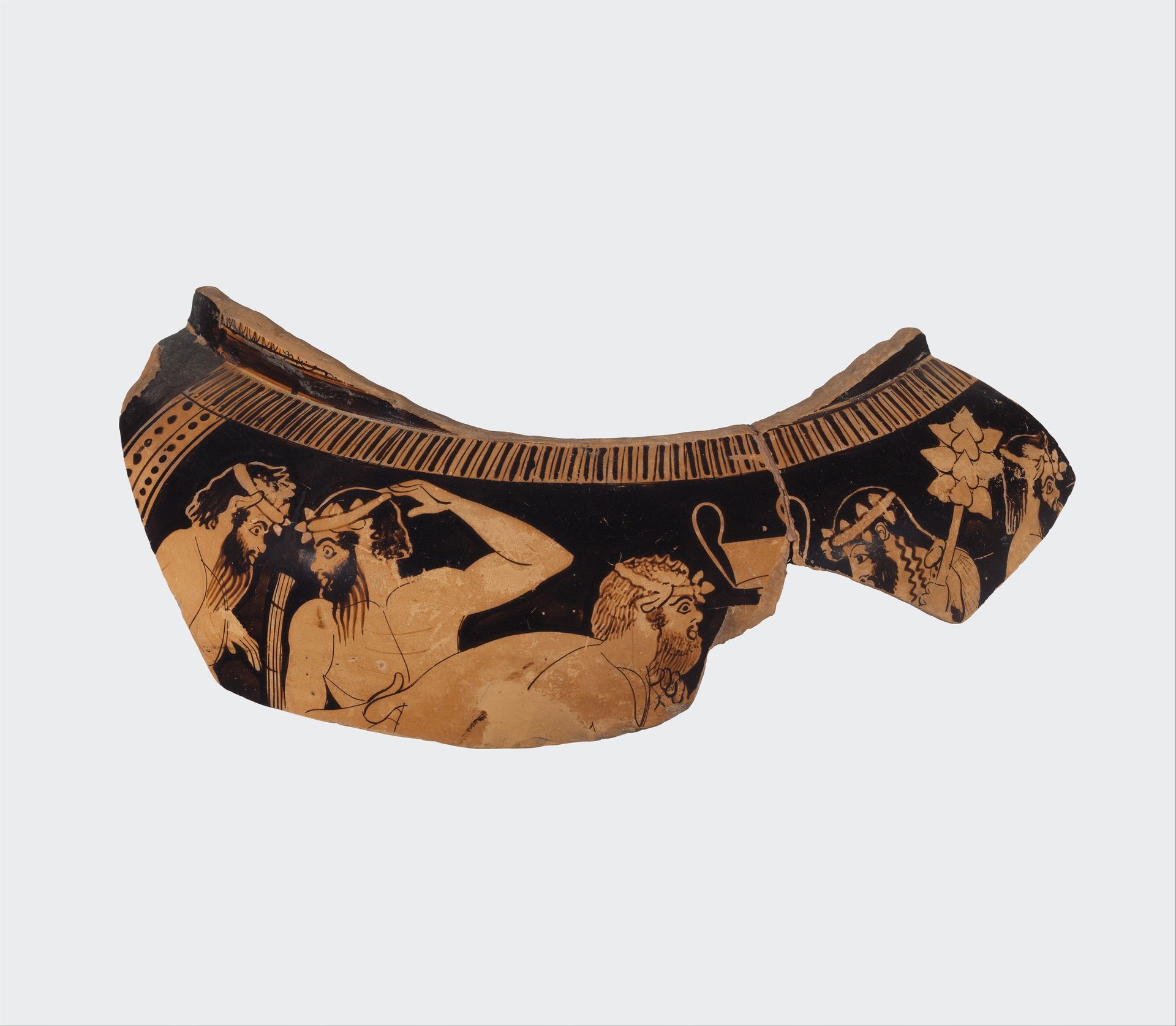
This fragment of a terracotta column-krater, or wine mixing bowl, was made by an anonymous artist in ancient Greece. The scene illustrates a symposium, a crucial social ritual for aristocratic men. The symposium provided an opportunity for elite members of society to perform and assert their social status through displays of wit, philosophical discussion, and political maneuvering, all lubricated by wine. This fragment offers insights into the visual codes and cultural references that shaped Greek identity. It was in these very rituals that social hierarchies were reinforced and political alliances forged. By studying such artifacts, we gain insight into the social structures of ancient Greece, revealing the values, beliefs, and power dynamics that defined this society. Historical sources, archaeological findings, and textual analysis are essential tools that enable art historians to interpret the visual language of Greek pottery and to understand its historical significance. The meaning of art, as we can see, is contingent on its social and institutional context.
Fragment of a terracotta column-krater (mixing bowl for wine and water)
460 BC


Artwork details
- Medium
- drawing, ceramic
- Dimensions
- H. 4 3/8 in. (11.1 cm) diameter 12 3/16 in. (31 cm)
- Location
- Metropolitan Museum of Art, New York, NY
- Copyright
- Public Domain
Tags
Comments
Share your thoughts
About this artwork
This fragment of a terracotta column-krater, or wine mixing bowl, was made by an anonymous artist in ancient Greece. The scene illustrates a symposium, a crucial social ritual for aristocratic men. The symposium provided an opportunity for elite members of society to perform and assert their social status through displays of wit, philosophical discussion, and political maneuvering, all lubricated by wine. This fragment offers insights into the visual codes and cultural references that shaped Greek identity. It was in these very rituals that social hierarchies were reinforced and political alliances forged. By studying such artifacts, we gain insight into the social structures of ancient Greece, revealing the values, beliefs, and power dynamics that defined this society. Historical sources, archaeological findings, and textual analysis are essential tools that enable art historians to interpret the visual language of Greek pottery and to understand its historical significance. The meaning of art, as we can see, is contingent on its social and institutional context.
Comments
Share your thoughts