c. early 16th century
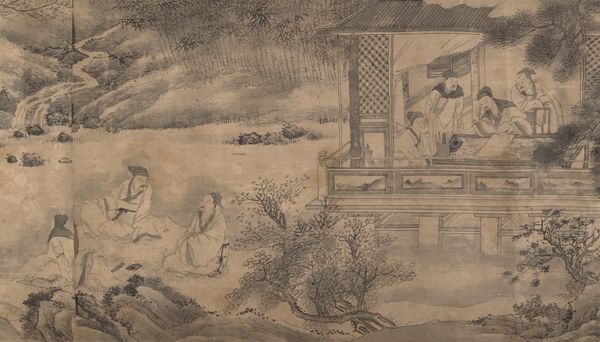
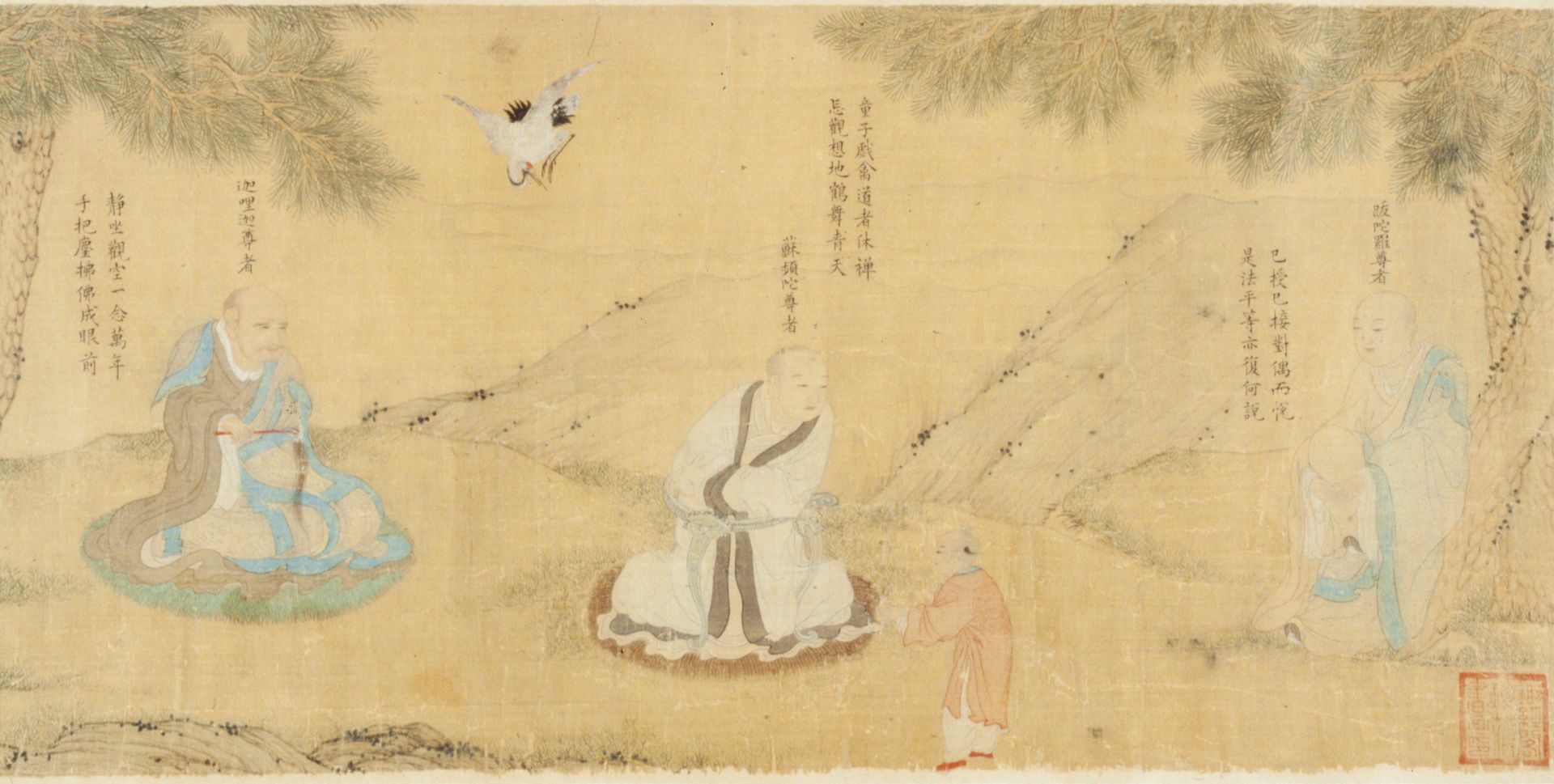
Eighteen Arhats (十八羅漢圖卷)


Listen to curator's interpretation
Curatorial notes
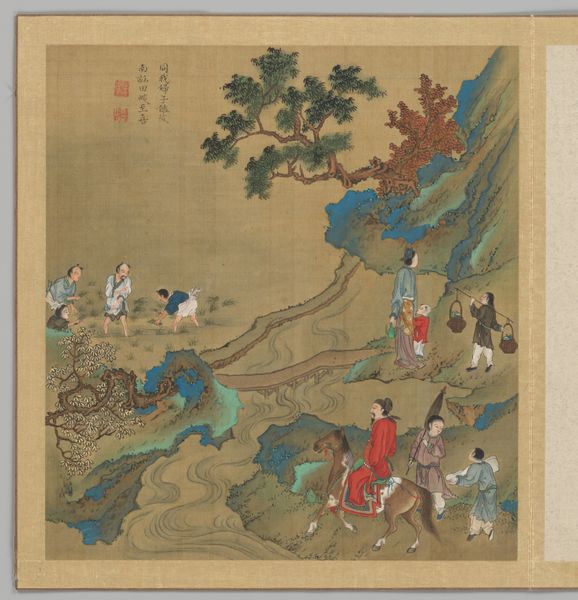
Curator: At first glance, this artwork emits such tranquility and calm. There's a simplicity that belies its depths. Editor: Yes, the immediate impression is one of quietude. This is a handscroll from the early 16th century, attributed to Ding Yunpeng, titled "Eighteen Arhats". It's painted in ink and watercolor on paper, a medium that lends itself so well to this airy landscape. But "Eighteen Arhats," aren't those enlightened disciples of Buddha? Curator: Exactly! The arhats were known for their advanced spiritual attainments, dwelling in remote locations, maintaining the Buddha's teachings, and awaiting Maitreya's arrival. You see them here meditating, engaged in conversation, accompanied by attendants… but each one’s unique qualities are rendered with such striking precision and delicate wash techniques. Notice that bird there - such perfect and economic strokes bring the scene to life. The narrative unfurls through the handscroll as you would have slowly experienced it in its original social context. Editor: I see. So, while the materials are simple—paper, ink, watercolor— the scroll is meant to convey profound spiritual understanding. And do the landscape settings indicate places of practice? The artist places them in mountainous terrains under trees... the visual metaphors of the mountains signify strength, persistence... It would give patrons encouragement. Curator: Yes, the iconography works on many levels, creating layered interpretations. Trees like the pines we see here may represent longevity and steadfastness. Then look closely: are some arhats exhibiting supernatural powers? Can you discern them offering blessings to humanity? These were deeply respected figures and the images tap into both personal aspirations of devotees, but also reinforced collective cultural values regarding piety. Editor: So, the very act of viewing it becomes a spiritual practice for the observer as they navigate these symbols. Are there many examples of this iconography at the time? Curator: The worship of Arhats and producing visual images became more widespread around this time. I find this painting so poignant—that combination of the individual and universal expressed so skillfully in washes of ink. Its legacy extends into Buddhist culture still. Editor: Well, my eye is drawn now to a political significance. That, within a hierarchical society, there would be images intended to emphasize virtuous behaviors amongst the individuals. I wonder about the location and exhibition history... These artworks offer access into what aspects of its past were revered or suppressed in relation to its reception and how it changed over time. Curator: Interesting points for consideration indeed.