

1650
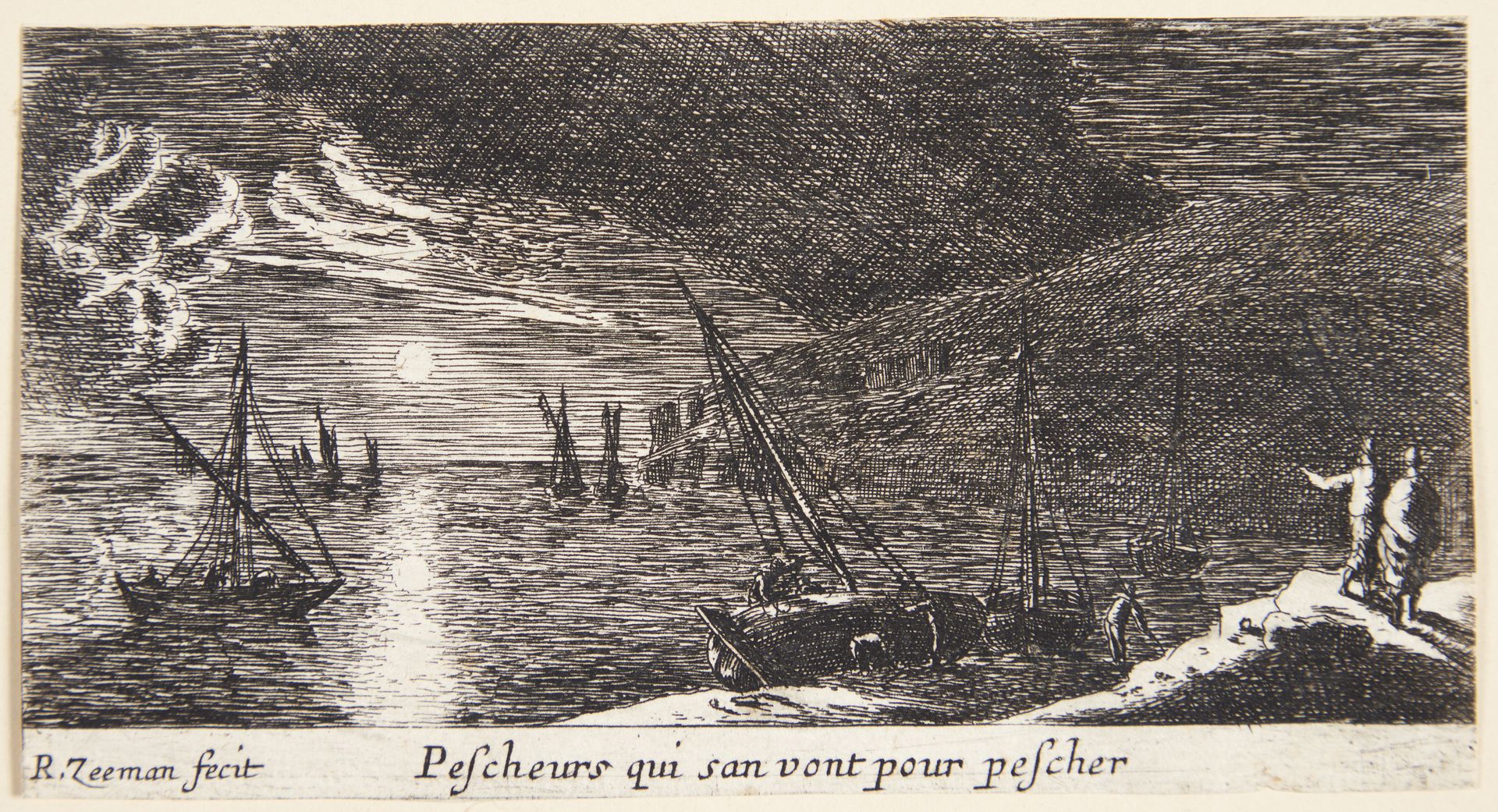
To færgebåde (steigerschuiten), i baggrunden et orlogsfartøj


Listen to curator's interpretation
Curatorial notes
Curator: This evocative etching, "To færgebåde (steigerschuiten), i baggrunden et orlogsfartøj" comes to us from Reinier Nooms, dating back to 1650. It resides in the collection of the Statens Museum for Kunst. What strikes you immediately? Editor: The drama! It’s stark, almost theatrical. The dark, heavy sky pressing down on the tiny boats heading out to sea, the contrast is quite intense. It makes me wonder about the vulnerability of those fishermen and their labor in that moment. Curator: Precisely! Nooms, also known as Zeeman, was famed for his marine scenes. This print really encapsulates the Dutch Golden Age interest in maritime power and the lives of those who lived by the sea. The very act of printing made images like this accessible to a wider public, thus forming a visual record for future generations. Editor: Thinking about the socio-political landscape then, the Dutch Republic was experiencing a boom in maritime trade. To see art reflect not just the grand naval exploits but the everyday toils of those contributing to that success...it grounds the narrative, highlighting labor, and the risk undertaken by the individuals within those vessels. Curator: I agree. The composition is interesting as well; the etching technique allows for strong lines to define the vessels. In particular the two figures in the bottom right seem to have power over the work. They add a personal touch. Editor: It’s impossible not to think about today's precarity. I keep seeing echoes between historical realities and current struggles with resources, power dynamics, labor rights. It brings history into direct dialogue with the issues we face. It demands critical engagement, linking our past with our present. Curator: Absolutely, thinking about this image helps highlight art's historical role. Reinier Nooms reminds us that beyond just aesthetic admiration, artwork has cultural and social value, acting as a mirror to different eras. Editor: And prompting questions about progress, justice, and who gets to narrate history in the first place. That is the activist charge that this work provokes within me.