print, engraving
#
portrait
#
medieval
# print
#
history-painting
#
engraving
Dimensions: 261 mm (height) x 169 mm (width) (plademaal)
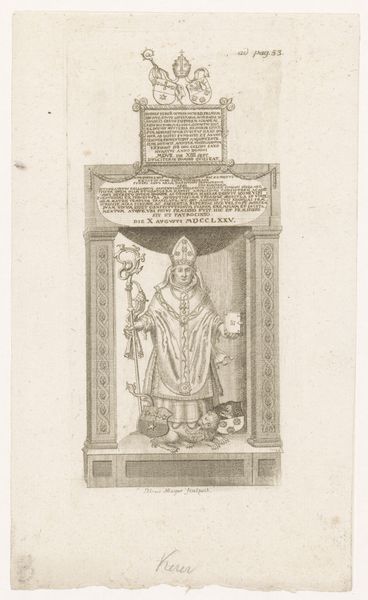
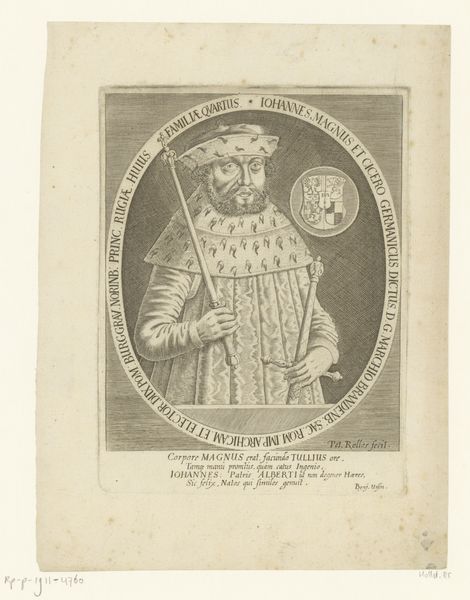
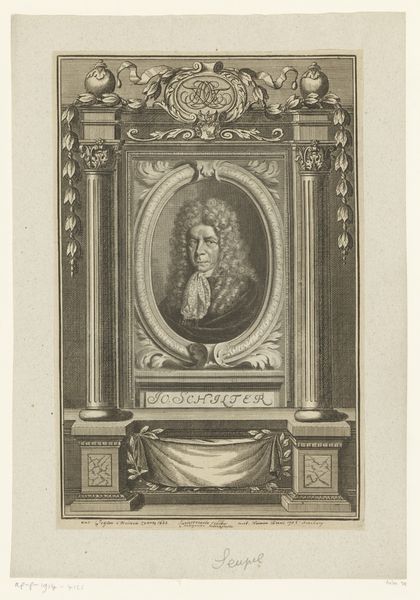
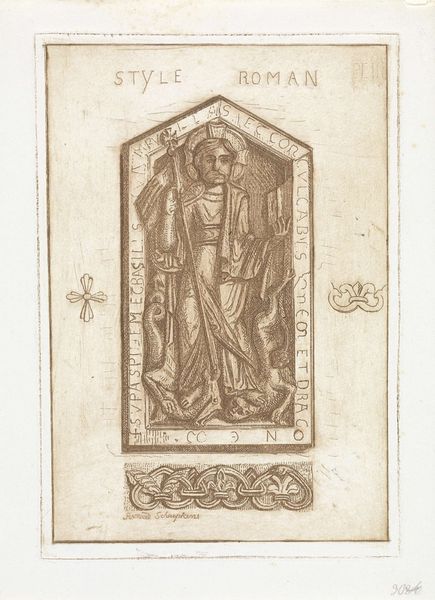
Curator: This print, titled "E. O. Thott, gravsten," likely created between 1726 and 1757, depicts a solemn figure. I’m immediately drawn to the pronounced formality of the composition. It feels very staged and carefully constructed. Editor: Well, it IS a grave marker. I think this piece reflects its social function more than its pure aesthetics, though the level of detail indicates a considerable investment of skill and resources. Engravings like these played an important role in shaping historical memory, even amongst nobility, ensuring remembrance and reinforcing their social position for the posterity of those left to admire it. Curator: I see what you mean. The medium itself, an engraving, speaks to a particular mode of production and circulation. Look at the intricacy of the lines creating the patterns on his sleeves! I wonder about the labor involved and the dissemination of such images. Were these readily available, or luxury items? How widely did they circulate? Editor: Luxury items no doubt. We can appreciate it today at the SMK - Statens Museum for Kunst because they recognized the public value of such portraits as well as prints that carry broader historical narratives about people such as Odvardt Helmoldt de Lode. It underscores how elite families were literally investing in the preservation of their lineage within the visual culture of their time. Curator: Yes, that symbolic value translates directly to materials. The time spent cutting the design, the expense of the paper – these details underline its cultural importance. Also notice the integration of text; the epitaph is inseparable from the image, contributing to its lasting legacy. What do you think the sword means? Editor: The sword clearly signifies status and the virtues expected of the nobility. The image as a whole served to legitimize the figure’s place within the social hierarchy of the period. I mean, the portrait itself is structured with architectural motifs as if he’s literally holding up an entrance way or a monumental achievement to the world, like he’s the new emperor. Curator: Fascinating how an examination of process – from carving the plate to disseminating the finished prints – enhances our appreciation of both its immediate impact and its long-term cultural resonance. Editor: Precisely! The gravestone portrait invites us to reconsider how power, memory, and art intersect within specific historical contexts.
Comments
No comments
Be the first to comment and join the conversation on the ultimate creative platform.
 Collect
 React
React Comment
More like this