Dimensions: height 324 mm, width 202 mm
Copyright: Rijks Museum: Open Domain
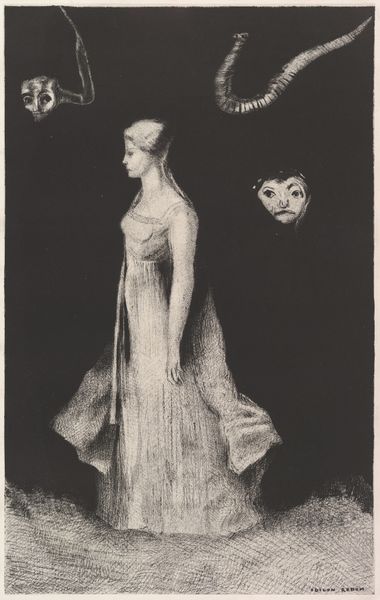
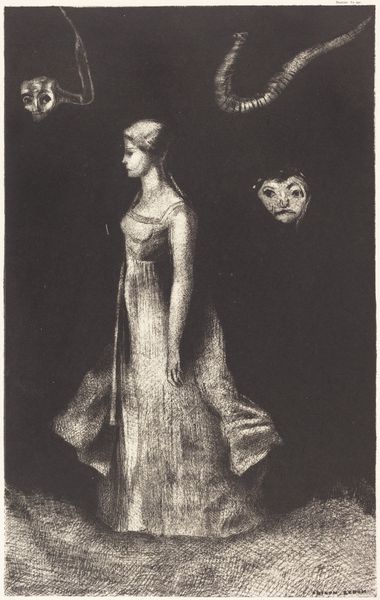
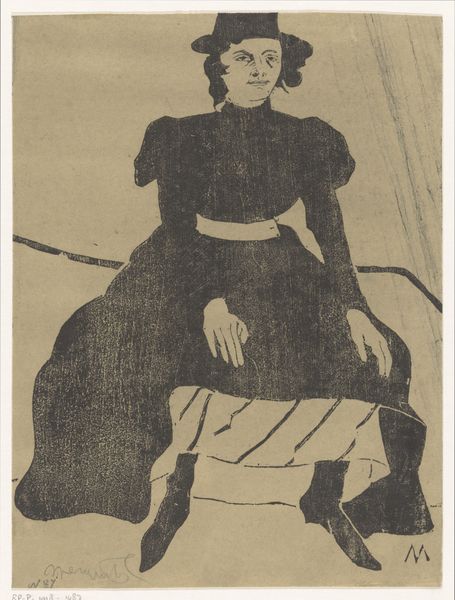
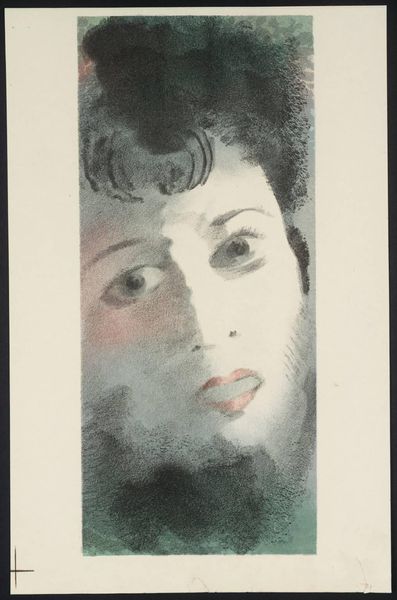
Curator: I find this preliminary book cover design incredibly evocative, almost haunting. The somber tones really amplify the inherent tragedy of the story. Editor: We're looking at a mixed-media print, believed to have been produced between 1947 and 1960, intended as "Bandontwerp voor: Leo Tolstoj, Anna Karenina." That's "Cover Design for Leo Tolstoy's Anna Karenina." The figure of Anna dominates, with a military officer looming behind. Curator: There's a stark contrast between Anna’s vulnerable expression and the rigid, almost ghostly, figure behind her. That officer...it adds this layer of impending doom, a premonition of her fate. And the use of monochrome intensifies that feeling. Editor: The way the artist has chosen to render the image in monochrome points us to post-war printmaking techniques. What's striking to me is how a commercial project for a book jacket borrows so heavily from the visual vocabulary of propaganda posters prevalent at the time. Curator: Interesting. I'm immediately drawn to the patterning used to define form, particularly in her dress and the fur stole. It's such an effective method for creating texture. Editor: Indeed, those elements speak to the social position, or rather the trappings, of her class—the material expressions of wealth within that world. But observe also the background architecture: It points to the specific spatial environments of power, influence, and access to the social relations and resources of 19th century Russia that informed the tragedy within. Curator: True, it firmly establishes Anna within the context of Russian aristocracy. It’s fascinating how much visual information is conveyed, even in this preparatory format. And the raw emotion so clearly rendered! Editor: Seeing it as a template rather than a finished product provides insight into design practices and commercial applications of art. So this preliminary piece offers an entryway into the art of reproduction and the world of book publishing as labor, ultimately informing broader dialogues around aesthetics and value. Curator: Precisely. It's more than just a depiction; it’s an object loaded with intention and cultural weight, both artistic and industrial. Editor: Agreed, looking at the piece in terms of form and material production illuminates how such cultural artifacts communicate social conditions of that moment.
Comments
No comments
Be the first to comment and join the conversation on the ultimate creative platform.
 Collect
 React
React Comment
More like this