About this artwork
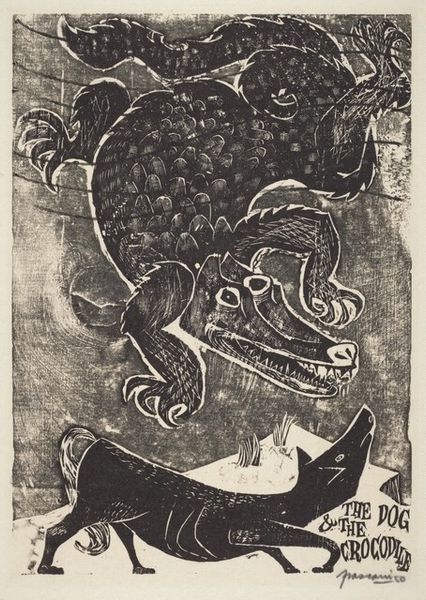
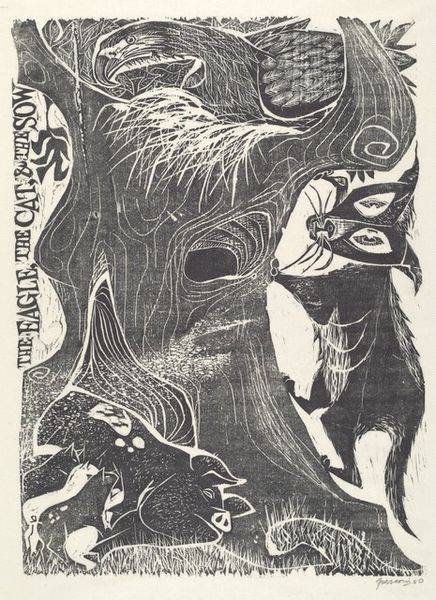
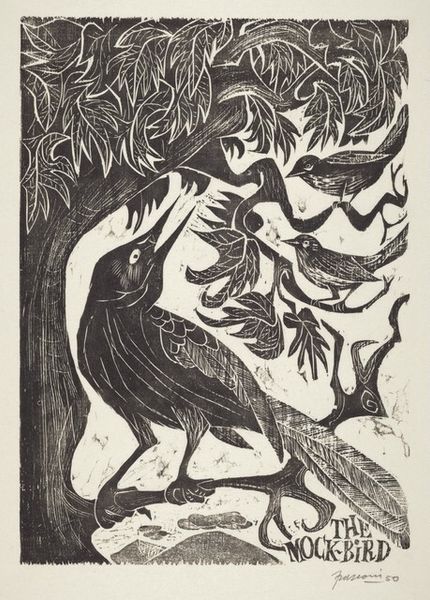
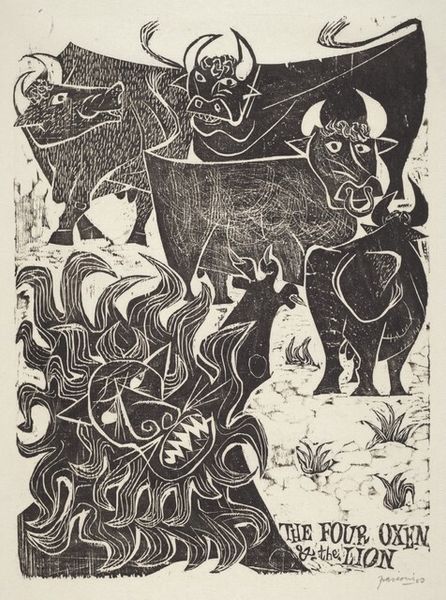
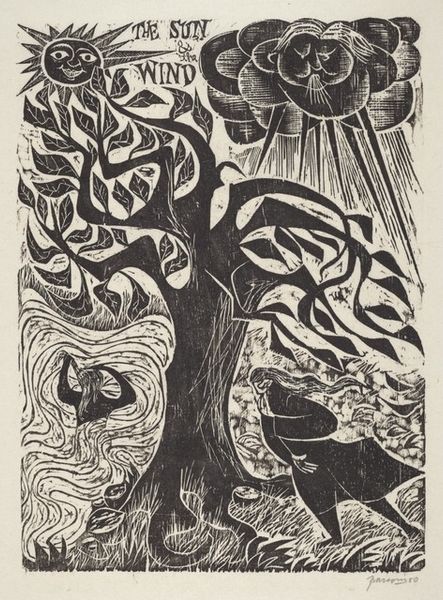
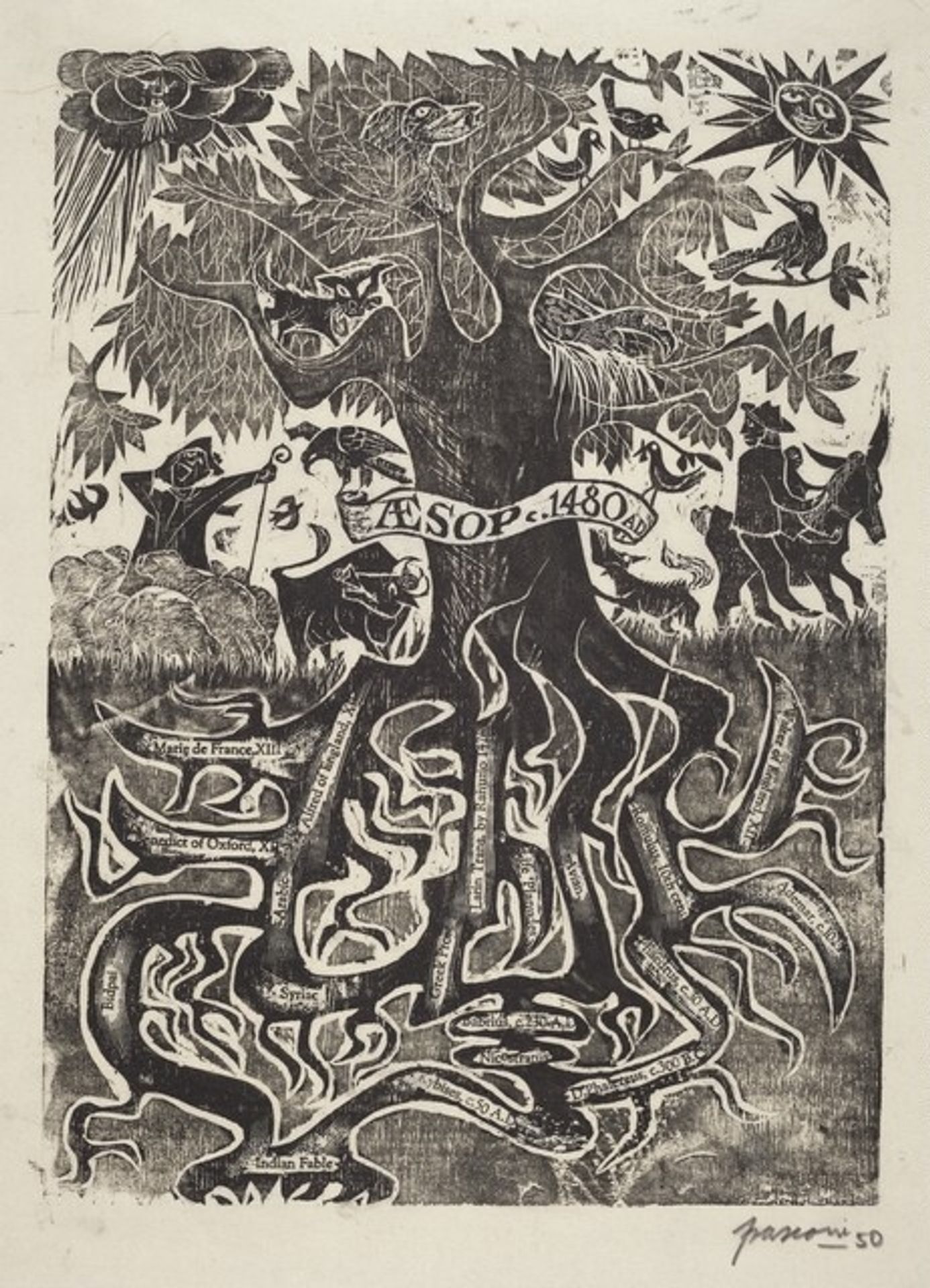
Antonio Frasconi's "The Aesop Tree" is an earthy, black-and-white woodcut print teeming with life and stories. It’s a process-heavy medium, woodcut. Every line, every shape is consciously carved away, leaving only the raised surfaces to catch the ink. Look at the sun in the upper right-hand corner, how it smiles with jagged rays—a primitive, almost childlike symbol of warmth and vitality. The whole image is full of figures, animals, faces, and text, all woven together like a dense tapestry. The texture is incredible; you can almost feel the grain of the wood. There’s something deeply satisfying about the stark contrast between the black ink and the bare paper. The roots of the tree are like twisting tentacles, each one labeled with what looks like different sources of the Aesop fable. They remind me of Alfred Rethel's woodcuts. Ultimately, it’s a reminder that art is an ongoing conversation, a dialogue between the artist, the materials, and the viewer. It leaves so much space for interpretation, and I think that’s where its power lies.


Artwork details
- Medium
- graphic-art, print, woodcut
- Copyright
- National Gallery of Art: CC0 1.0
Tags
graphic-art
narrative-art
old engraving style
folk-art
woodcut
Comments
Be the first to share your thoughts about this work.
About this artwork
Antonio Frasconi's "The Aesop Tree" is an earthy, black-and-white woodcut print teeming with life and stories. It’s a process-heavy medium, woodcut. Every line, every shape is consciously carved away, leaving only the raised surfaces to catch the ink. Look at the sun in the upper right-hand corner, how it smiles with jagged rays—a primitive, almost childlike symbol of warmth and vitality. The whole image is full of figures, animals, faces, and text, all woven together like a dense tapestry. The texture is incredible; you can almost feel the grain of the wood. There’s something deeply satisfying about the stark contrast between the black ink and the bare paper. The roots of the tree are like twisting tentacles, each one labeled with what looks like different sources of the Aesop fable. They remind me of Alfred Rethel's woodcuts. Ultimately, it’s a reminder that art is an ongoing conversation, a dialogue between the artist, the materials, and the viewer. It leaves so much space for interpretation, and I think that’s where its power lies.
Comments
Be the first to share your thoughts about this work.