

1861
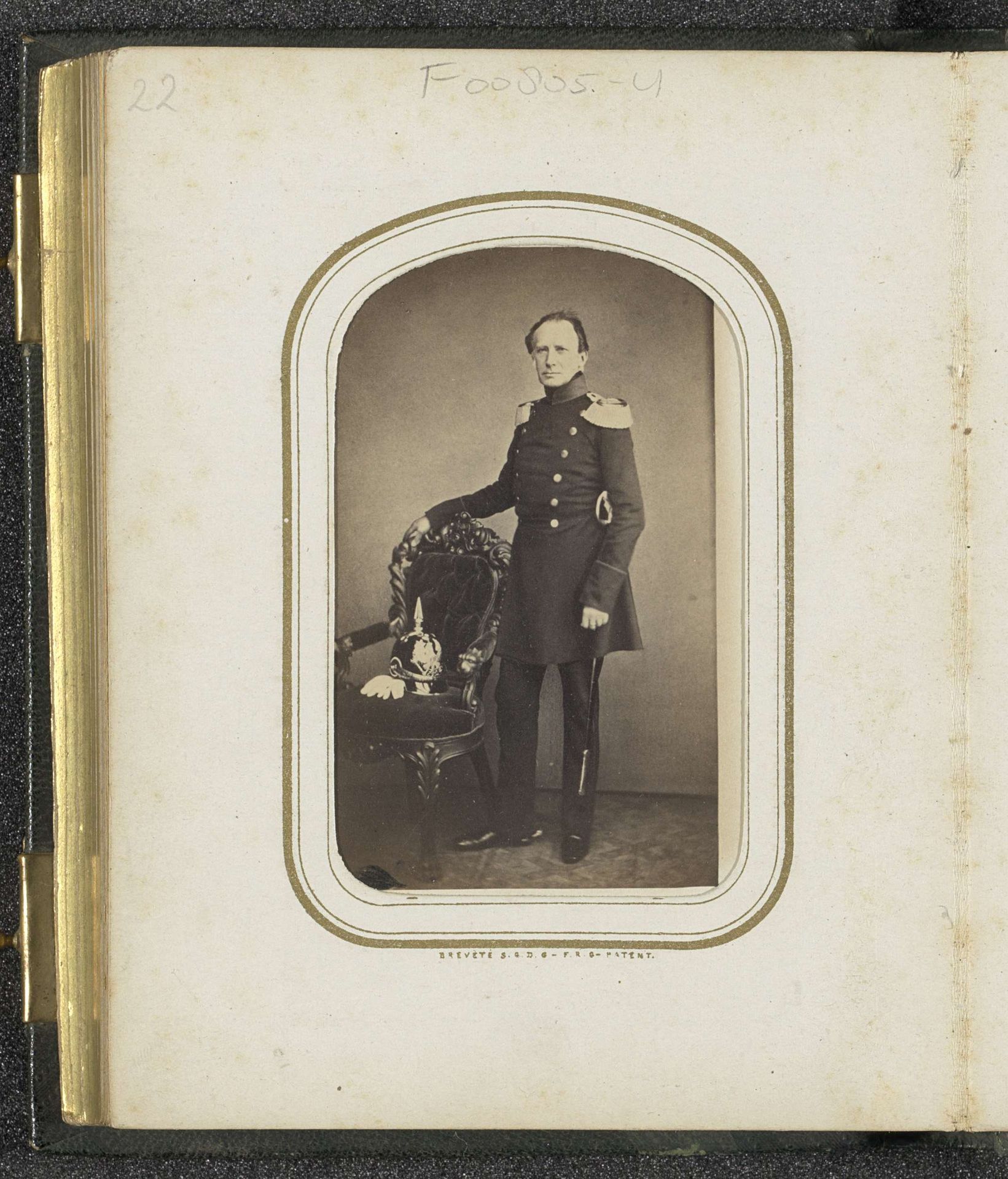
Portret van Frederik, prins der Nederlanden, in militair kostuum

Listen to curator's interpretation
Curatorial notes
Curator: This daguerreotype from 1861, attributed to C. Schwartz & Co., presents Frederik, Prince of the Netherlands, in military attire. What's your immediate impression? Editor: A very subdued solemnity, a somber mood overall. The grayscale really amplifies that, and his posture appears quite rigid, almost forced. The image feels… weighty. Curator: Weighty indeed. Note the deliberate arrangement: the subject’s stiff pose echoes the formality inherent in the rigid verticality of the composition itself. The placement of his hand, lightly resting on the ornate chair, provides a curious counterpoint. Editor: Precisely. We need to consider the Prince's position during a period of immense social and political change. Photography, by this time, had become a crucial tool for portraying power and authority, especially within royal circles. The careful staging reinforces that idea. It projects an image of controlled strength and decorum. Curator: And structurally, it’s interesting to observe how the relatively soft gradations of light delineate the prince’s form from the solid, dark backdrop, allowing him to emerge as the primary focal point. Editor: Yes, although that contrasts significantly with the almost distracting ornate detail of the chair he's resting his hand on. One cannot help but notice the somewhat redundant inclusion of the military helmet on the chair to underscore the Prince's vocation. What's striking to me is that this could have been so easily avoided to maintain a powerful portrait. Curator: A fair point. However, that level of symbolism may also provide access to the cultural understanding of status and position prevalent at that historical juncture. It is worth observing what such symbols contribute to the broader narrative of representation in the 19th century. Editor: From my perspective, analysing the interplay between the symbolic props and the rigid formality certainly illuminates the Prince's projected persona and his historical moment. Curator: Indeed, considering the deliberate structure coupled with its historical positioning enables a rather layered appreciation of the image.