1859
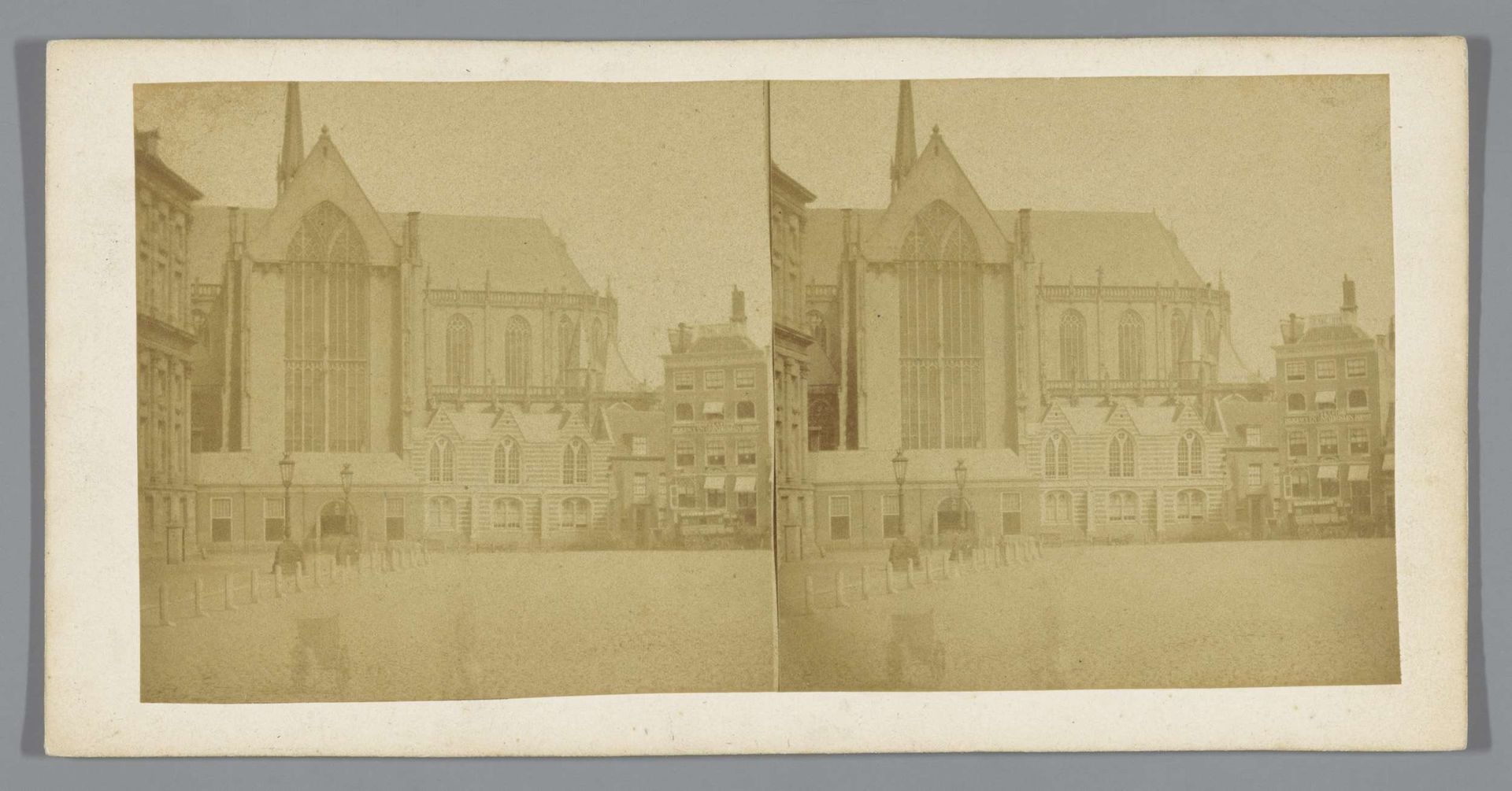
Nieuwe Kerk en de Dam, Amsterdam

Pieter Oosterhuis
1816 - 1885Location
RijksmuseumListen to curator's interpretation
Curatorial notes
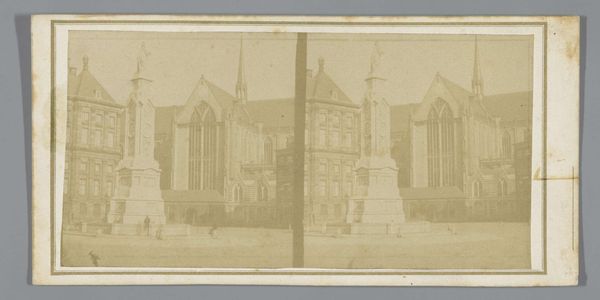
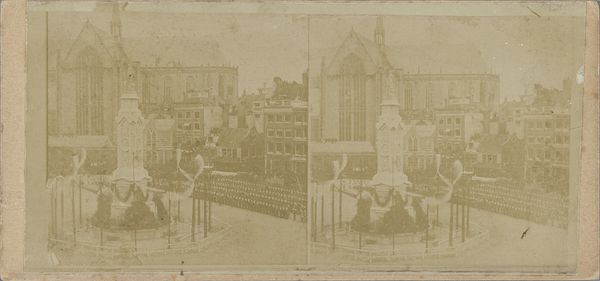
Curator: What a stillness captured here. It almost feels… sepulchral, yet majestic. The Nieuwe Kerk dominates the Dam Square in Amsterdam. This albumen print, dating from 1859, is the work of Pieter Oosterhuis. Editor: It certainly does have a muted quality, a quiet grandeur. The near monochrome palette lends it a sense of timelessness, despite being so clearly rooted in a specific moment. Curator: Right? It’s fascinating how Oosterhuis used the new medium of photography to document such an established scene. You have the very modern technique used to capture the eternal symbol of the church. Note the light, almost a ghostly glow, as if memory itself is imprinting the scene. Editor: Yes, there's a kind of stark realism in the architectural details, balanced with the slightly faded quality of the albumen print that softens the scene, almost rendering it like a dream. The way the building looms, it’s like Oosterhuis wasn't simply taking a snapshot, but constructing a powerful image. The Nieuwe Kerk takes on symbolic meaning: spiritual tradition dominating the landscape. Curator: Maybe even overshadowing it? It’s interesting that he doesn't really show the bustle you might expect from a city square. Instead, it's like he’s captured the soul of Amsterdam in stone. I like how those empty streets amplify this notion of an all seeing building watching a soul slowly leaving its earthly body Editor: Good point, he isn't presenting it as a hub of commerce, but a symbolic anchor. One might see the rigid geometric forms and precise composition as reflections of religious and social order and its structures of power and control that extend into our world. This is a potent piece in capturing cultural memory and conveying powerful meaning. Curator: And for me, looking at it now, that’s its real power – how something frozen in time can continue to provoke fresh interpretations and evoke such resonant moods. Editor: It does leave one contemplating how buildings speak across the ages. Fascinating, indeed.