Copyright: National Gallery
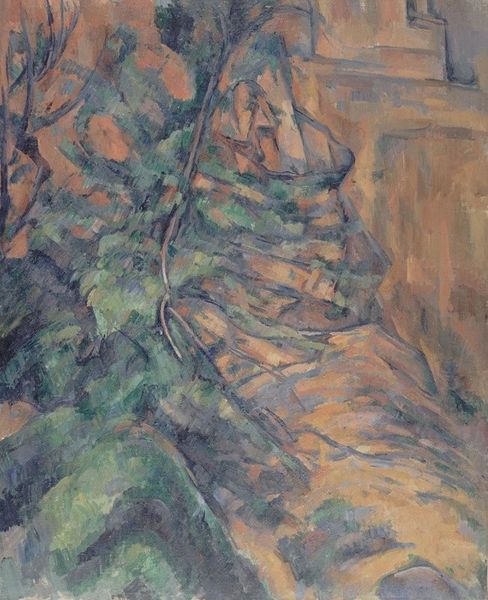
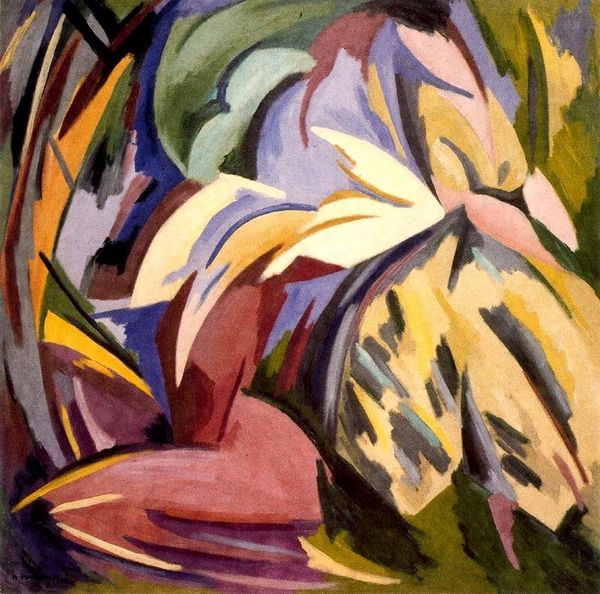
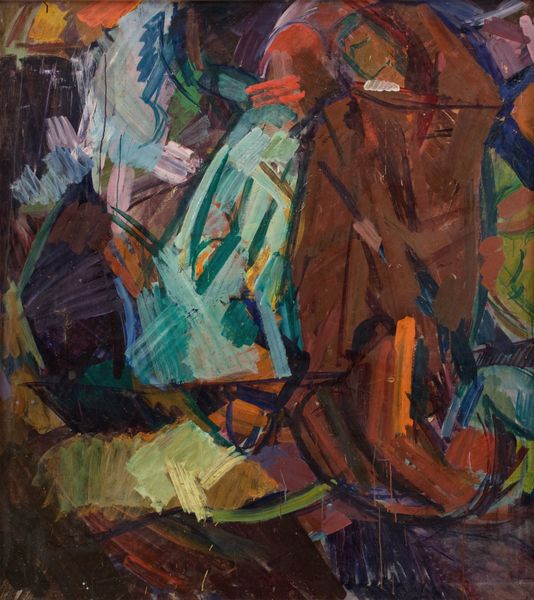
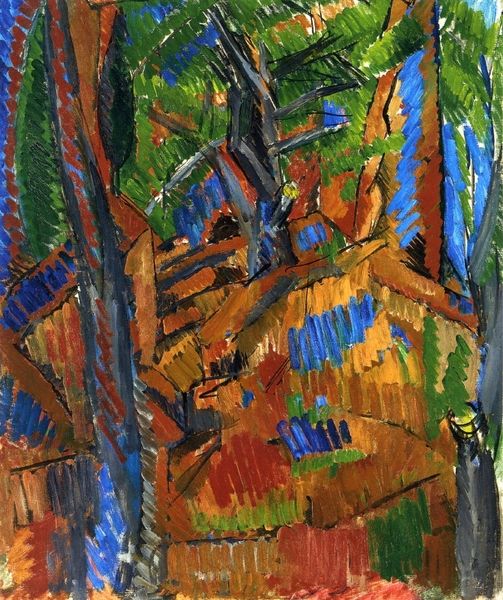
Paul Cézanne painted "In the Bibémus Quarry" with oil on canvas, capturing the rugged landscape of southern France. Notice the striking contrast between the fiery red earth and the solitary figure. This opposition evokes a sense of the individual's relationship with nature's imposing forces. The color red, dominant in this landscape, has historically signified vitality, passion, and sacrifice. Think of its recurring presence in religious art to represent the blood of martyrs or the robes of cardinals. Here, the ruddy hues of the earth engulf the figure, suggesting a psychological immersion into nature’s raw energy. This echoes the Romantic artists' fascination with the sublime – a confrontation with something greater than ourselves. The quarry itself, a site of extraction, can be seen as symbolic of human impact on the natural world, a theme that has been revisited and reinterpreted across centuries. The lone figure, positioned amidst these monumental rocks, evokes a feeling of introspection and perhaps, a subconscious yearning for connection with the elemental forces of the earth. As these symbols evolve through time, they carry with them our deepest fears and aspirations.
Comments
No comments
Be the first to comment and join the conversation on the ultimate creative platform.
 Collect
 React
React Comment
More like this