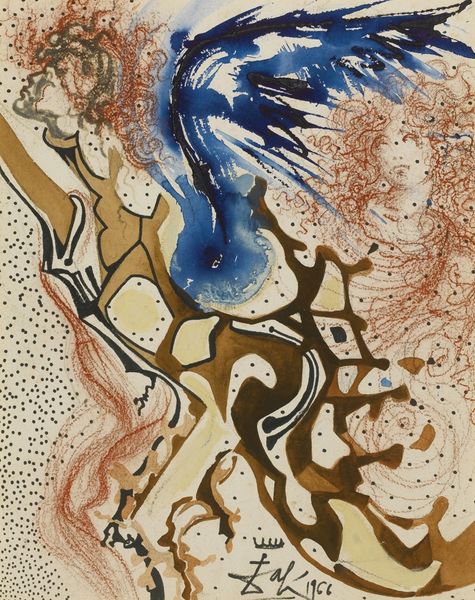
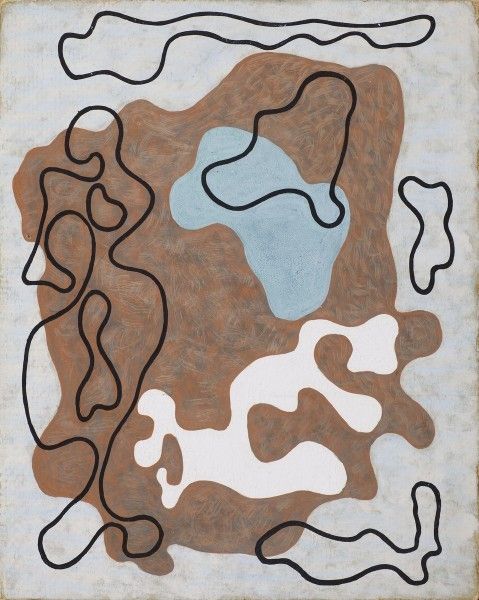
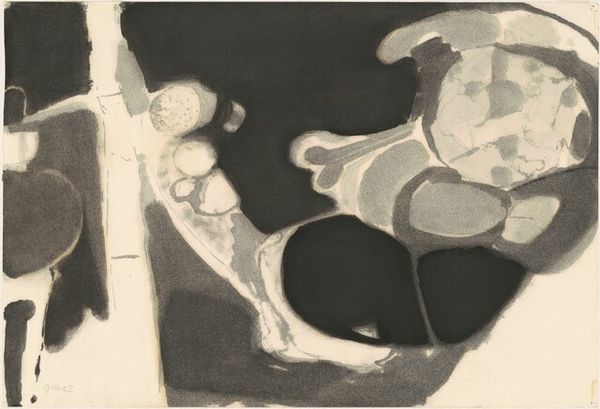
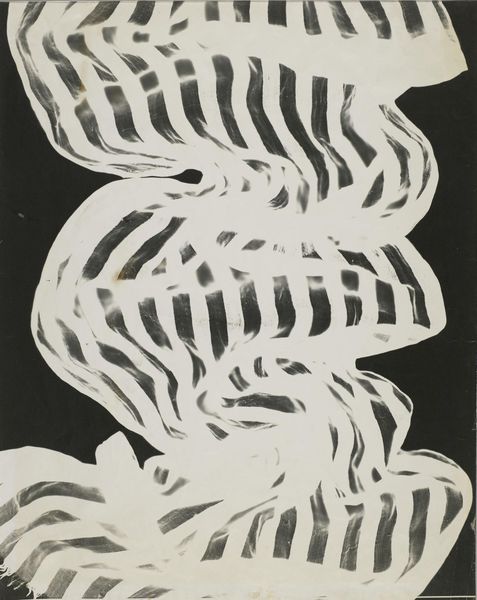
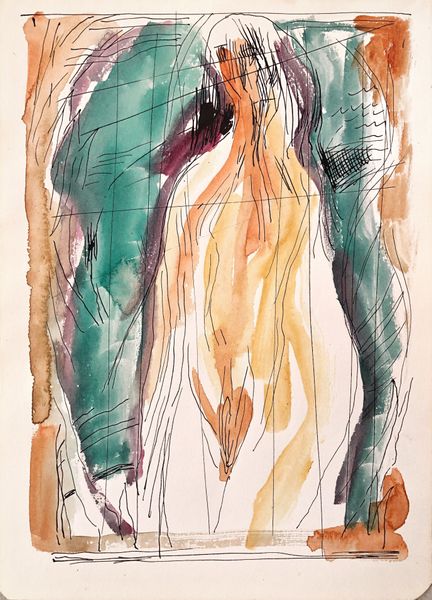
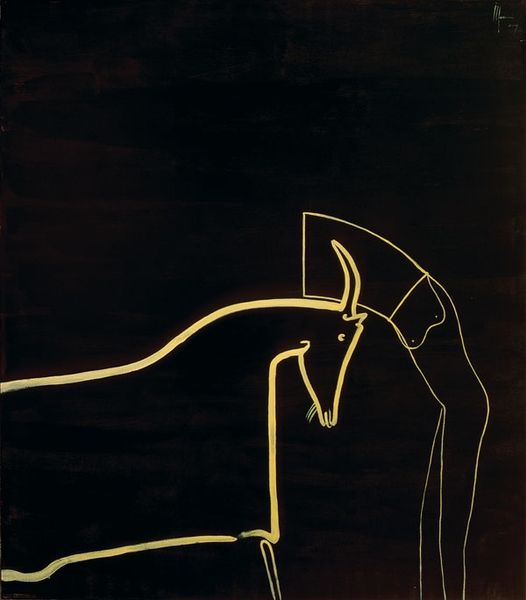
Pluie Du Printemps, Projet Pour Un Tissu Imprimé De La Collection Stimulus Pour Schiffer Prints Division De Mil-Art Company 1949
0:00
0:00

drawing, mixed-media
#
drawing
#
mixed-media
#
organic
#
form
#
abstraction
#
line
#
surrealism
Copyright: Modern Artists: Artvee
Editor: Here we have Salvador Dali's "Pluie Du Printemps, Projet Pour Un Tissu Imprimé De La Collection Stimulus Pour Schiffer Prints Division De Mil-Art Company", created in 1949, a mixed-media drawing. Its stylized and surreal nature feels like an attempt to capture both organic growth and some unseen, underlying structure. What do you see in this piece that speaks to you? Curator: As a historian, this piece sparks thoughts about post-war commercialism and the commodification of art. Dalí designing fabric is fascinating in itself, a Surrealist bending to popular demands while retaining his signature style. It reflects the growing trend of artists engaging with mass production, potentially democratizing art. What statements do you think Dalí might be making, implicitly or explicitly, in embracing design for a company like Schiffer Prints? Editor: It is hard to say, but could it be his vision of nature filtered through his subconscious, designed to be accessible to the masses, a surrealist take on mass-produced beauty? How do you view the role of Surrealism itself within that social context? Was it inherently rebellious, or was its shocking imagery eventually absorbed and neutralized by mainstream culture? Curator: That's a key tension, isn’t it? Initially a movement rejecting bourgeois values, Surrealism was inevitably pulled into the market. Here, the 'spring rain' motif could signify renewal, but is it truly subversive, or just a novel pattern? This work becomes a window into art's complicated dance with capitalism, posing the question, can art retain its critical edge when mass-produced? Editor: Interesting! So much to consider in a pattern. I'll definitely look at Surrealism and its commercial trajectory through a new lens now. Curator: Me too! It's helpful to reflect on how seemingly simple pieces can raise profound questions about art and its place in our culture.
Comments
No comments
Be the first to comment and join the conversation on the ultimate creative platform.
 Collect
 React
React Comment
More like this