About this artwork
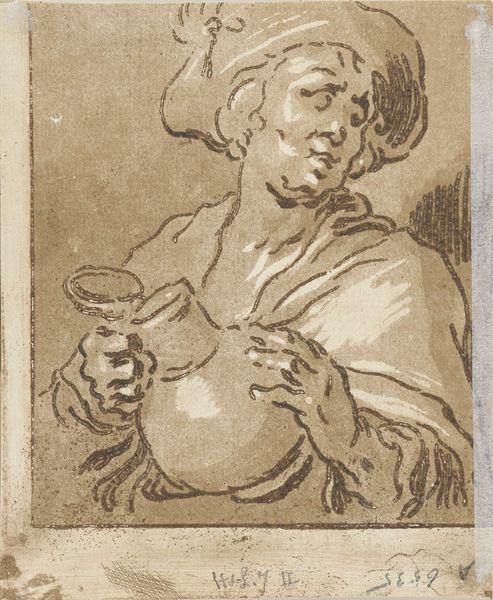
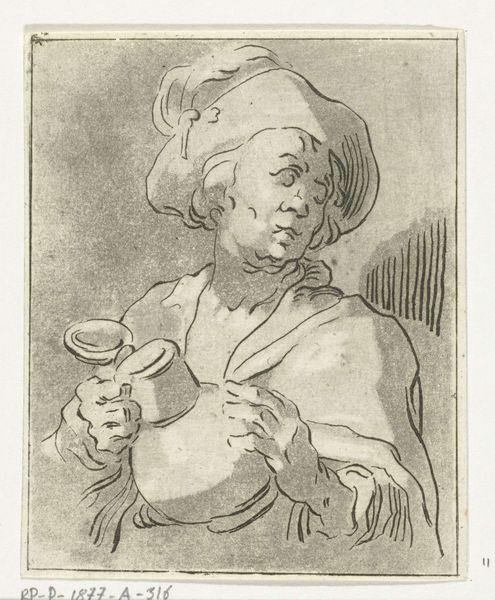
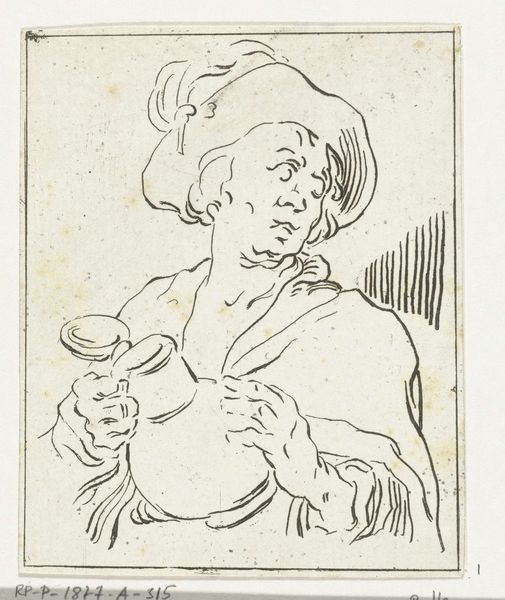
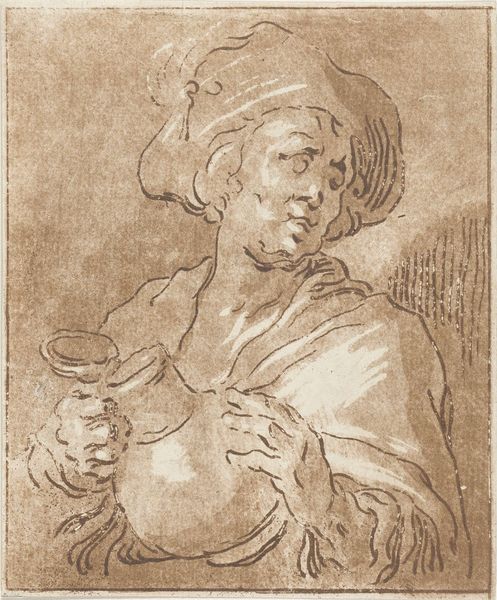
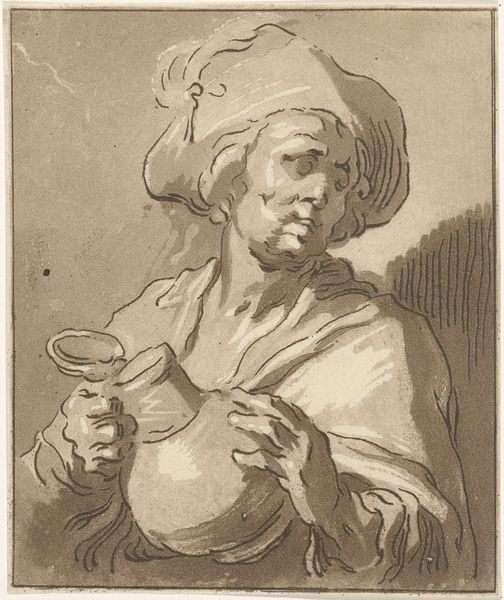
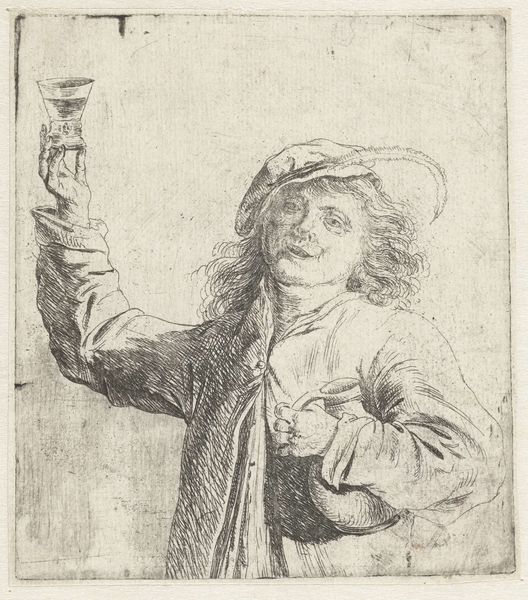
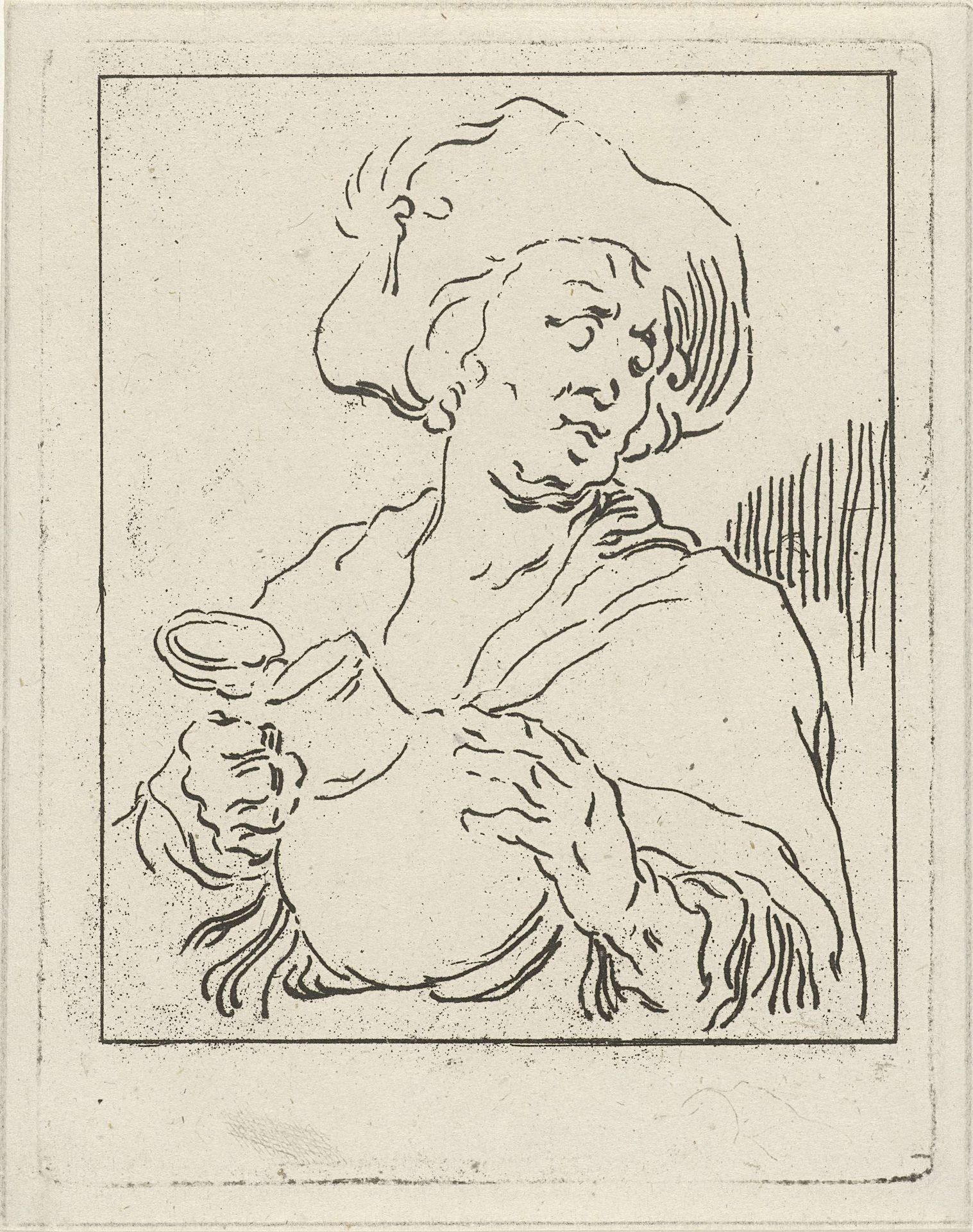
Editor: We're looking at "Man met kruik," or "Man with Jug," a pen and ink drawing by Hermanus Fock, created sometime between 1781 and 1822. It's at the Rijksmuseum. It feels like a quick sketch, almost humorous in its exaggeration of the figure's features. What do you see in this piece, beyond just a man holding a jug? Curator: The jug itself is key. Vessels, across cultures, often symbolize abundance, nourishment, and even the feminine principle. The way he cradles it – is it protective? Reverent? Consider its weight, both literal and metaphorical. Is it water, wine, oil? Each carries its own specific symbolism – cleansing, communion, anointing. And what does that imply for this man's role? Is he a provider, a participant in some ritual? The context is crucial here, because without it, the symbol loses definition and may lead to many possible paths for its viewer. Editor: I hadn’t thought about the contents of the jug. The way it's drawn, it's so simple; it could be anything. But you're right, it completely changes the meaning. Curator: Precisely! Think about the man's clothing, too. It looks like a theatrical costume almost. Is this image from a play? This choice of dress is crucial because every visual element that creates and surrounds this portrait helps viewers develop possible cultural memories connected with what is represented. It prompts associations – perhaps deliberate ones seeded by the artist – with similar characters or events they might have already witnessed or were otherwise part of their local popular imagination. This can range very far, to say the least. Editor: So, it's not just a simple genre painting but a complex set of symbols pointing to different interpretations. I'm glad I asked! Curator: Absolutely! Seeing art, at the heart of it, is asking the right questions, and understanding the cultural codes woven into the image.

Artwork details
- Dimensions
- height 128 mm, width 100 mm
- Location
- Rijksmuseum
- Copyright
- Rijks Museum: Open Domain
Comments
Share your thoughts
About this artwork
Editor: We're looking at "Man met kruik," or "Man with Jug," a pen and ink drawing by Hermanus Fock, created sometime between 1781 and 1822. It's at the Rijksmuseum. It feels like a quick sketch, almost humorous in its exaggeration of the figure's features. What do you see in this piece, beyond just a man holding a jug? Curator: The jug itself is key. Vessels, across cultures, often symbolize abundance, nourishment, and even the feminine principle. The way he cradles it – is it protective? Reverent? Consider its weight, both literal and metaphorical. Is it water, wine, oil? Each carries its own specific symbolism – cleansing, communion, anointing. And what does that imply for this man's role? Is he a provider, a participant in some ritual? The context is crucial here, because without it, the symbol loses definition and may lead to many possible paths for its viewer. Editor: I hadn’t thought about the contents of the jug. The way it's drawn, it's so simple; it could be anything. But you're right, it completely changes the meaning. Curator: Precisely! Think about the man's clothing, too. It looks like a theatrical costume almost. Is this image from a play? This choice of dress is crucial because every visual element that creates and surrounds this portrait helps viewers develop possible cultural memories connected with what is represented. It prompts associations – perhaps deliberate ones seeded by the artist – with similar characters or events they might have already witnessed or were otherwise part of their local popular imagination. This can range very far, to say the least. Editor: So, it's not just a simple genre painting but a complex set of symbols pointing to different interpretations. I'm glad I asked! Curator: Absolutely! Seeing art, at the heart of it, is asking the right questions, and understanding the cultural codes woven into the image.
Comments
Share your thoughts