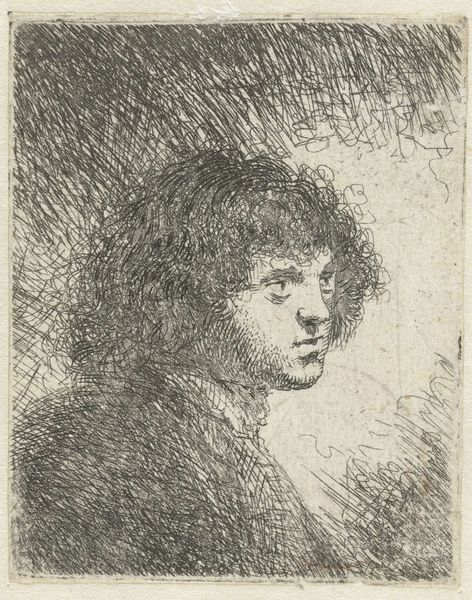
Dimensions: image: 15.6 x 12.6 cm (6 1/8 x 4 15/16 in.) plate (lithograph stone): 22.3 x 15.9 cm (8 3/4 x 6 1/4 in.) sheet: 34.6 x 27.7 cm (13 5/8 x 10 7/8 in.)
Copyright: National Gallery of Art: CC0 1.0
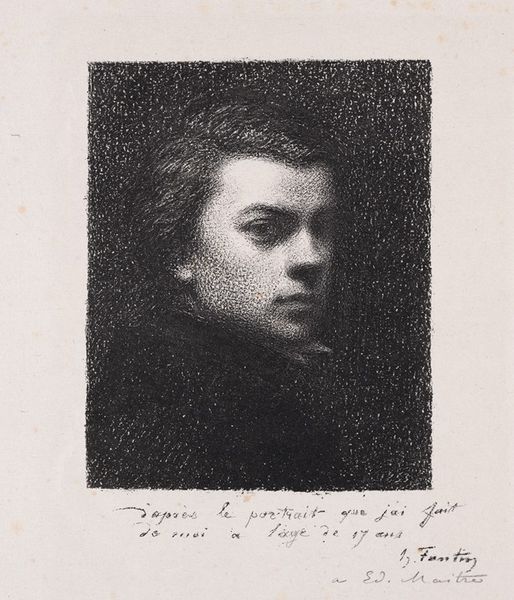
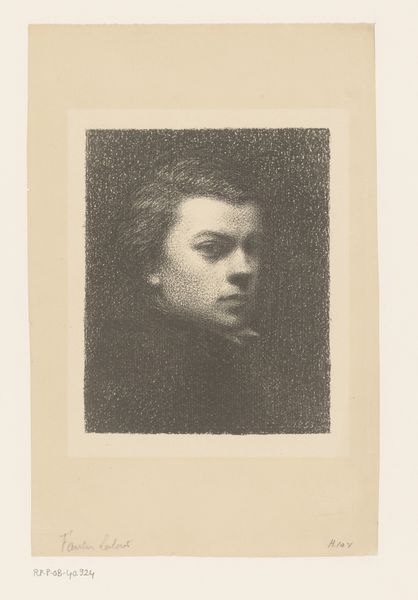
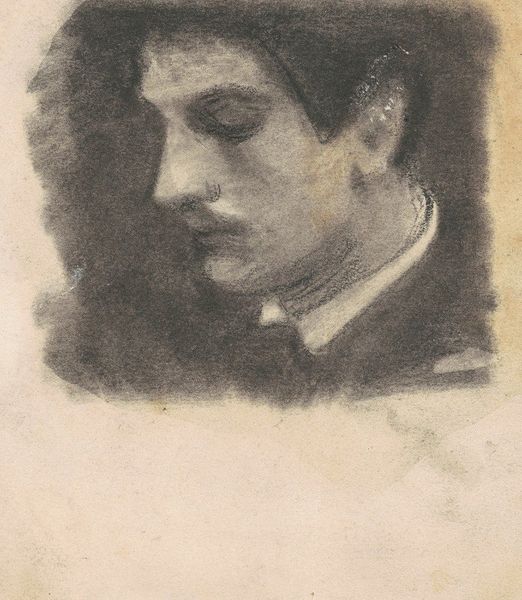
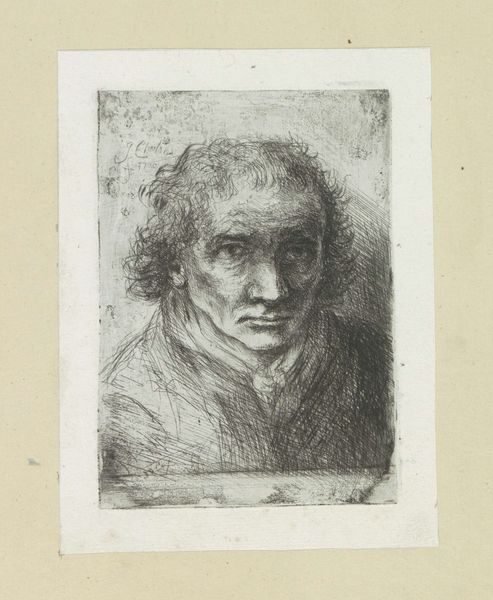
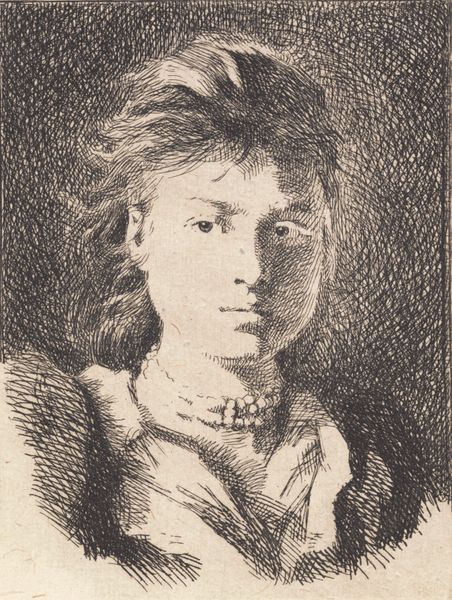
Henri Fantin-Latour made this lithograph self-portrait when he was seventeen. He was working in France, where institutions like the École des Beaux-Arts shaped artistic careers. Fantin-Latour captures himself with a soft, almost dreamy quality. The lithographic technique, with its grainy texture, lends itself to this ethereal effect. The play of light and shadow across his face draws us in. But what does it mean for a young artist to create a self-portrait? Was he reflecting on his identity, or perhaps announcing his arrival on the art scene? Looking at the art world of 19th-century France, we see a system of salons and exhibitions that could either make or break an artist. A self-portrait could be a way to assert oneself, to take control of one's image in a world that was quick to judge. To understand this work better, we can look at letters, exhibition reviews, and other documents that shed light on the artist's world. Art, after all, is never made in a vacuum, but is a product of its time and place.
Comments
No comments
Be the first to comment and join the conversation on the ultimate creative platform.
 React
React Comment