About this artwork
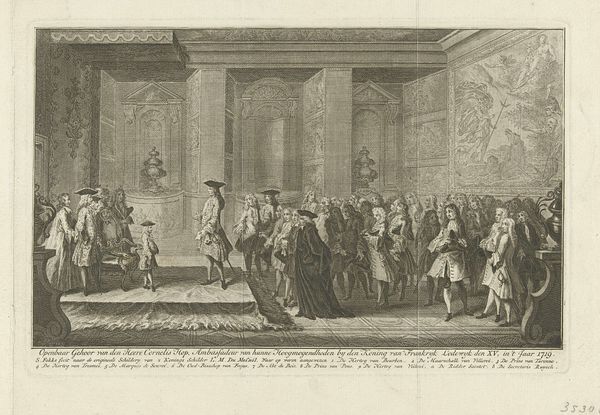
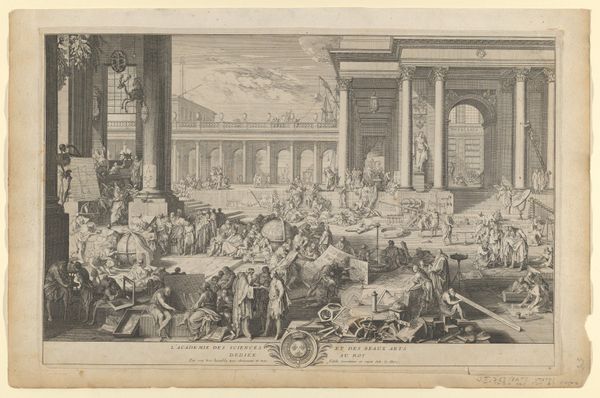
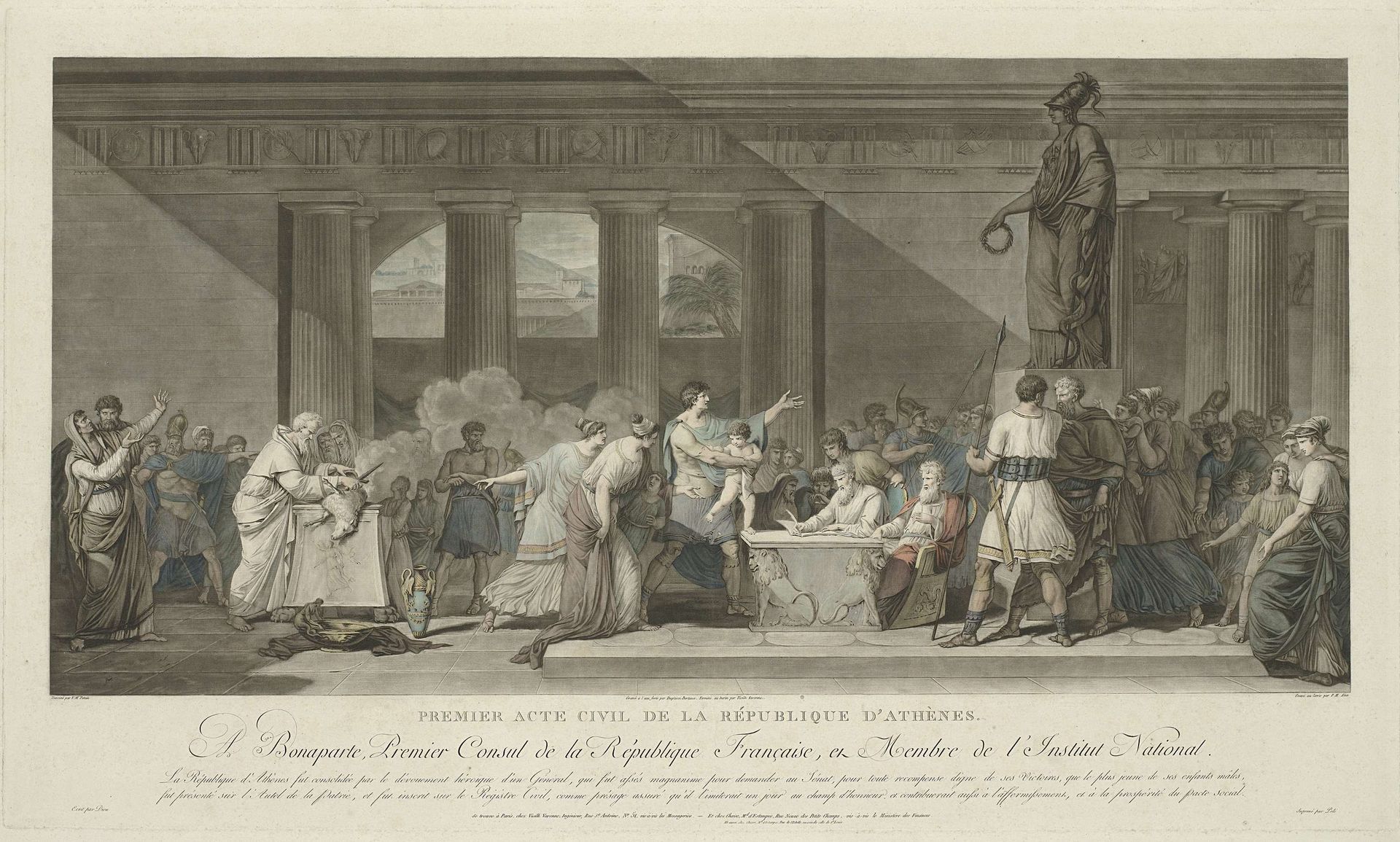
Pierre Michel Alix created this print depicting a scene from the Athenian Republic. Dominating the composition, we observe the figure of Athena, helmeted and holding a laurel wreath, symbols of wisdom and victory, deeply rooted in classical antiquity. Athena's image echoes through time; we see her reappear in Roman sculptures as Minerva, and even in modern allegorical figures representing liberty or knowledge. The wreath, initially a symbol of triumph, evolves into a symbol of honor, gracing poets and athletes alike. Think of its presence in Renaissance paintings, adorning the heads of learned men, or its modern use in Olympic ceremonies, signifying achievement. These symbols tap into our collective unconscious, evoking feelings of admiration and respect. The gestures of the figures, the solemnity of the setting—all resonate with a deep, subconscious understanding of power and authority. This is not merely a scene; it is a carefully constructed arrangement meant to elicit a visceral response. The cyclical journey of these symbols reveals how cultural memory shapes our perception, forging connections between disparate moments in history.
Commandant laat zijn jonge zoon inschrijven bij de burgerlijke stand van de Atheense Republiek
before 1804

Artwork details
- Medium
- print, engraving
- Dimensions
- height 543 mm, width 928 mm
- Copyright
- Rijks Museum: Open Domain
Tags
Comments
Share your thoughts
About this artwork
Pierre Michel Alix created this print depicting a scene from the Athenian Republic. Dominating the composition, we observe the figure of Athena, helmeted and holding a laurel wreath, symbols of wisdom and victory, deeply rooted in classical antiquity. Athena's image echoes through time; we see her reappear in Roman sculptures as Minerva, and even in modern allegorical figures representing liberty or knowledge. The wreath, initially a symbol of triumph, evolves into a symbol of honor, gracing poets and athletes alike. Think of its presence in Renaissance paintings, adorning the heads of learned men, or its modern use in Olympic ceremonies, signifying achievement. These symbols tap into our collective unconscious, evoking feelings of admiration and respect. The gestures of the figures, the solemnity of the setting—all resonate with a deep, subconscious understanding of power and authority. This is not merely a scene; it is a carefully constructed arrangement meant to elicit a visceral response. The cyclical journey of these symbols reveals how cultural memory shapes our perception, forging connections between disparate moments in history.
Comments
Share your thoughts