About this artwork
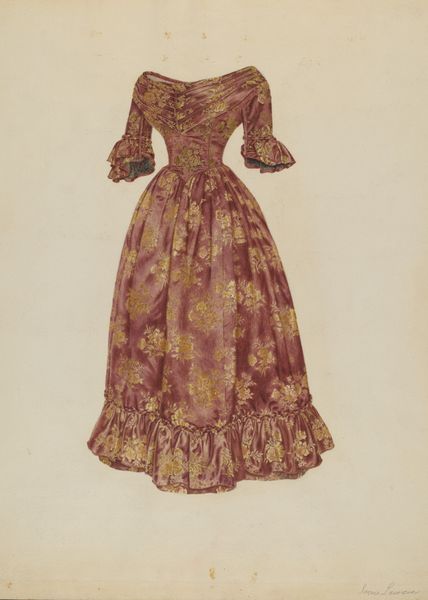
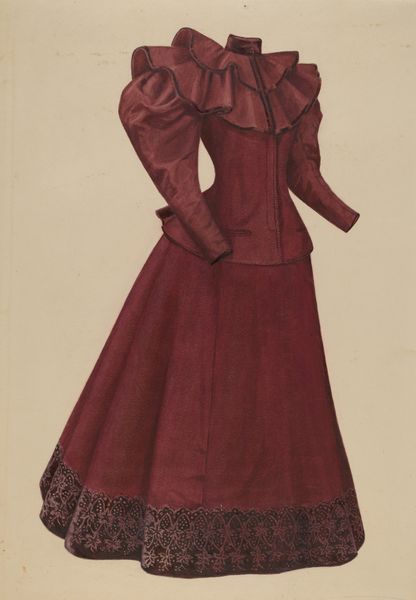
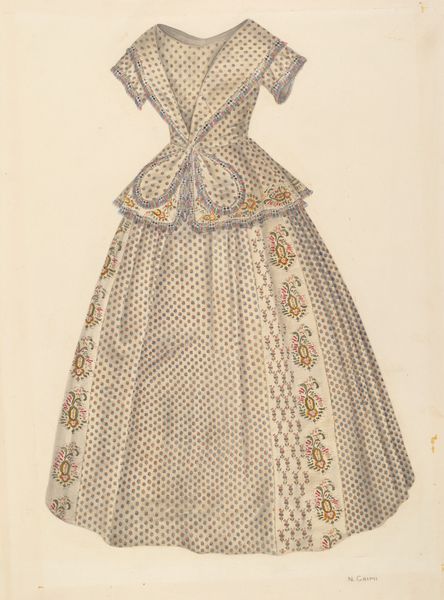
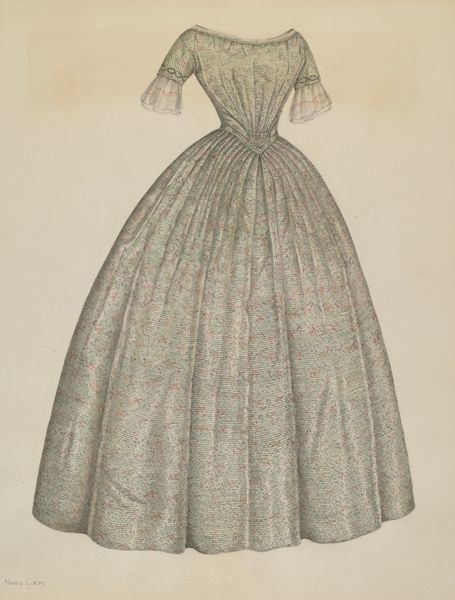
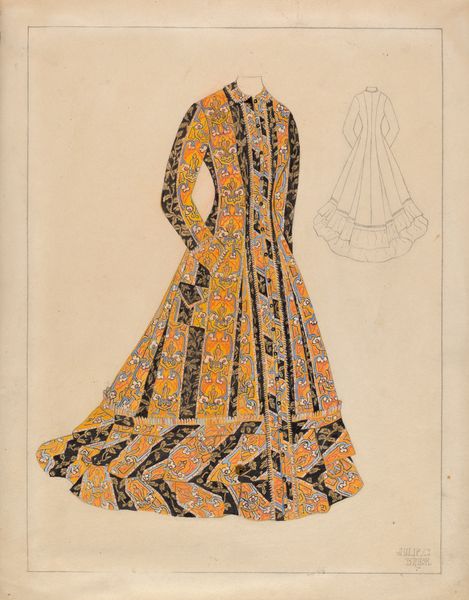
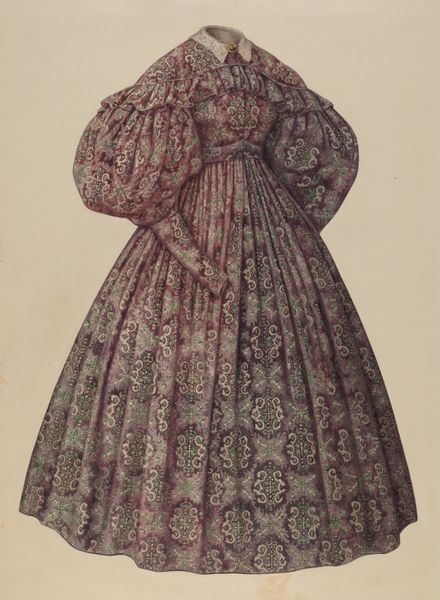
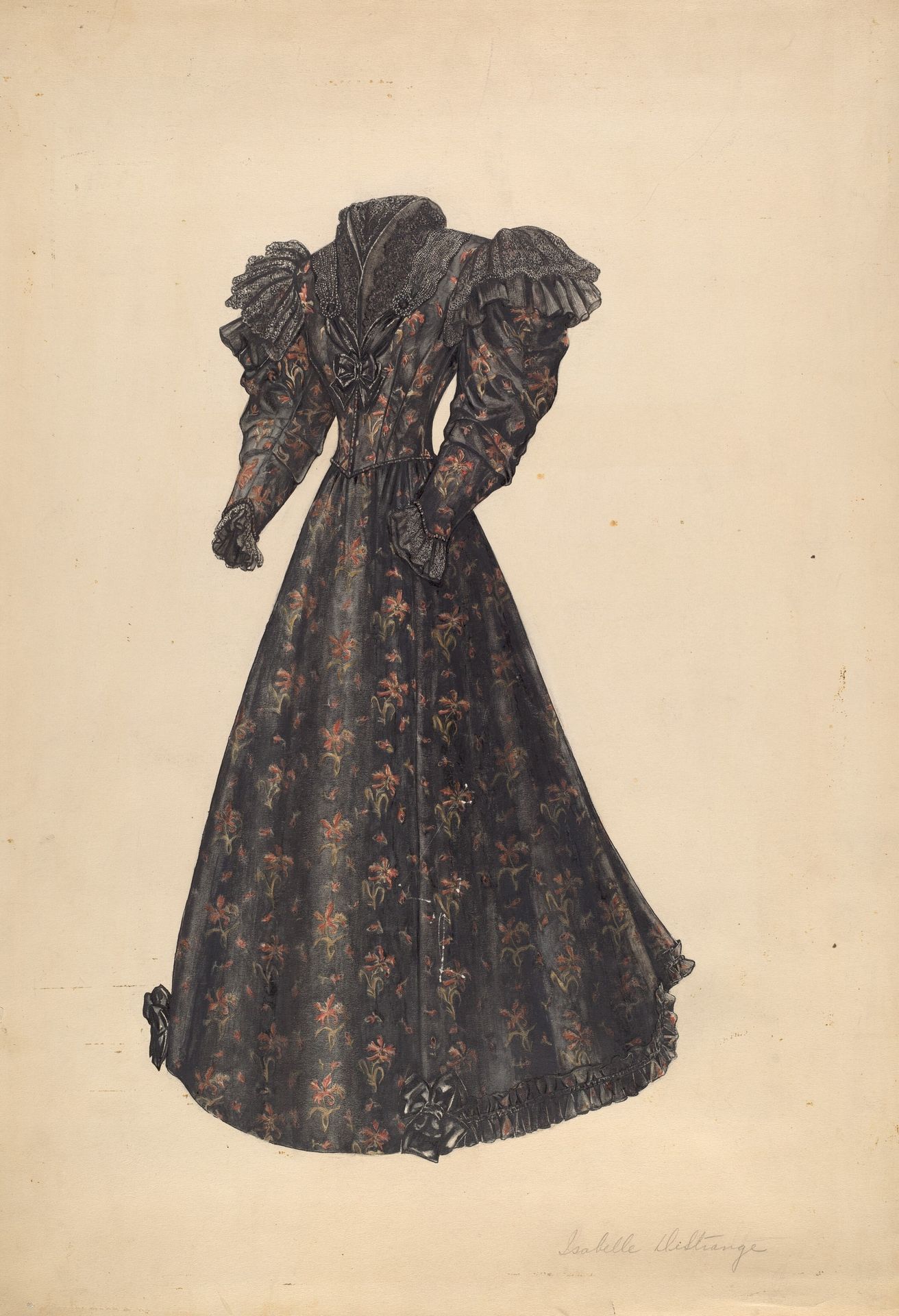
Editor: This is "Dress" created by Isabelle De Strange between 1935 and 1942, using colored pencil on paper. The gown seems to be floating in the frame, and it's a bit eerie! What are your thoughts? Curator: Well, given the era and medium, let's think about context. A dress depicted in coloured pencil, detached from a figure... it could relate to fashion design but it also reflects on how women's roles were changing socially and politically during that pre-war period. How does the detachment from the body change how we read it? Editor: That's interesting – almost like the dress exists as a symbol, removed from the individual. Could it also relate to the rising anxieties of the time? Curator: Exactly. Consider the economic depression, the rise of fascism... a focus on outward appearance, yet rendered in this almost ghostly, ethereal way... It might be read as both an aspiration for elegance, yet it’s fragility and the ephemeral medium hints at anxieties and a world on the cusp of turmoil. The dress takes on a social weight. Editor: The choice of colored pencil then isn't just a material constraint, but speaks to that fragility. Curator: Precisely! A painted portrait would imply permanence, a coloured pencil drawing suggests the opposite. De Strange makes it not merely fashion, but commentary. Editor: Wow, I never thought about a fashion drawing containing that much social commentary! Thank you for opening my eyes. Curator: And thank you. Reflecting on the social dimensions of art like this enriches our experience of it.


Artwork details
- Medium
- drawing, coloured-pencil, paper
- Dimensions
- overall: 53.4 x 36.8 cm (21 x 14 1/2 in.)
- Copyright
- National Gallery of Art: CC0 1.0
Tags
drawing
coloured-pencil
paper
coloured pencil
Comments
No comments
About this artwork
Editor: This is "Dress" created by Isabelle De Strange between 1935 and 1942, using colored pencil on paper. The gown seems to be floating in the frame, and it's a bit eerie! What are your thoughts? Curator: Well, given the era and medium, let's think about context. A dress depicted in coloured pencil, detached from a figure... it could relate to fashion design but it also reflects on how women's roles were changing socially and politically during that pre-war period. How does the detachment from the body change how we read it? Editor: That's interesting – almost like the dress exists as a symbol, removed from the individual. Could it also relate to the rising anxieties of the time? Curator: Exactly. Consider the economic depression, the rise of fascism... a focus on outward appearance, yet rendered in this almost ghostly, ethereal way... It might be read as both an aspiration for elegance, yet it’s fragility and the ephemeral medium hints at anxieties and a world on the cusp of turmoil. The dress takes on a social weight. Editor: The choice of colored pencil then isn't just a material constraint, but speaks to that fragility. Curator: Precisely! A painted portrait would imply permanence, a coloured pencil drawing suggests the opposite. De Strange makes it not merely fashion, but commentary. Editor: Wow, I never thought about a fashion drawing containing that much social commentary! Thank you for opening my eyes. Curator: And thank you. Reflecting on the social dimensions of art like this enriches our experience of it.
Comments
No comments