About this artwork
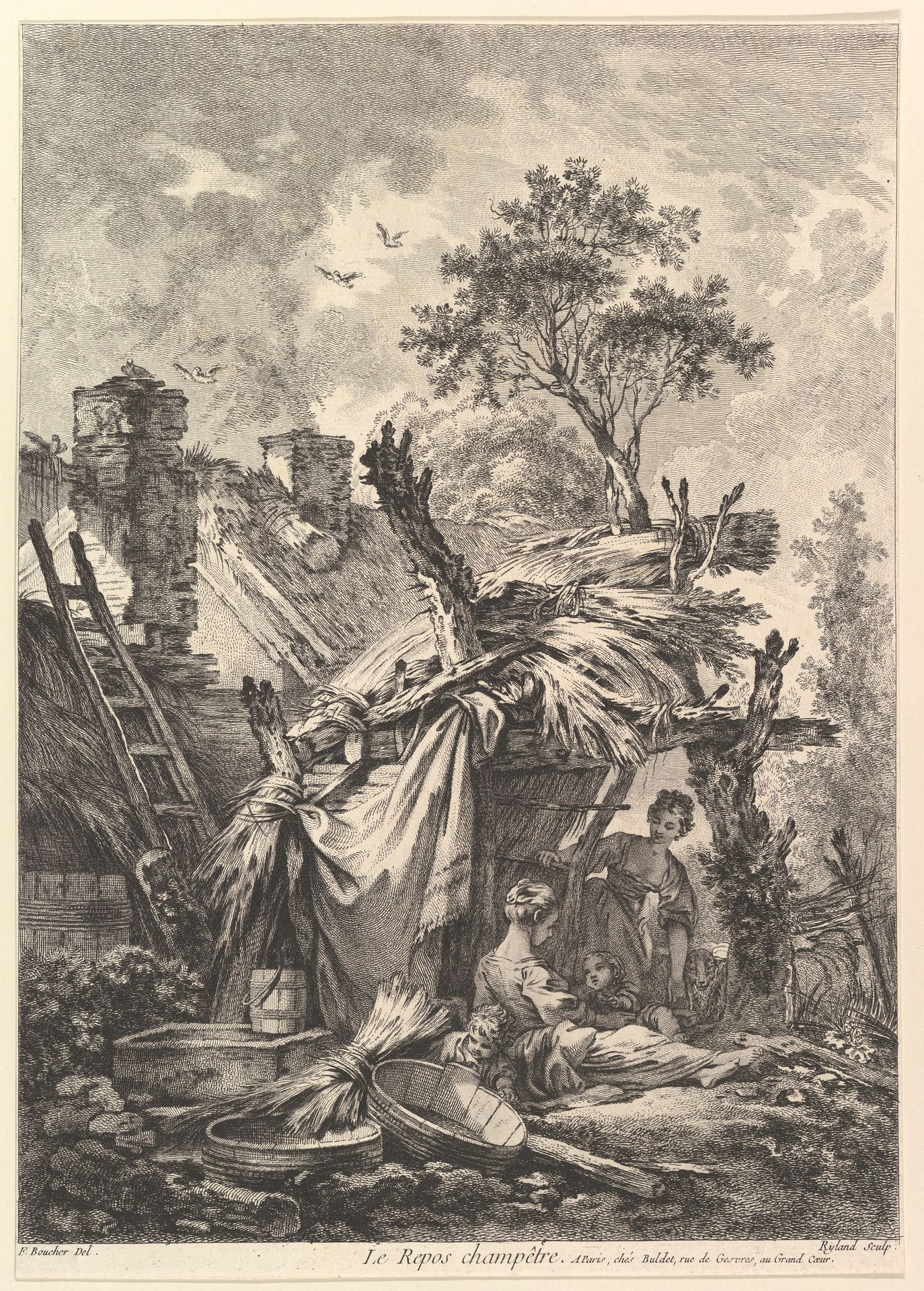
William Wynne Ryland created this print, “Rest in the Country,” using etching and engraving techniques. Notice the stark contrast between light and shadow, achieved through dense cross-hatching. This contrast defines forms and creates a sense of depth, drawing your eye to the figures nestled within the rustic shelter. The composition is structured around a play of textures and forms. The rough, organic textures of the thatched roof and foliage contrast with the smoother surfaces of the figures’ clothing and skin. This juxtaposition enhances the sense of realism while also creating a dynamic visual rhythm. Ryland skillfully manipulates line and texture to create a visual language that speaks to both the idyllic and the precarious aspects of rural life. Consider how the structure, with its linear elements and textured surfaces, invites ongoing interpretation about humans and their connection with the natural world.
Rest in the Country
1732 - 1783

William Wynne Ryland
1732 - 1783
The Metropolitan Museum of Art
Metropolitan Museum of Art, New York, NYArtwork details
- Medium
- drawing, print, etching
- Dimensions
- sheet: 13 3/16 x 9 3/8 in. (33.5 x 23.8 cm)
- Location
- Metropolitan Museum of Art, New York, NY
- Copyright
- Public Domain
Tags
Comments
Share your thoughts
About this artwork
William Wynne Ryland created this print, “Rest in the Country,” using etching and engraving techniques. Notice the stark contrast between light and shadow, achieved through dense cross-hatching. This contrast defines forms and creates a sense of depth, drawing your eye to the figures nestled within the rustic shelter. The composition is structured around a play of textures and forms. The rough, organic textures of the thatched roof and foliage contrast with the smoother surfaces of the figures’ clothing and skin. This juxtaposition enhances the sense of realism while also creating a dynamic visual rhythm. Ryland skillfully manipulates line and texture to create a visual language that speaks to both the idyllic and the precarious aspects of rural life. Consider how the structure, with its linear elements and textured surfaces, invites ongoing interpretation about humans and their connection with the natural world.
Comments
Share your thoughts