1695
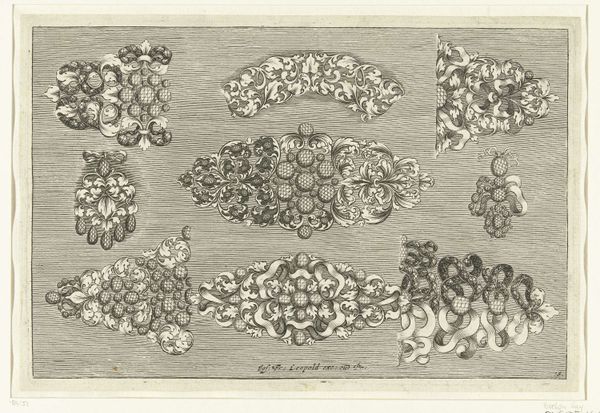
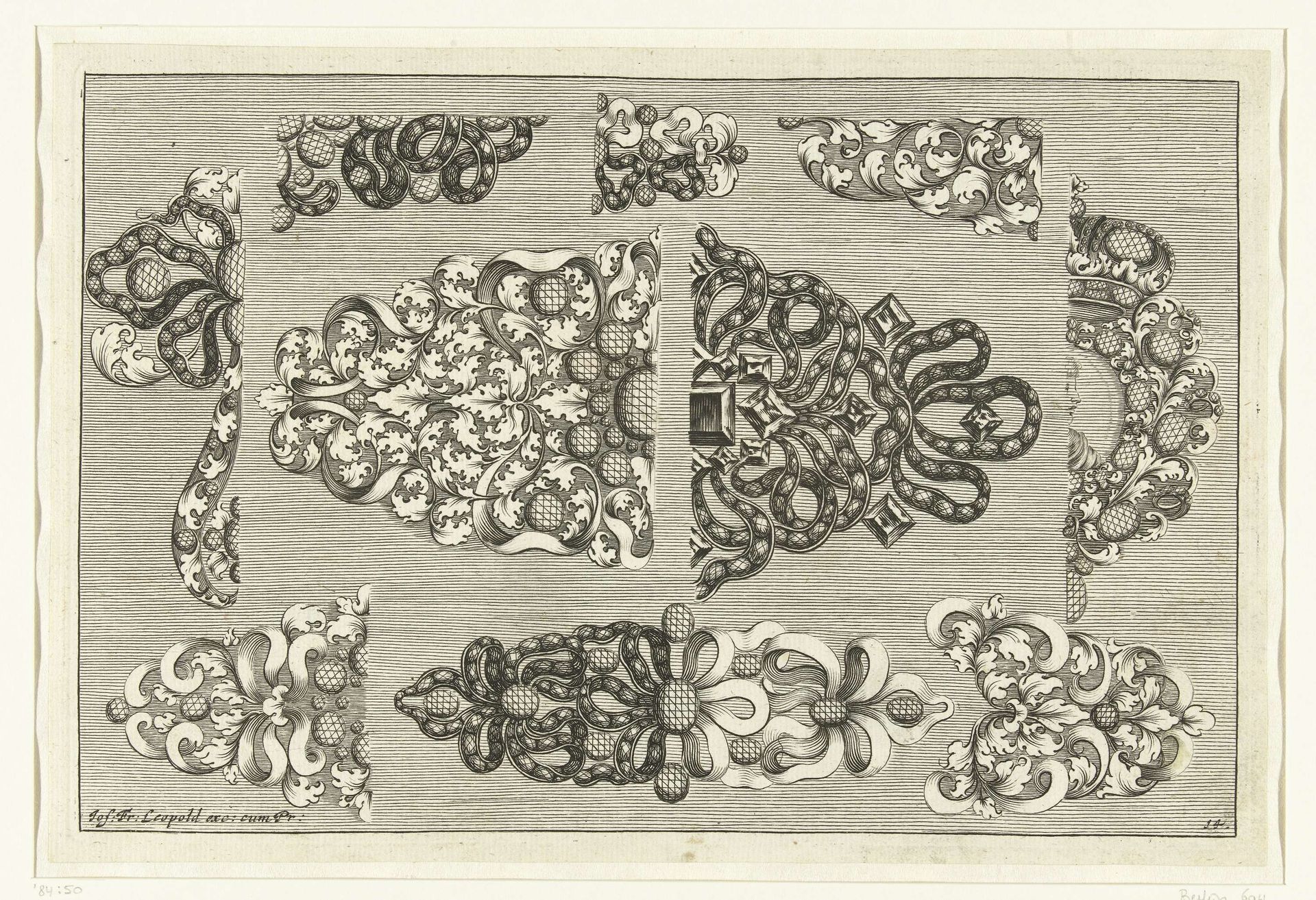
Tien ontwerpen voor juwelen

Joseph Friedrich Leopold
1668 - 1726Location
RijksmuseumListen to curator's interpretation
Curatorial notes
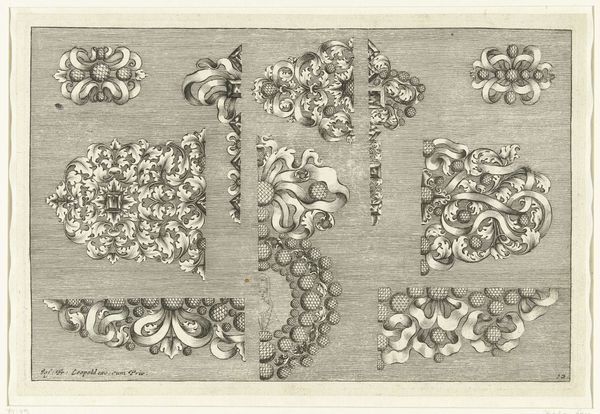
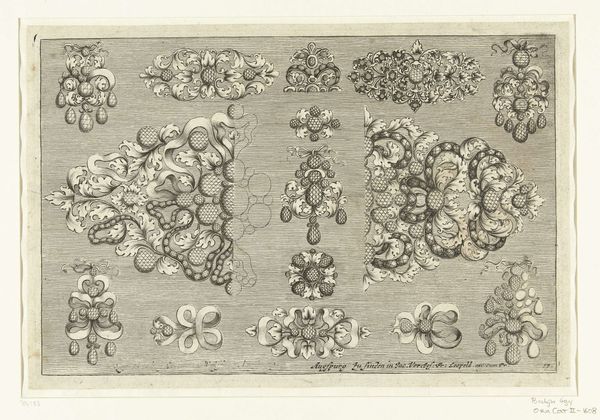
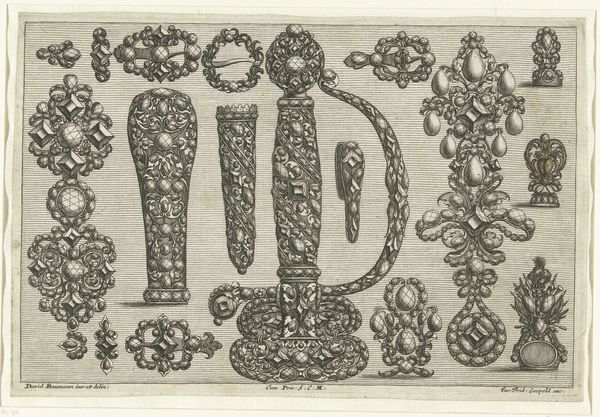
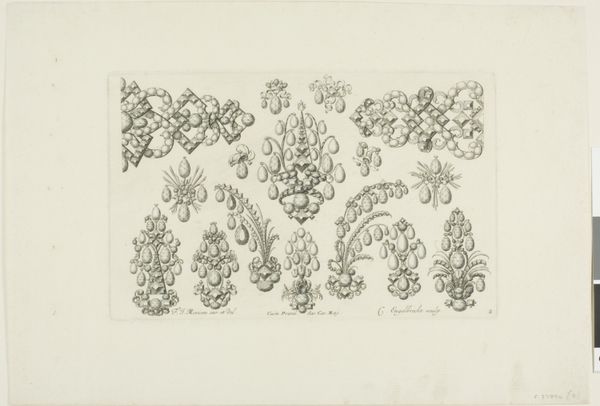
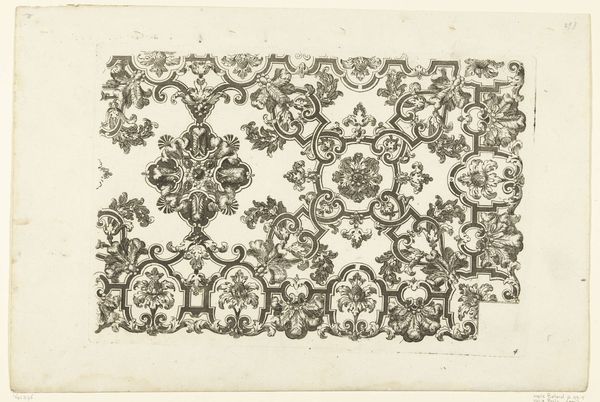
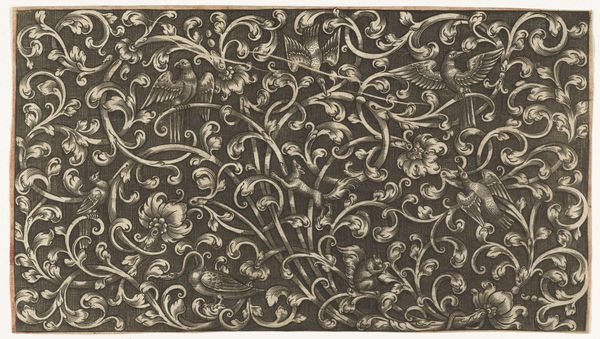
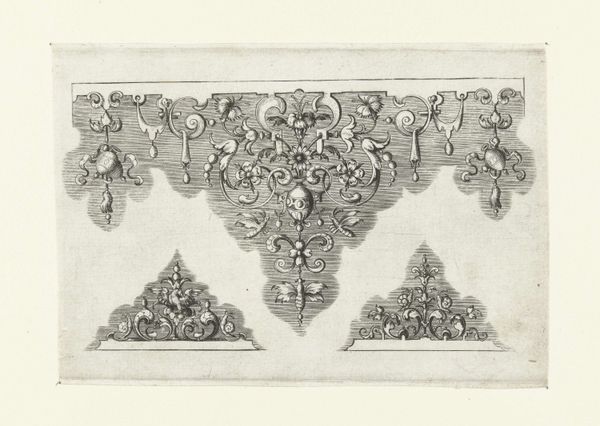
Joseph Friedrich Leopold created these ten jewelry designs on paper using etching in the late 17th or early 18th century. Such designs offer a glimpse into the world of artisans catering to the wealthy during this period. The visual language speaks of Baroque exuberance. Leaf motifs and swirling ribbon patterns would have resonated with the aristocratic class, keen to display their wealth through fashionable accessories. Leopold's image also offers insight into the institutional history of art production. Printmaking allowed for the widespread dissemination of designs, influencing trends and standardizing artistic styles. The social conditions of the time heavily influenced artistic output; these designs reflect the hierarchical structure of society, where luxury goods were predominantly enjoyed by the elite. By analyzing sources such as fashion plates, inventories, and guild records, historians piece together a deeper understanding of the society that shaped these works of art. Studying this etching reminds us that art's meaning is always contingent on its social and historical context.